

Key Highlights
The contract effective date marks the start of legally binding contractual obligations.
It is different from the execution date, which is simply the date the contract is signed.
A clear effective date is crucial for preventing disputes about when performance should begin.
This date impacts the terms of the contract, including payment schedules, liability, and renewal periods.
Effective contract management depends on accurately tracking this key date.
The date can be in the past, present, or future, based on what the parties agree upon.
Introduction
The contract effective date is a vital detail in any contractual agreement. It is more than just a date on a document; it is the official starting point for all legal rights and responsibilities outlined in the contract. Understanding this date is fundamental in contract law because it determines exactly when the parties must begin to fulfil their promises. Without a clear date, confusion and disagreements can easily arise, undermining the entire agreement. This article will explain what this date means and why it matters.
Defining the Contract Effective Date

The effective date of a contract is the precise moment when a legal agreement becomes operational and binding on all parties involved. It acts as the official reference point from which all contractual duties must be performed.
Parties can agree for this date to be in the past, present, or future. Having a clear effective date ensures there is no ambiguity about when the terms apply. Understanding this concept is the first step toward better contract management. We will now look closer at its meaning and where to find it.
What the effective date means in legal agreements
In legal agreements, the effective date meaning is straightforward: it is the day the contract comes to life. Before this date, the agreement is just a piece of paper. After this date, it becomes an enforceable document with legal validity. This distinction is critical for establishing a clear contractual relationship.
It signals the start of the journey for both parties, dictating when performance must begin. For example, if a service agreement has an effective date of 1st July, the service provider has no obligation to start work before then, and the client has no obligation to pay.
Understanding this date ensures the obligations of the parties are clear from the outset. It removes any guesswork about when the contract’s terms are active, which helps prevent future disputes and ensures both sides know exactly what is expected of them and when.
Where the effective date is found in a contract document
You can usually find the effective date within the body of the contract, often in a clause that specifies the agreement's duration or term. This section will clearly state the date of a contract and when it becomes active. For example, a clause might read, "This Agreement shall commence on [Date] (the 'Effective Date')."
To improve clarity, many modern contracts also display key details like the effective date at the very beginning of the document. This makes it easy for anyone reading the contract to see the most important information without searching through dense legal text.
Advanced contract management software can also help. These tools can automatically extract and track important contract terms, including the effective date. This ensures you can easily find and manage these critical dates across all your agreements without manual effort.
Exploring Contract Execution, Commencement, and Effective Dates
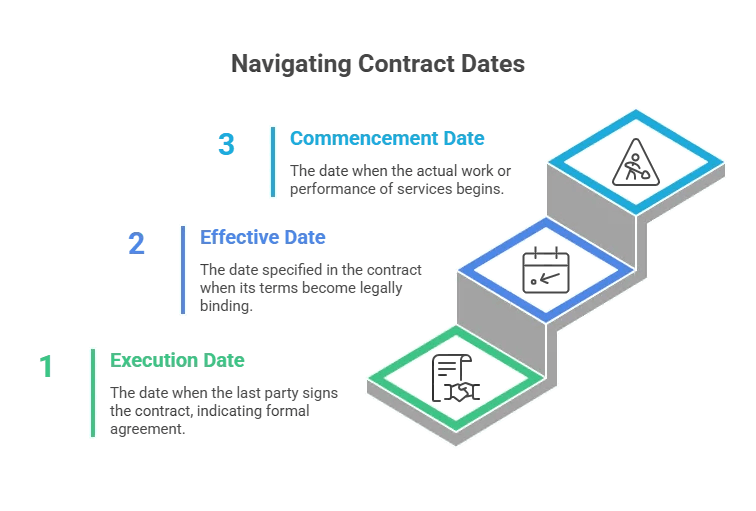
People often confuse three important dates in a contract: the execution date, the effective date, and the commencement date. While they can sometimes be the same, they each have a distinct purpose. The execution date is the date of signing, while the effective date is when the contract becomes legally active.
Understanding these differences is crucial for legal teams and anyone managing contracts. Getting them wrong can lead to serious misunderstandings about when obligations begin. The following sections will explain each of these dates in more detail.
The difference between effective date and execution date
The main difference between the effective date and the execution date of a contract is their function. The execution date is the day the parties physically or digitally sign the document, showing their agreement to its terms. It is proof that a deal has been made.
In contrast, the effective date of a contract is when the rights and responsibilities in that agreement actually begin. This date is what makes the contract legally operational. A contract might be signed in January (execution date) but not become effective until March (effective date). Seeking legal advice can help clarify which date applies to your specific obligations.
Here is a simple breakdown of the two dates:
Date Type | Definition |
|---|---|
Execution Date | The date when the last party signs the contract, indicating formal agreement to the terms. |
Effective Date | The date specified in the contract when its terms become legally binding and enforceable. |
The commencement date: meaning and usage
The commencement date refers to the day when the actual work or performance of services under a contract begins. While it often aligns with the effective date, it can be different. For example, the legal obligations of a contract might start on 1st May (effective date), but the physical work might not start until 15th May (commencement date).
This distinction is particularly useful in project management and construction contracts. It allows time for preparation, such as ordering materials or assembling a team, after the contract is legally active but before the period of performance starts. The commencement date marks the operational start, while the effective date marks the legal start.
In many business agreements, the terms "effective date" and "commencement date" are used interchangeably to mean the same thing: the start of all contract activities. However, when they are defined as separate dates, it is important to understand what each one triggers.
Related Article: AI CLM in Construction: Boost Efficiency & Compliance
Importance of Specifying the Effective Date

Specifying the effective date in a contract is essential for clarity and legal certainty. It establishes a clear starting line for all contractual obligations, which helps prevent legal disputes down the road. Without a specified date, parties might disagree on when their duties were supposed to begin.
This clarity is vital for contract enforcement, risk management, and compliance reporting. A well-defined effective date ensures that everyone involved is on the same page from day one. Let’s explore how this date affects your rights and the contract's enforceability.
Impact on the start of rights and obligations
The effective date is the switch that turns on a contract's rights and obligations. It is the moment the contractual relationship officially begins, and from this point, both parties are legally bound to perform their duties. This has a direct impact on several key areas of the agreement.
For instance, this date determines when payment cycles start, when service level agreements (SLAs) become active, and when liability periods commence. A clear date reduces risk exposure by ensuring that neither party acts too early or too late. It provides certainty for financial reporting and planning.
Key impacts of the effective date include:
Performance Timelines: It sets the clock for all deadlines and milestones mentioned in the contract.
Payment Schedules: Billing and payment obligations are triggered from this date.
Liability and Warranties: The start of warranty periods and limitations of liability are measured from the effective date.
Consequences for contract enforcement
A clearly stated effective date is fundamental for contract enforcement. If a dispute arises, this date serves as the primary evidence for when the agreement’s terms became active. Without it, it can be difficult to prove when a party was supposed to start fulfilling their obligations.
This ambiguity can weaken the legal validity of the contract. For example, if you need to take action for a breach of the contract, you must be able to show that the breach occurred after the contract was legally in effect. An unclear or missing effective date gives the other party room to argue about when their duties began.
Ultimately, specifying the effective date strengthens your position in any dispute resolution process. It provides the court or arbitrator with a clear, undisputed timeline, making it much easier to enforce your rights and hold the other party accountable.
Related Article: Breach of Contract: Master How to Resolve Legal Disputes
Setting the Right Contract Effective Date

Setting the right contract effective date is a strategic decision, not just an administrative task. This specific date should be chosen carefully to align with your business needs and project timelines. It acts as a crucial reference point throughout the contract lifecycle management process.
Good contract management involves thinking ahead and defining clear dates from the start. This ensures the contract terms are practical and reflect the true intentions of both parties. The following best practices will help you choose the right date for your agreements.
Choosing an appropriate effective date
Choosing an appropriate effective date requires considering the specific needs of your agreement. It shouldn't be an arbitrary choice. You might select a future date to allow for preparation time or a past date to cover work that has already started. The goal is to ensure the date aligns with the reality of the transaction.
When negotiating, think about what makes the most sense for both parties. For instance, aligning the date with the start of a new fiscal year could simplify accounting. Discussing and agreeing on clear dates upfront can prevent confusion and build a stronger business relationship. If you are unsure, seeking legal advice is always a good idea.
Consider the following when choosing a date:
Project Timelines: Does the date give enough time for teams to prepare before work begins?
Payment Schedules: Does the date align with your company's billing or financial reporting cycles?
Regulatory Deadlines: Are there any external deadlines that the contract needs to meet?
Can the effective date differ from the signing date?
Yes, the effective date can absolutely differ from the signing date, which is also known as the execution date. It is common for these two dates to be different, and a contract can be structured to become effective before or after it is signed.
A contract might have an effective date set for a later date to give parties time to prepare for their obligations. For example, an employment contract might be signed in May but have an effective date of 1st July to match the employee's start date. This is useful when planning for future projects or partnerships.
Conversely, a contract can be backdated to have an effective date that is earlier than the signing date. This is often done to formally cover work or services that began before the final agreement was signed. This is legally valid as long as both parties agree to it.
Related Article: Contract Expiration Date: Top Strategies for Contract Expiry
Common Mistakes and How to Avoid Them

Several common mistakes can occur when setting a contract effective date. These include using overlapping dates, failing to specify a date, or using retroactive dates without clear agreement. Such errors can create confusion, increase risk exposure, and lead to problems with compliance reporting.
For legal teams and contract managers, being aware of these pitfalls is crucial. By implementing careful contract management practices, you can avoid these mistakes and ensure your agreements are clear and enforceable. The next sections will cover these common errors in more detail.
Overlapping or missing effective and execution dates
One of the most frequent mistakes is confusing the effective date with the execution date or leaving the effective date out entirely. Many people assume a contract becomes active the moment it is signed, but this is not always true and can lead to major issues.
If a contract does not specify an effective date, a court will typically assume it is the execution date. However, this may not reflect what the parties intended. This ambiguity can cause disputes, especially if one party started performing their duties with a different start date in mind.
To avoid this, always state the effective date explicitly in your contracts. This simple step in your contract management process removes all doubt and ensures both parties share the same understanding of when their obligations begin. It is especially important in agreements like insurance contracts, where coverage periods must be precise.
Pitfalls with retroactive or unclear dates
Using retroactive dates, or backdating a contract, comes with its own set of pitfalls if not handled carefully. While legally permissible with mutual consent, it can lead to legal disputes if one party later claims they did not agree to the backdating. The key is to have clear, documented proof of agreement from both sides.
Unclear dates create uncertainty around the obligations of the parties. This ambiguity can complicate compliance reporting and make it difficult to manage the contract effectively. Using contract management software can help flag contracts with unclear or risky date clauses, allowing you to address them proactively.
To avoid these pitfalls, you should:
Always document the mutual agreement to any retroactive dates in writing.
Ensure the effective date is explicitly stated and easy to find.
Avoid language that could be interpreted in more than one way.
Conclusion
In summary, understanding the concept of the contract effective date is crucial for anyone involved in legal agreements. It sets the stage for when rights and obligations commence, impacting the enforcement of the contract itself. By specifying the effective date clearly and avoiding common pitfalls, parties can minimise misunderstandings and ensure smooth execution of their agreements. Whether you are drafting a contract or reviewing one, keep this essential element in mind to safeguard your interests and uphold the integrity of your agreements. For further insights and assistance on contracts, consider reaching out for a free consultation tailored to your needs.
Frequently Asked Questions
Can a contract be enforced before its effective date?
No, a contract generally cannot be enforced before its effective date. The legal validity of the contract and the obligations of the parties only begin on this specified date. Any actions taken before this point are typically not covered by the contract’s terms, according to contract law.
Are there legal requirements for stating the effective date in India?
While general principles of contract law apply globally, specific legal obligations for stating an effective date can vary by jurisdiction. In India, it is always a best practice to clearly define the date to avoid ambiguity. For specific compliance reporting requirements, consulting with a local legal expert is recommended.
What is the best practice for referencing the effective date in a contract?
The best practice is to explicitly state the effective date in the opening section or a dedicated duration clause of the contract. This makes it a clear reference point. Good contract management also involves highlighting this date in a summary sheet so it is visible without reading the entire document.
About the Company

Volody AI CLM is an Agentic AI-powered Contract Lifecycle Management platform designed to eliminate manual contracting tasks, automate complex workflows, and deliver actionable insights. As a one-stop shop for all contract activities, it covers drafting, collaboration, negotiation, approvals, e-signature, compliance tracking, and renewals. Built with enterprise-grade security and no-code configuration, it meets the needs of the most complex global organizations. Volody AI CLM also includes AI-driven contract review and risk analysis, helping teams detect issues early and optimize terms. Trusted by Fortune 500 companies, high-growth startups, and government entities, it transforms contracts into strategic, data-driven business assets.







" height="216.72211px" id="FYO0bO80Y" transform="translate(3 6.105)" width="206.073px"/><path d="M 108.174 222 C 88.432 222 70.303 217.239 53.785 207.717 C 37.267 198.196 24.173 185.052 14.504 168.285 C 4.835 151.312 0 132.165 0 110.845 C 0 89.731 4.835 70.792 14.504 54.025 C 24.173 37.052 37.267 23.804 53.785 14.282 C 70.303 4.761 88.432 0 108.174 0 C 128.116 0 146.246 4.761 162.562 14.282 C 179.08 23.804 192.073 37.052 201.541 54.025 C 211.21 70.792 216.044 89.731 216.044 110.845 C 216.044 132.165 211.21 151.312 201.541 168.285 C 192.073 185.052 179.08 198.196 162.562 207.717 C 146.044 217.239 127.915 222 108.174 222 Z M 108.174 183.189 C 120.864 183.189 132.044 180.291 141.713 174.495 C 151.382 168.492 158.936 160.006 164.375 149.035 C 169.814 138.064 172.533 125.334 172.533 110.845 C 172.533 96.355 169.814 83.729 164.375 72.965 C 158.936 61.994 151.382 53.611 141.713 47.815 C 132.044 42.02 120.864 39.122 108.174 39.122 C 95.483 39.122 84.202 42.02 74.332 47.815 C 64.663 53.611 57.109 61.994 51.67 72.965 C 46.231 83.729 43.511 96.355 43.511 110.845 C 43.511 125.334 46.231 138.064 51.67 149.035 C 57.109 160.006 64.663 168.492 74.332 174.495 C 84.202 180.291 95.483 183.189 108.174 183.189 Z" fill="rgba(255, 255, 255, 0.12)" height="222px" id="aa1McFcE9" transform="translate(227.183 3)" width="216.04399999999998px"/><path d="M 42.302 182.257 L 111.799 182.257 L 111.799 216.722 L 0 216.722 L 0 0 L 42.302 0 Z" fill="rgba(255, 255, 255, 0.12)" height="216.72211px" id="yRq4AnrsX" transform="translate(477.721 6.105)" width="111.79899999999998px"/><path d="M 108.174 222 C 88.432 222 70.303 217.239 53.785 207.717 C 37.267 198.196 24.173 185.052 14.504 168.285 C 4.835 151.312 0 132.165 0 110.845 C 0 89.731 4.835 70.792 14.504 54.025 C 24.173 37.052 37.267 23.804 53.785 14.282 C 70.303 4.761 88.432 0 108.174 0 C 128.116 0 146.246 4.761 162.562 14.282 C 179.08 23.804 192.073 37.052 201.541 54.025 C 211.21 70.792 216.045 89.731 216.045 110.845 C 216.045 132.165 211.21 151.312 201.541 168.285 C 192.073 185.052 179.08 198.196 162.562 207.717 C 146.044 217.239 127.915 222 108.174 222 Z M 108.174 183.189 C 120.864 183.189 132.044 180.291 141.713 174.495 C 151.382 168.492 158.936 160.006 164.375 149.035 C 169.814 138.064 172.534 125.334 172.534 110.845 C 172.534 96.355 169.814 83.729 164.375 72.965 C 158.936 61.994 151.382 53.611 141.713 47.815 C 132.044 42.02 120.864 39.122 108.174 39.122 C 95.483 39.122 84.202 42.02 74.332 47.815 C 64.663 53.611 57.108 61.994 51.67 72.965 C 46.231 83.729 43.511 96.355 43.511 110.845 C 43.511 125.334 46.231 138.064 51.67 149.035 C 57.108 160.006 64.663 168.492 74.332 174.495 C 84.202 180.291 95.483 183.189 108.174 183.189 Z" fill="rgba(255, 255, 255, 0.12)" height="222px" id="mo8HQspQ0" transform="translate(609.155 3)" width="216.04500000000007px"/><path d="M 73.727 0 C 95.885 0 115.324 4.45 132.044 13.351 C 148.967 22.252 161.957 34.982 171.027 51.541 C 180.287 67.894 184.917 86.937 184.917 108.671 C 184.917 130.405 180.287 149.449 171.027 165.801 C 161.957 181.947 148.967 194.47 132.044 203.371 C 115.324 212.271 95.885 216.722 73.727 216.722 L 0 216.722 L 0 0 Z M 72.216 179.773 C 94.374 179.773 111.497 173.564 123.583 161.144 C 135.669 148.724 141.713 131.233 141.713 108.671 C 141.713 86.109 135.669 68.515 123.583 55.888 C 111.497 43.055 94.374 36.638 72.216 36.638 L 42.302 36.638 L 42.302 179.773 Z" fill="rgba(255, 255, 255, 0.12)" height="216.72211px" id="I3iXX5Hi_" transform="translate(859.693 6.105)" width="184.91699999999992px"/><path d="M 185.22 0 L 113.91 141.273 L 113.91 216.722 L 71.61 216.722 L 71.61 141.273 L 0 0 L 47.74 0 L 93.06 99.046 L 138.08 0 Z" fill="rgba(255, 255, 255, 0.12)" height="216.72211px" id="nzHyWC0_d" transform="translate(1061.78 6.105)" width="185.22000000000003px"/></svg>)