

Key Highlights
A systematic contract review process is crucial for protecting your business from financial risks and poor contract management.
Creating a playbook with standard clauses ensures consistency and speeds up the review of business contracts.
AI contract review solutions and other tools automate risk assessment and allow teams to focus on high-value negotiations.
Collaboration between legal and business teams is essential for aligning agreements with operational goals.
Integrating a legal AI assistant streamlines the entire contract review process, from initial drafting to final approval.
Introduction
Finalising an important business deal, only to discover an overlooked clause that exposes your company to risk, is a nightmare scenario. A thorough business contract review is your safety net. It is more than just a legal formality; it’s a critical practice for risk management and operational efficiency throughout the contract lifecycle management. A proper contract review process ensures agreements align with your organisation’s goals, protecting you from misunderstandings, financial losses, and legal disputes.
Top 10 Things to Watch in Contract Review for 2026
As we look towards 2026, the contract review process is becoming more dynamic and technology-driven. Staying ahead means understanding where to focus your attention to protect your business interests and minimise potential risks. It's about being proactive, not just reactive.
From identifying critical clauses to leveraging AI, a modern legal review involves a multi-faceted approach. This guide will walk you through the top ten areas to watch, helping you navigate the complexities of agreements with confidence and efficiency. Let's explore the key aspects you need to master.
1. Identifying Critical Clauses in Business Agreements
The first step in any effective review is to pinpoint the critical clauses within business contracts. These are the sections that carry the most weight and potential impact on your organisation. Key terms related to payment, liability, and termination rights demand careful scrutiny.
Understanding these core contract terms is fundamental. A clause-by-clause analysis helps you dive deeper into each section, looking for any unusual or non-standard language that could pose a risk. This detailed examination ensures that the agreements content aligns with your business goals.
By focusing on these critical areas early in the contract lifecycle, you can prepare for negotiations and avoid future disputes. It’s about creating a clear foundation that protects all parties and supports a healthy business relationship.
2. Assessing Risk Allocation and Liability Provisions
A crucial part of contract review is a thorough risk assessment, especially concerning how risk is allocated between parties. You need to evaluate the liability provisions to understand the potential risks you are accepting. This involves identifying clauses that could expose your business to excessive financial or legal burdens.
Setting clear risk thresholds is vital. This helps your team know what is acceptable and what requires negotiation. Key liability provisions to watch for include:
Indemnification clauses that outline who pays for losses.
Limitations of liability that cap the amount of damages one party can claim.
By carefully assessing these areas, you can make informed decisions and protect your organisation from unforeseen consequences. This proactive approach to reviewing liability provisions ensures that the agreement is balanced and fair, aligning with your company's risk tolerance.
3. Ensuring Compliance with Regulatory Changes
In an ever-evolving legal landscape, ensuring compliance with all applicable laws is paramount. Contracts must adhere to current regulations, and with frequent regulatory changes, staying updated is a significant challenge. A failure to comply can result in severe penalties and legal disputes.
Your contract review process must include a step to verify that the agreement meets all relevant legal requirements. This often requires legal expertise to interpret how new laws, especially those related to data privacy or industry-specific regulations, affect your contracts.
Keeping an eye on regulatory changes is not a one-time task. It requires continuous monitoring to ensure that your contracts remain compliant throughout their lifecycle. This vigilance protects your business from legal risks and helps maintain a strong reputation.
4. Reviewing Payment Terms and Financial Obligations
The financial aspects of a contract are often the most critical. Carefully reviewing payment terms and other financial obligations ensures that the agreement is commercially viable and aligns with your financial planning. Ambiguous or unfavourable terms can lead to cash flow problems and disputes.
Using a contract review checklist can help you systematically examine all financial clauses. During contract negotiation, pay close attention to the details of these obligations. Key areas to scrutinise include:
Payment schedules, amounts, and methods.
Triggers for payment, such as milestones.
Penalties for late payments or discounts for early ones.
Any hidden costs or fees.
A thorough review of these elements prevents financial surprises and ensures that both parties have a clear understanding of their commitments. This clarity is essential for a smooth and successful business relationship.
5. Verifying Termination and Renewal Conditions
Understanding how a agreements can end is just as important as knowing how it begins. Verifying termination clauses and renewal terms is a critical part of the review process. These clauses define the exit strategy and can prevent you from being locked into an unfavourable agreement.
Look closely at the conditions for termination, including notice periods and any triggers for an early exit. Similarly, auto-renewal terms can be a trap if not managed properly, leading to unintended contract extensions. Effective contract lifecycle management requires tracking these dates and conditions meticulously.
If the language in these clauses is complex or unclear, seeking advice from legal counsel is a wise move. A clear understanding of your rights and obligations regarding termination and renewal empowers you to manage the contract's lifecycle effectively and protect your business interests.
6. Checking Intellectual Property and Confidentiality Clauses
In today's information-driven economy, protecting your intellectual property (IP) and confidential information is non-negotiable. Your contract review process must include a rigorous check of clauses related to these valuable assets. These provisions safeguard your unique ideas, data, and trade secrets from misuse or unauthorised disclosure.
When reviewing, ensure that the definitions of "intellectual property" and "confidential information" are broad enough to cover all your sensitive data. Verify that ownership rights are clearly stated and that any usage rights granted to the other party are precisely defined and limited.
Failing to secure these clauses can have devastating consequences for your business interests. A thorough review ensures that your most valuable intangible assets are protected, maintaining your competitive edge and preventing potential legal battles over ownership and confidentiality.
Related Articles: Key License Agreement Clauses to Protect Your IP
7. Detecting Common Red Flags in Agreement Review
One of the common challenges in contract review is spotting red flags that signal potential issues or unexpected contractual risks. Being able to detect these warning signs during a first pass can save significant time and prevent future problems. Vague language, one-sided terms, and missing clauses are all common indicators that a agreements needs a closer look.
Some of the most frequent red flags that should immediately grab your attention include:
Unlimited liability provisions.
Ambiguous scope of work or deliverables.
Unfavourable termination or auto-renewal clauses.
Lack of a clear dispute resolution mechanism.
Identifying these red flags early allows you to address them during negotiations. Developing an eye for these potential pitfalls is a key skill that helps protect your organisation from hidden risks and ensures the agreements you sign are fair and balanced.
8. Integrating AI Contract Review Tools for Efficiency
Manual contract review is time-consuming and prone to human error. By 2026, integrating AI contract review tools will be standard practice for efficient legal departments. This technology automates the tedious parts of the review process, allowing your team to accomplish more in less time.
AI-powered contract review software can scan documents in seconds, flagging risky clauses, identifying deviations from your standard templates, and extracting key data points. This leads to faster reviews without sacrificing accuracy. A legal AI assistant can handle the first pass, freeing up legal professionals to focus on strategic analysis and negotiation.
By embracing these tools, you can dramatically accelerate your review cycles. The result is a more streamlined workflow, reduced risk of oversight, and a legal team that can operate as a strategic partner to the business rather than a bottleneck.
9. Tracking Document Review Workflow and Approvals
A disorganised review process leads to delays and confusion. Tracking the contract review workflow and approvals is essential for efficient business contract review. A clear system ensures that agreements move smoothly from one stage to the next, with all necessary stakeholders providing their input in a timely manner.
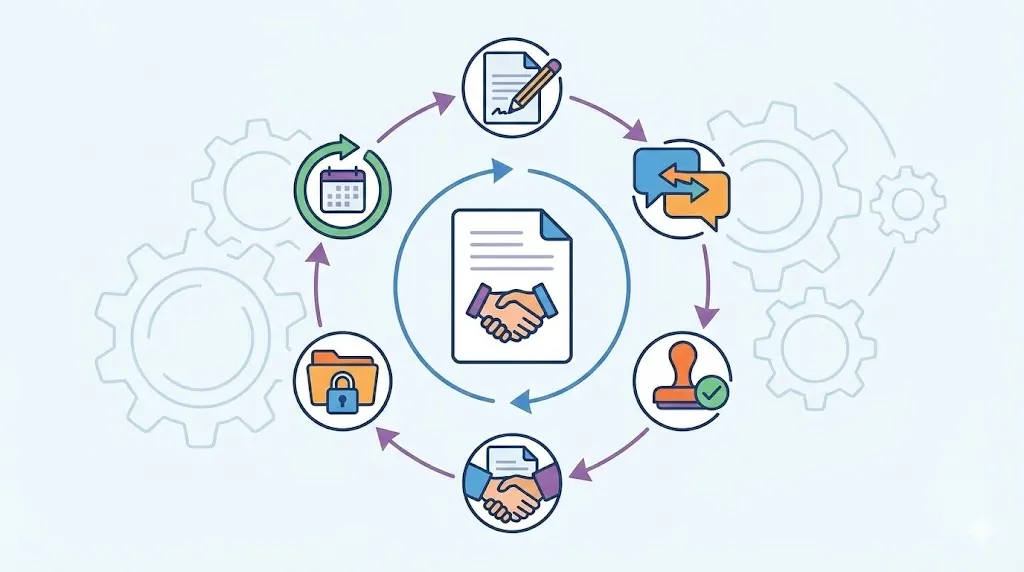
Implementing a structured workflow helps manage the entire contract lifecycle, from initial draft to final signature. This includes routing the document to the right people for review and approval. An organised document management system prevents versions from getting lost in email chains and provides a clear audit trail. A typical workflow might look like this:
Stage | Responsible Party | Action |
|---|---|---|
1. Draft | Business Team | Create initial contract draft. |
2. Legal Review | Legal Department | Review for risk and compliance. |
3. Finance Review | Finance Team | Check payment terms. |
4. Final Approval | Executive | Sign off on the final version. |
This systematic approach ensures that every contract is thoroughly vetted by all relevant parties before execution, improving both speed and quality.
10. Maintaining Version Control and Audit Trails
Without proper version control, agreements negotiations can quickly descend into chaos. Working from an outdated draft is a common mistake that leads to confusion, delays, and the risk of signing the wrong version of an agreement. Maintaining a clear system for tracking changes is fundamental to effective management.
Implementing a strict version control protocol ensures that everyone is always working on the most current document. This could be a simple naming convention or, ideally, a feature within your contract management software. Every change, comment, and revision should be tracked.
Furthermore, maintaining complete audit trails is crucial for compliance and dispute resolution. An audit trail provides a historical record of the entire and negotiation process, showing who made what changes and when. This transparency is invaluable for accountability and serves as a key item on any contract review checklist.
Related Article: How to Review a Contract: 10 Tips for successful Contract
Key Steps in an Effective Contract Review Process
An effective contract review process is more than just reading a document; it's a systematic procedure designed to protect your organisation. Following a structured set of steps ensures that no detail is overlooked and that every agreement aligns with your business objectives. This approach turns legal review from a potential bottleneck into a strategic advantage.
By breaking the review process down into manageable stages, from initial preparation to final approval, you can ensure consistency and thoroughness. Using an agreement review checklist as a guide, your team can confidently navigate even the most complex agreements. The following sections will explore these key steps in greater detail.
Outlining the Agreement Review Checklist
A well-structured contract review checklist is an invaluable tool for any legal department. It provides a consistent starting point for every review, ensuring that all key points are scrutinised and nothing falls through the cracks. This checklist serves as a roadmap, guiding reviewers through the critical elements of an agreement.
Creating a comprehensive checklist forces a methodical approach. It standardises the review process across your team, which is especially useful for training new members and ensuring quality control. The checklist should be tailored to different contract types but will generally include core items. Key points to include are:
Verification of all parties' legal names and details.
Clarity of scope, deliverables, and timelines.
Scrutiny of payment terms, liability, and indemnification.
Confirmation of termination and renewal conditions.
Compliance with applicable laws and company policies.
Think of the agreement review checklist not as a rigid set of rules, but as a flexible guide that ensures a thorough and efficient review every time.
Related Articles: 10 Tips for Contract Negotiation : Strategies Toward Success
Analysing Parties’ Roles and Responsibilities
Beyond a simple legal formality, a clear understanding of the parties' roles and responsibilities is at the heart of any successful business contract. A thorough analysis of these sections is essential to prevent future misunderstandings and disputes. The agreements should explicitly state what each party is expected to do, deliver, and be accountable for.
Vague or poorly defined responsibilities are a recipe for trouble. Your review should confirm that the language used is precise and unambiguous. Are the deliverables clearly described? Are the timelines and milestones realistic and clearly articulated?
This detailed analysis ensures that the agreements accurately reflects the operational reality of the agreement. By confirming that all parties' roles are well-defined, you lay the groundwork for a smooth partnership and ensure that the contract is not just a document, but a practical guide for the business relationship.
Evaluating Dispute Resolution Mechanisms
While everyone hopes for a smooth contractual relationship, it is wise to prepare for potential disagreements. Evaluating the dispute resolution mechanisms within a agreements is a critical component of any legal review. This clause dictates how conflicts will be handled, which can have significant implications for time, cost, and business relationships.
The chosen dispute resolution mechanisms can vary depending on the contract type and the nature of the relationship. Common options include mediation, arbitration, or litigation. Your review should assess whether the selected method is appropriate and favourable for your organisation. Pay attention to details like the governing law and jurisdiction, as these determine which laws and courts will apply.
A well-drafted clause provides a clear, structured path for resolving conflicts, reducing uncertainty and potential hostility. By proactively evaluating these terms, you can ensure that if a dispute does arise, you have a fair and efficient process to follow.
Document Review for Consistency and Accuracy
A thorough contract review must include a final check for consistency and accuracy across the entire agreement. Inconsistencies between different clauses, or between the main body and its attachments, can create ambiguity and lead to disputes. This careful review ensures that the functions as a cohesive, logical whole.
During this stage of the legal review, check that all dates, names, and figures are correct and consistent throughout the document. Verify that all referenced attachments and schedules are included and accurate. It is easy for errors to creep in during drafting and negotiation, and this final pass is your opportunity to catch them.
This meticulous examination confirms that the document represents the "entire agreement" between the parties, with no conflicting terms or hidden contradictions. This commitment to accuracy and consistency is the hallmark of a professional and diligent contract review process.
Related Article: How to Review Contracts More Quickly and Effectively?
Leveraging Technology and AI in Contract Review
In 2026, leveraging technology is no longer optional—it's essential for a competitive contract review process. Contract review software and AI contract review solutions are transforming how businesses handle agreements, turning a traditionally manual and slow task into an efficient, data-driven operation. These tools are designed to enhance, not replace, human expertise.
By using AI-powered contract review tools, legal teams can automate tasks like the platform's extraction of key clauses and identification of risks. This allows professionals to focus on strategic advice and negotiation, adding more value to the business. The following sections will explore the specific role of AI and the benefits of these innovative solutions.
Role of AI Contract Review in 2026
By 2026, the role of AI contract review will have evolved from a novelty to a cornerstone of the modern contract review process. AI will not just be about speed; it will be about intelligence and providing deeper insights. Legal professionals will use AI as a collaborative partner to enhance their analytical capabilities.
Technologies like conversational search will allow legal professionals to ask complex questions about their contract portfolio and receive instant, accurate answers. For instance, you could ask, "Show me all unlimited liability clauses that renew in the next 90 days." This level of accessibility transforms how legal teams manage risk and identify opportunities.
AI will handle the repetitive, low-value work, such as initial document screening and data extraction. This empowers legal professionals to dedicate their time to high-stakes negotiation, strategic counselling, and complex problem-solving, ultimately making the entire contract review process more efficient and impactful.
Benefits of Contract Review Software for Indian Businesses
For Indian businesses, especially small businesses and startups, contract review software offers a significant competitive advantage. It levels the playing field by providing access to sophisticated tools that were once only available to large corporations with extensive legal departments. This technology helps reduce legal costs and improve operational efficiency.
By automating parts of the review process, this software allows businesses to handle a higher volume of agreements without increasing headcount. This leads to faster deal cycles and quicker revenue recognition. Key benefits for Indian businesses include:
Reduced reliance on expensive external legal counsel for routine reviews.
Improved ability to negotiate for better terms by quickly identifying non-standard clauses.
Enhanced compliance with India's complex and evolving regulatory landscape.
Democratisation of legal knowledge, empowering business teams to handle simple contracts confidently.
Ultimately, contract review software enables businesses to manage risk more effectively and secure more favourable agreements, contributing directly to their growth and success.
How to Implement AI-Powered Contract Review Solutions
Implementing AI-powered contract review solutions requires a thoughtful and strategic approach. It's not just about purchasing software; it's about integrating the right tools into your existing workflows and ensuring adoption across both your legal team and relevant business teams. The goal is to create a seamless process that enhances collaboration and efficiency.
Start by identifying your specific needs and pain points. Are you struggling with volume, speed, or consistency? This will help you choose a solution with the right features. Involve key stakeholders from the beginning, including legal, procurement, sales, and IT, to ensure the chosen tool meets everyone's requirements.
Proper training and change management are crucial for a successful rollout. Show your teams how the new solution will make their jobs easier, not more complicated. Start with a pilot project to demonstrate value and work out any kinks before a full-scale implementation. A phased approach ensures a smoother transition and greater long-term success.
Conclusion
In conclusion, staying ahead in contract review for 2026 means being vigilant about the evolving landscape of legal agreements. From identifying critical clauses to integrating AI tools, the items on our list serve as essential focal points for legal professionals and businesses alike. As regulations and technologies continue to change, adapting your contract review practices will not only mitigate risks but also enhance efficiency. By keeping these top 10 things in mind, you can ensure that your approach to contract review is thorough and well-informed. If you want to refine your contract review process further, don't hesitate to get a free consultation with our experts to explore tailored strategies for your needs.
Frequently Asked Questions
What should I look for when reviewing a contract to avoid mistakes?
To avoid mistakes, focus on key terms like payment, liability, and termination. The review process should identify potential risks, unclear language, and unfavourable clauses. A thorough legal review ensures the agreement is fair, clear, and aligns with your business goals before you sign.
How does AI contract review improve document review processes?
AI contract review tools automate the analysis of agreements, leading to faster. This software can instantly flag risky clauses, extract key data, and compare versions, improving document management. This frees up legal professionals to focus on strategic tasks rather than manual, repetitive work.
Are there best practices for agreement review in 2026?
Yes, best practices for 2026 include using a contract review checklist, leveraging AI tools for efficiency, and ensuring close collaboration between legal and business teams. A meticulous contract review, combining legal expertise with effective contract management technology, will be the standard for success.
What are the most common pitfalls to avoid during contract review in 2026?
Common pitfalls include overlooking vague language, accepting one-sided liability clauses, and failing to spot hidden risks in complex agreements. Rushing the contract negotiation process without a thorough review can expose you to potential issues and unexpected risks down the line. Always take the time for a careful review.
About the Company

Volody AI CLM is an Agentic AI-powered Contract Lifecycle Management platform designed to eliminate manual contracting tasks, automate complex workflows, and deliver actionable insights. As a one-stop shop for all contract activities, it covers drafting, collaboration, negotiation, approvals, e-signature, compliance tracking, and renewals. Built with enterprise-grade security and no-code configuration, it meets the needs of the most complex global organizations. Volody AI CLM also includes AI-driven contract review and risk analysis, helping teams detect issues early and optimize terms. Trusted by Fortune 500 companies, high-growth startups, and government entities, it transforms contracts into strategic, data-driven business assets.




" height="216.72211px" id="FYO0bO80Y" transform="translate(3 6.105)" width="206.073px"/><path d="M 108.174 222 C 88.432 222 70.303 217.239 53.785 207.717 C 37.267 198.196 24.173 185.052 14.504 168.285 C 4.835 151.312 0 132.165 0 110.845 C 0 89.731 4.835 70.792 14.504 54.025 C 24.173 37.052 37.267 23.804 53.785 14.282 C 70.303 4.761 88.432 0 108.174 0 C 128.116 0 146.246 4.761 162.562 14.282 C 179.08 23.804 192.073 37.052 201.541 54.025 C 211.21 70.792 216.044 89.731 216.044 110.845 C 216.044 132.165 211.21 151.312 201.541 168.285 C 192.073 185.052 179.08 198.196 162.562 207.717 C 146.044 217.239 127.915 222 108.174 222 Z M 108.174 183.189 C 120.864 183.189 132.044 180.291 141.713 174.495 C 151.382 168.492 158.936 160.006 164.375 149.035 C 169.814 138.064 172.533 125.334 172.533 110.845 C 172.533 96.355 169.814 83.729 164.375 72.965 C 158.936 61.994 151.382 53.611 141.713 47.815 C 132.044 42.02 120.864 39.122 108.174 39.122 C 95.483 39.122 84.202 42.02 74.332 47.815 C 64.663 53.611 57.109 61.994 51.67 72.965 C 46.231 83.729 43.511 96.355 43.511 110.845 C 43.511 125.334 46.231 138.064 51.67 149.035 C 57.109 160.006 64.663 168.492 74.332 174.495 C 84.202 180.291 95.483 183.189 108.174 183.189 Z" fill="rgba(255, 255, 255, 0.12)" height="222px" id="aa1McFcE9" transform="translate(227.183 3)" width="216.04399999999998px"/><path d="M 42.302 182.257 L 111.799 182.257 L 111.799 216.722 L 0 216.722 L 0 0 L 42.302 0 Z" fill="rgba(255, 255, 255, 0.12)" height="216.72211px" id="yRq4AnrsX" transform="translate(477.721 6.105)" width="111.79899999999998px"/><path d="M 108.174 222 C 88.432 222 70.303 217.239 53.785 207.717 C 37.267 198.196 24.173 185.052 14.504 168.285 C 4.835 151.312 0 132.165 0 110.845 C 0 89.731 4.835 70.792 14.504 54.025 C 24.173 37.052 37.267 23.804 53.785 14.282 C 70.303 4.761 88.432 0 108.174 0 C 128.116 0 146.246 4.761 162.562 14.282 C 179.08 23.804 192.073 37.052 201.541 54.025 C 211.21 70.792 216.045 89.731 216.045 110.845 C 216.045 132.165 211.21 151.312 201.541 168.285 C 192.073 185.052 179.08 198.196 162.562 207.717 C 146.044 217.239 127.915 222 108.174 222 Z M 108.174 183.189 C 120.864 183.189 132.044 180.291 141.713 174.495 C 151.382 168.492 158.936 160.006 164.375 149.035 C 169.814 138.064 172.534 125.334 172.534 110.845 C 172.534 96.355 169.814 83.729 164.375 72.965 C 158.936 61.994 151.382 53.611 141.713 47.815 C 132.044 42.02 120.864 39.122 108.174 39.122 C 95.483 39.122 84.202 42.02 74.332 47.815 C 64.663 53.611 57.108 61.994 51.67 72.965 C 46.231 83.729 43.511 96.355 43.511 110.845 C 43.511 125.334 46.231 138.064 51.67 149.035 C 57.108 160.006 64.663 168.492 74.332 174.495 C 84.202 180.291 95.483 183.189 108.174 183.189 Z" fill="rgba(255, 255, 255, 0.12)" height="222px" id="mo8HQspQ0" transform="translate(609.155 3)" width="216.04500000000007px"/><path d="M 73.727 0 C 95.885 0 115.324 4.45 132.044 13.351 C 148.967 22.252 161.957 34.982 171.027 51.541 C 180.287 67.894 184.917 86.937 184.917 108.671 C 184.917 130.405 180.287 149.449 171.027 165.801 C 161.957 181.947 148.967 194.47 132.044 203.371 C 115.324 212.271 95.885 216.722 73.727 216.722 L 0 216.722 L 0 0 Z M 72.216 179.773 C 94.374 179.773 111.497 173.564 123.583 161.144 C 135.669 148.724 141.713 131.233 141.713 108.671 C 141.713 86.109 135.669 68.515 123.583 55.888 C 111.497 43.055 94.374 36.638 72.216 36.638 L 42.302 36.638 L 42.302 179.773 Z" fill="rgba(255, 255, 255, 0.12)" height="216.72211px" id="I3iXX5Hi_" transform="translate(859.693 6.105)" width="184.91699999999992px"/><path d="M 185.22 0 L 113.91 141.273 L 113.91 216.722 L 71.61 216.722 L 71.61 141.273 L 0 0 L 47.74 0 L 93.06 99.046 L 138.08 0 Z" fill="rgba(255, 255, 255, 0.12)" height="216.72211px" id="nzHyWC0_d" transform="translate(1061.78 6.105)" width="185.22000000000003px"/></svg>)