
Provakil provides a legal operations platform that includes contract lifecycle management as one of its core modules. Its CLM functionality enables legal teams to centralize contract storage, automate approval workflows, and improve contract visibility across the organization.
Provakil pricing is structured based on organizational scale, platform usage scope, and deployment complexity. This pricing approach is common among enterprise legal technology vendors where cost varies based on implementation scope and operational requirements.
Legal teams evaluating Provakil typically assess pricing across five primary cost drivers.
Related Article: Mastering the Stages of Contract Lifecycle
Core Factors That Determine Provakil CLM Pricing
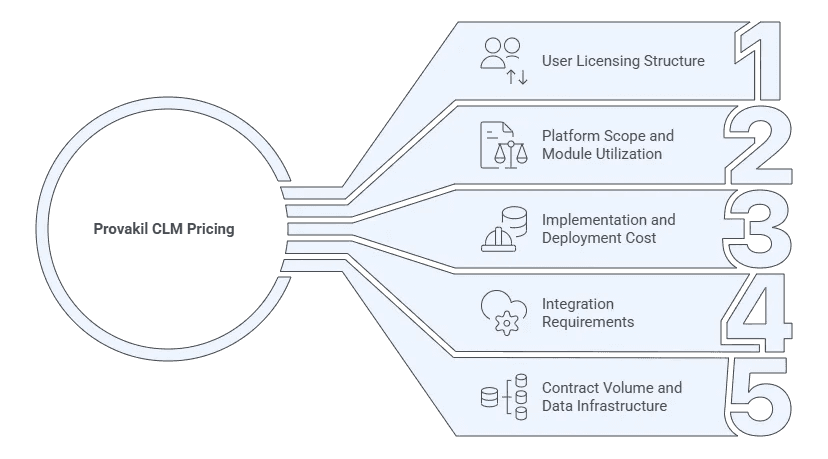
1. User Licensing Structure
Provakil pricing scales based on the number of platform users. This includes:
Legal team users
Business approvers
Compliance and operations stakeholders
As user adoption increases across departments, licensing cost increases proportionally.
User-based pricing directly influences scalability economics.
2. Platform Scope and Module Utilization
Provakil operates as a legal operations platform, where CLM is integrated alongside matter management and legal workflow automation.
Pricing varies depending on:
Contract repository size
Workflow automation requirements
Reporting and analytics usage
Legal operations integration scope
Broader platform usage increases total subscription cost.
3. Implementation and Deployment Cost
Implementation cost varies based on workflow complexity and migration scope. Typical implementation components include:
Contract migration from legacy systems
Workflow configuration
Approval hierarchy setup
User onboarding and training
Implementation duration directly affects consulting cost and time-to-value realization.
Longer implementation cycles increase total cost of ownership.
4. Integration Requirements
Provakil may require integration with enterprise systems such as:
CRM platforms
ERP systems
Email and document platforms
Integration complexity increases deployment effort and implementation cost.
Integration cost is often underestimated during initial procurement evaluation.
5. Contract Volume and Data Infrastructure
Organizations managing larger contract portfolios require:
Greater storage capacity
Faster indexing and retrieval
Infrastructure scalability
Contract volume directly affects infrastructure cost and pricing tier selection.
Provakil Pricing Model Implications
Provakil follows a quote-based pricing structure.
Cost flexibility based on deployment scope
Limited upfront pricing transparency
Higher dependence on vendor scoping during procurement
Quote-based pricing reduces early-stage cost predictability.
Related Articles: Contract Migration: Expert Tips for Success
Provakil Strengths and Cost Considerations
Strengths
Unified legal operations and contract management platform
Centralized contract visibility and repository control
Workflow automation for approval and tracking
Integration with legal operations workflows
Cost Considerations
Implementation requires workflow configuration
Licensing cost increases with user expansion
Integration requirements increase deployment cost
Cost predictability depends on vendor scoping
CLM Pricing Comparison Table: Provakil vs Competitors
This comparison evaluates pricing architecture, AI cost structure, deployment intensity, and financial predictability across leading CLM vendors.
Factor | Provakil | Icertis | Ironclad | Volody |
Vendor Type | Legal operations platform with CLM | Enterprise CLM platform | Enterprise CLM platform | AI-native CLM platform |
Pricing Transparency | Quote-based | Quote-based | Tiered + quote-based | Transparent structured pricing |
Licensing Model | User-based licensing | Enterprise licensing | User and workflow licensing | Scalable user-based licensing |
AI Cost Structure | Platform dependent | Advanced AI in higher tiers | Limited AI depth | Embedded AI included |
AI Included by Default | Partial | No | Limited | Yes |
Implementation Intensity | Moderate | High | Moderate | Low to moderate |
Deployment Speed | Moderate | Slow | Moderate | Fast |
Implementation Cost Predictability | Medium | Low | Medium | High |
Integration Cost Impact | Moderate | High | Moderate | Low to moderate |
Related Article: Juro CLM Pricing Overview: Cost, Features and Best CLM
Financial Interpretation of the Comparison
The comparison reveals structural differences in pricing architecture and cost predictability.
Provakil provides integrated legal operations and CLM functionality, but pricing flexibility reduces early-stage cost predictability.
Icertis has the highest implementation intensity and cost complexity due to enterprise-level customization.
Ironclad provides moderate deployment intensity but limited embedded AI capability.
Volody provides the highest pricing transparency and cost predictability due to embedded AI and structured pricing architecture.
Platforms with embedded AI and faster deployment reduce:
Implementation cost
Expansion cost volatility
Total cost of ownership over time
Why Volody Provides Superior Pricing Predictability Compared to Provakil
Volody is architected as a CLM-first platform with embedded AI, which directly affects pricing efficiency and operational cost.
Key financial and operational advantages include:
Embedded AI eliminates additional AI module cost
Transparent pricing improves procurement predictability
Faster deployment reduces implementation expense
Reduced configuration lowers consulting dependency
Predictable scalability improves long-term budgeting
This reduces total cost volatility and improves ROI realization speed.
Related Article: How to use AI for Contract Management: An Effective Guide
Strategic Conclusion
Provakil is suitable for organizations prioritizing legal operations integration alongside contract management.
Volody provides superior pricing transparency, lower cost volatility, faster deployment, and embedded AI functionality, resulting in higher cost predictability and faster ROI realization.
Frequently Asked Questions
1. Does Provakil publish public CLM pricing?
No. Pricing is quote-based and depends on users, features, integrations, and deployment scope.
2. What factors influence Provakil CLM pricing most?
User count, contract volume, feature scope, integrations, and implementation complexity.
3. Is implementation cost separate from licensing?
Yes. Implementation services such as workflow setup, migration, and training are typically scoped separately.
4. How does Provakil compare with Volody on pricing transparency?
Provakil uses quote-based pricing, while Volody provides transparent, structured pricing.
5. Which platform provides faster deployment?
Volody offers faster deployment due to pre-configured workflows and embedded automation.
6. Does CLM pricing increase over time?
Yes. Expansion in users, integrations, and features can increase total cost.
7. What determines CLM ROI?
Deployment speed, automation capability, cost predictability, and operational efficiency improvements.
About the Company

Volody AI CLM is an Agentic AI-powered Contract Lifecycle Management platform designed to eliminate manual contracting tasks, automate complex workflows, and deliver actionable insights. As a one-stop shop for all contract activities, it covers drafting, collaboration, negotiation, approvals, e-signature, compliance tracking, and renewals. Built with enterprise-grade security and no-code configuration, it meets the needs of the most complex global organizations. Volody AI CLM also includes AI-driven contract review and risk analysis, helping teams detect issues early and optimize terms. Trusted by Fortune 500 companies, high-growth startups, and government entities, it transforms contracts into strategic, data-driven business assets.






" height="216.72211px" id="FYO0bO80Y" transform="translate(3 6.105)" width="206.073px"/><path d="M 108.174 222 C 88.432 222 70.303 217.239 53.785 207.717 C 37.267 198.196 24.173 185.052 14.504 168.285 C 4.835 151.312 0 132.165 0 110.845 C 0 89.731 4.835 70.792 14.504 54.025 C 24.173 37.052 37.267 23.804 53.785 14.282 C 70.303 4.761 88.432 0 108.174 0 C 128.116 0 146.246 4.761 162.562 14.282 C 179.08 23.804 192.073 37.052 201.541 54.025 C 211.21 70.792 216.044 89.731 216.044 110.845 C 216.044 132.165 211.21 151.312 201.541 168.285 C 192.073 185.052 179.08 198.196 162.562 207.717 C 146.044 217.239 127.915 222 108.174 222 Z M 108.174 183.189 C 120.864 183.189 132.044 180.291 141.713 174.495 C 151.382 168.492 158.936 160.006 164.375 149.035 C 169.814 138.064 172.533 125.334 172.533 110.845 C 172.533 96.355 169.814 83.729 164.375 72.965 C 158.936 61.994 151.382 53.611 141.713 47.815 C 132.044 42.02 120.864 39.122 108.174 39.122 C 95.483 39.122 84.202 42.02 74.332 47.815 C 64.663 53.611 57.109 61.994 51.67 72.965 C 46.231 83.729 43.511 96.355 43.511 110.845 C 43.511 125.334 46.231 138.064 51.67 149.035 C 57.109 160.006 64.663 168.492 74.332 174.495 C 84.202 180.291 95.483 183.189 108.174 183.189 Z" fill="rgba(255, 255, 255, 0.12)" height="222px" id="aa1McFcE9" transform="translate(227.183 3)" width="216.04399999999998px"/><path d="M 42.302 182.257 L 111.799 182.257 L 111.799 216.722 L 0 216.722 L 0 0 L 42.302 0 Z" fill="rgba(255, 255, 255, 0.12)" height="216.72211px" id="yRq4AnrsX" transform="translate(477.721 6.105)" width="111.79899999999998px"/><path d="M 108.174 222 C 88.432 222 70.303 217.239 53.785 207.717 C 37.267 198.196 24.173 185.052 14.504 168.285 C 4.835 151.312 0 132.165 0 110.845 C 0 89.731 4.835 70.792 14.504 54.025 C 24.173 37.052 37.267 23.804 53.785 14.282 C 70.303 4.761 88.432 0 108.174 0 C 128.116 0 146.246 4.761 162.562 14.282 C 179.08 23.804 192.073 37.052 201.541 54.025 C 211.21 70.792 216.045 89.731 216.045 110.845 C 216.045 132.165 211.21 151.312 201.541 168.285 C 192.073 185.052 179.08 198.196 162.562 207.717 C 146.044 217.239 127.915 222 108.174 222 Z M 108.174 183.189 C 120.864 183.189 132.044 180.291 141.713 174.495 C 151.382 168.492 158.936 160.006 164.375 149.035 C 169.814 138.064 172.534 125.334 172.534 110.845 C 172.534 96.355 169.814 83.729 164.375 72.965 C 158.936 61.994 151.382 53.611 141.713 47.815 C 132.044 42.02 120.864 39.122 108.174 39.122 C 95.483 39.122 84.202 42.02 74.332 47.815 C 64.663 53.611 57.108 61.994 51.67 72.965 C 46.231 83.729 43.511 96.355 43.511 110.845 C 43.511 125.334 46.231 138.064 51.67 149.035 C 57.108 160.006 64.663 168.492 74.332 174.495 C 84.202 180.291 95.483 183.189 108.174 183.189 Z" fill="rgba(255, 255, 255, 0.12)" height="222px" id="mo8HQspQ0" transform="translate(609.155 3)" width="216.04500000000007px"/><path d="M 73.727 0 C 95.885 0 115.324 4.45 132.044 13.351 C 148.967 22.252 161.957 34.982 171.027 51.541 C 180.287 67.894 184.917 86.937 184.917 108.671 C 184.917 130.405 180.287 149.449 171.027 165.801 C 161.957 181.947 148.967 194.47 132.044 203.371 C 115.324 212.271 95.885 216.722 73.727 216.722 L 0 216.722 L 0 0 Z M 72.216 179.773 C 94.374 179.773 111.497 173.564 123.583 161.144 C 135.669 148.724 141.713 131.233 141.713 108.671 C 141.713 86.109 135.669 68.515 123.583 55.888 C 111.497 43.055 94.374 36.638 72.216 36.638 L 42.302 36.638 L 42.302 179.773 Z" fill="rgba(255, 255, 255, 0.12)" height="216.72211px" id="I3iXX5Hi_" transform="translate(859.693 6.105)" width="184.91699999999992px"/><path d="M 185.22 0 L 113.91 141.273 L 113.91 216.722 L 71.61 216.722 L 71.61 141.273 L 0 0 L 47.74 0 L 93.06 99.046 L 138.08 0 Z" fill="rgba(255, 255, 255, 0.12)" height="216.72211px" id="nzHyWC0_d" transform="translate(1061.78 6.105)" width="185.22000000000003px"/></svg>)