

Effective contract management is essential for optimizing insurance claims processes, directly impacting risk mitigation and payout precision. By ensuring claims strictly adhere to contractual terms, insurers can significantly reduce exposure to fraud, errors, and compliance issues. Despite common challenges such as ambiguous contract language and integration complexities, implementing robust contract management strategies empowers insurers to streamline workflows, enhance governance, and improve overall claims accuracy.
This article provides a comprehensive overview of how disciplined contract management practices, supported by centralized repositories, standardized clauses, AI-driven analysis, and automation, elevate risk controls and payout reliability. You will gain actionable insights into overcoming implementation hurdles and leveraging technology to transform insurance claims management.
TL;DR
Contract management insurance claims combine contract oversight with claims handling to reduce risks and improve payouts. Centralized contract storage secures documents and prevents fraud. Standardized clauses ensure consistent risk controls. AI tools speed reviews and flag issues. Automated alerts keep teams on track and reduce operational errors. Integrating contract risk into governance frameworks strengthens compliance. Despite challenges like data integration, best practices and technology help insurers manage claims disputes and boost payout accuracy.
Related articles: Hospitality Contract Management: Best Practices
The Role of Centralized Contract Repositories in Risk Reduction
Enhancing Security Through Centralized Storage
Centralized contract repositories store all insurance agreements in a single, secure system. This approach replaces scattered files, spreadsheets, and emails that create risk. Keeping contracts in one place simplifies tracking and reduces the chance of losing or misplacing key documents. It also enables consistent application of security measures, such as encryption and access controls, to protect sensitive policy and claims data.
When contracts are centralized, insurers can quickly verify agreement terms during claims processing. This reduces disputes caused by referencing outdated or incorrect contracts. For example, claims teams can confirm coverage limits or exclusions without delay, preventing errors that lead to overpayments or underpayments.
Limiting Access and Employing Zero-Trust Models
Limiting access to contracts is essential for reducing internal and external fraud risks. Many insurers adopt zero-trust security models, which grant the minimum necessary access to users. This means only authorized personnel involved in claims or contract management can view or modify contracts.
Such controls prevent unauthorized changes that could increase insurer exposure or create compliance issues. For instance, if only legal and claims teams have edit rights, it’s easier to maintain contract integrity. Audit logs track who accesses or changes contracts, supporting accountability.
Impact on Fraud Prevention and Contract Integrity
Centralized repositories paired with strict access controls help detect and prevent fraudulent claims. When contracts are secure and unaltered, claims handlers can cross-check claim details against original terms, spotting inconsistencies that suggest fraud. Automated alerts can flag claims submitted outside contract validity periods or exceeding policy limits.
Research by the Insurance Information Institute found that centralized contract management reduces claim fraud rates by up to 30%. This shows how contract integrity directly impacts risk reduction. Overall, centralization builds trust across teams and with regulators by ensuring all parties work from the same, verified contract data.
Related articles: What is Contract Risk & How to manage it?
Leveraging Clause and Template Libraries for Consistency and Compliance
Standardizing Contract Language to Reduce Ambiguity
Using clause and template libraries ensures contracts use consistent, clear language. Ambiguous terms often cause disputes and delay claims payouts. By pre-approving standard clauses, insurers reduce the chance of vague or conflicting provisions. This clarity helps claims teams interpret contract terms correctly and apply them fairly.
Standardization also supports regulatory compliance. Insurance contracts must meet specific legal requirements, and templates can embed these automatically. This reduces the risk of contracts missing key protections or falling short of industry standards.
Pre-Approved Clauses as Risk Controls
Pre-approved clauses act as built-in risk controls. They often cover essential insurance contract risk areas such as coverage limits, exclusions, subrogation rights, and notice of cancellation. Embedding these clauses consistently helps insurers manage exposure before claims arise.
For example, a notice-of-cancellation clause requires timely communication if a policy ends early. This protects the insurer from unexpected claims after coverage lapses. Similarly, subrogation clauses clarify when insurers can recover payments from third parties responsible for losses.
Streamlining Contract Creation to Minimize Errors
Template libraries speed contract creation while reducing errors. Claims teams can quickly generate contracts that include all necessary clauses without manual drafting. This lowers the risk of missing important terms or introducing contradictory language.
Streamlined contract creation also frees legal teams to focus on complex negotiations and risk assessments instead of routine drafting. According to a report by Deloitte, using clause libraries cuts contract drafting time by 40%, which translates into faster contract-to-claims workflows.
Related articles: Insurance Contracts Made Easy with AI CLM
AI-Driven Contract Analysis for Enhanced Accuracy
Algorithms Detecting Discrepancies and Irregularities
Artificial intelligence (AI) analyzes contracts to detect discrepancies and irregularities that may affect claims. Algorithms scan for missing clauses, conflicting terms, or unusual language that might introduce risk. This automated review supplements human oversight and catches issues that might otherwise be overlooked.
For example, AI can flag contracts where coverage limits don’t align with standard policies or where exclusion clauses are absent. This early detection prevents costly claims disputes and payout errors.
Automating Compliance Checks and Legal Adherence
AI tools also automate compliance checks, ensuring contracts meet legal and regulatory standards. They scan contracts against up-to-date rule sets and alert teams if terms fall short. This is crucial in insurance claims compliance management, where evolving regulations require constant vigilance.
Automated compliance reduces the burden on legal teams and speeds up contract approval cycles. It also minimizes risks of penalties or reputational damage from non-compliant contracts.
Reducing Human Error and Accelerating Review Cycles
Manual contract reviews are time-consuming and prone to human error, especially when handling large volumes. AI accelerates these cycles by rapidly processing contracts and highlighting only the highest-risk areas for detailed review.
Claims teams benefit by receiving accurate contract insights faster, enabling timely and precise payout decisions. This reduces bottlenecks and improves customer satisfaction. Research by McKinsey shows that AI in contract analysis can cut review times by up to 50%, increasing operational efficiency.
Related article: Understanding Contract Risk Exposure in Business
Automating Notifications and Workflow to Mitigate Operational Risks
Real-Time Alerts for Contract Milestones and Obligations
Contract management insurance claims rely on timely actions tied to contract dates and duties. Automated notifications alert teams about upcoming renewals, claim deadlines, or reporting requirements. These real-time alerts prevent missed obligations that could lead to coverage gaps or disputed claims.
For example, claims handlers receive reminders to verify claim submissions within policy limits. Contract managers get notified about renewal windows to update terms and conditions proactively. This reduces operational risk and keeps workflows on track.
Workflow Automation to Prevent Oversights
Automated workflows guide claims and contract teams through required steps, reducing human oversight. Systems can enforce approval hierarchies, ensuring claims are reviewed by the right people before payouts. They also track progress and escalate delays automatically.
Such automation improves coordination and consistency. It prevents errors like paying claims without verifying contract clauses or missing required documentation. This leads to higher payout accuracy and less financial leakage.
Enhancing Coordination Between Claims and Contract Teams
Automation fosters better collaboration between claims handlers and contract managers. Shared dashboards provide transparency on contract status and claims linked to those contracts. Teams can quickly resolve discrepancies or disputes before they escalate.
In practice, this reduces finger-pointing and speeds up resolution. According to Gartner, organizations with integrated contract and claims workflows reduce claims disputes by 25%, showing the value of aligned teams supported by automation.
Integrating Contract Risk Management within Governance, Risk, and Compliance Frameworks
Defining Roles and Responsibilities for Contract Oversight
Clear roles and responsibilities for contract oversight are essential to embed contract risk management in governance. Organizations assign ownership for contract review, approval, and ongoing monitoring. This clarity prevents gaps where contracts or claims might fall through the cracks.
For example, legal teams handle contract drafting and compliance, while claims teams ensure payouts align with contract terms. Risk officers assess contract risk exposure and monitor trends. This division of duties supports thorough risk controls.
Embedding Contract Controls into Broader Risk Policies
Contract management should not operate in isolation. Embedding contract controls into enterprise risk policies ensures alignment with overall risk mitigation strategies insurance contracts require. This integration enables consistent application of risk limits and compliance rules across business units.
For instance, contract clauses related to indemnity or subrogation become part of the company’s broader risk appetite framework. This creates a unified approach to managing insurance claims risk.
Continuous Improvement Through Risk Assessments and KPIs
Governance frameworks include ongoing contract risk assessments and key performance indicators (KPIs). Regular reviews evaluate how well contracts mitigate risks and support claims accuracy. Metrics track issues like claim dispute rates or contract compliance breaches.
Continuous improvement cycles enable teams to refine contract templates, update clauses, and enhance process controls. This proactive stance reduces future risks and builds resilience. Research by PwC found that companies with mature contract risk management reduce financial losses by 20% annually.
Fraud Detection and Prevention through Contract Management Systems
Identifying Anomalies in Claims Linked to Contract Terms
Contract management systems help identify claims anomalies by linking claim data to contract terms. For example, if a claim exceeds policy limits or occurs outside coverage periods, the system flags it for review. This early detection helps prevent fraudulent or erroneous payouts.
Patterns like repeated claims on the same contract clause or suspicious timing can also indicate fraud. Such insights allow insurers to intervene quickly.
Automated Flagging of Suspicious Claims for Investigation
Automated systems apply rules and AI models to flag suspicious claims based on contract data. These flags trigger investigations before payouts occur. The process reduces false positives and focuses resources on high-risk cases.
For instance, claims inconsistent with contract provisions on coverage or deductibles get marked for manual review. This targeted approach strengthens fraud prevention without slowing down legitimate claims.
Case Examples of Fraud Reduction via Contract Controls
Several insurers report fraud reduction after implementing contract management controls. One large carrier cut fraudulent claims by 35% within a year by enforcing contract clause checks and automated alerts. Another used AI-driven contract analysis to detect subrogation rights violations, recovering millions in improper payouts.
These results show how contract management insurance claims tools create a robust defense against fraud, protecting company revenue and customer trust.
Improving Payout Accuracy with Data Analytics and Contract Insights
Aligning Claims Processing with Contractual Obligations
Accurate payouts depend on claims processing that strictly follows contract terms. Contract management software enables claims teams to access detailed contract data instantly. This ensures payout calculations reflect coverage limits, exclusions, and deductibles as agreed.
Aligning claims with contract provisions prevents underpayments that harm customers or overpayments that hurt profitability. It also supports dispute resolution by providing clear evidence of contract terms.
Using Data to Validate Claims and Avoid Overpayments
Data analytics enhance claims validation by comparing claim details against contract rules. Systems can spot inconsistencies like duplicate claims or amounts exceeding policy limits. This reduces overpayments and financial leakage.
Analytics also identify trends that suggest systemic issues, such as recurring errors in certain contract types. Addressing these improves payout accuracy over time.
Enhancing Transparency and Auditability in Payout Decisions
Contract management creates transparent records linking claims to contract terms. This audit trail supports internal reviews and regulatory compliance. Insurers can demonstrate that payouts were made according to contract rules.
Transparency builds trust with regulators and customers alike. It also simplifies audits and reduces legal risks. According to the National Association of Insurance Commissioners, transparent contract-to-claims processes reduce regulatory penalties by 15%.
Challenges in Implementing Contract Management for Insurance Claims
Overcoming Resistance to Process Standardization
Many insurers face cultural resistance when standardizing contract and claims processes. Teams accustomed to manual methods may resist adopting software or new workflows. Change management is critical to gain buy-in and demonstrate value.
Training and clear communication help ease transitions. Highlighting time savings and risk reduction motivates adoption.
Addressing Data Integration and System Compatibility Issues
Integrating contract management software with existing claims and policy systems presents technical challenges. Data formats, legacy platforms, and siloed databases complicate seamless information flow.
Insurers must invest in middleware or APIs to bridge systems. Testing and phased rollouts reduce disruption.
Managing Complexity in Multi-Party Contract Environments
Insurance contracts often involve multiple parties, such as reinsurers, brokers, and insured clients. Managing these layered agreements adds complexity to contract management insurance claims.
Systems must track interrelated contracts and ensure consistency across parties. This requires advanced contract provisions for insurance risk and robust risk assessment tools to maintain clarity.
Best Practices for Optimizing Contract Management to Support Claims
Establishing Clear Contract Lifecycle Management Protocols
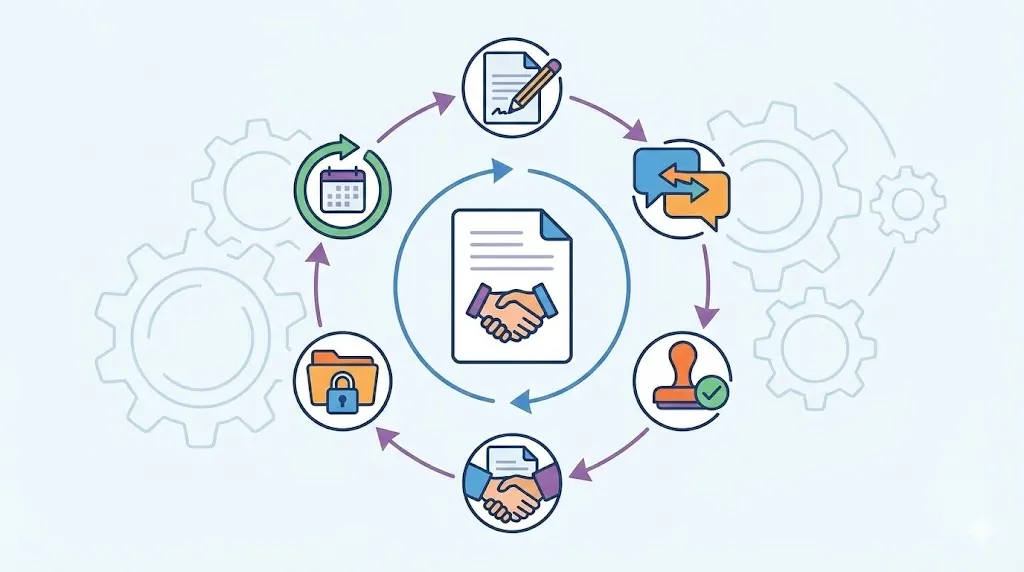
Defining protocols for every stage of the insurance contract lifecycle helps maintain control. From drafting and approval to renewal and termination, clear steps reduce errors and missed obligations.
Protocols should include regular contract reviews linked to claims processing to catch changes affecting payouts.
Training Teams on Contractual Nuances Affecting Claims
Claims and legal teams must understand contract provisions that impact claims decisions. Training improves their ability to spot risks and apply contract terms correctly.
Regular workshops and knowledge sharing promote consistent interpretation and reduce disputes.
Leveraging Technology for Continuous Monitoring and Updates
Using best contract management software insurance providers can continuously monitor contracts for changes in laws, regulations, or business needs. Automated updates to templates and clauses keep contracts current.
Continuous monitoring supports insurance claims processing automation and reduces manual workload, improving efficiency and accuracy.
Conclusion
Implementing comprehensive contract management practices is critical for insurers aiming to enhance risk mitigation and ensure payout accuracy. By centralizing contracts, standardizing language, leveraging AI-driven analysis, and automating workflows, insurance companies can significantly reduce fraud, errors, and operational risks. Embedding these controls within governance frameworks further strengthens compliance and supports continuous improvement. Although challenges such as cultural resistance and system integration exist, adopting clear protocols, targeted training, and advanced technology delivers measurable improvements in claims accuracy and dispute reduction. Begin by evaluating your current contract and claims workflows to identify opportunities for optimization. Investing in these solutions not only reduces claim disputes and overpayments by up to 30% but also positions your organization for sustained regulatory compliance and competitive advantage.
Frequently Asked Questions
What is contract risk management?
Contract risk management involves spotting and handling risks tied to contracts. It helps insurers avoid legal troubles and financial losses by reviewing contract terms, tracking duties, and setting controls. In insurance claims, managing contract risk ensures agreements are clear and enforceable, reducing disputes and unexpected costs.
How can I mitigate risks in contract management?
You can reduce risks by using standard contract templates, centralizing contract storage, and setting up automated alerts for deadlines. Regular audits help find weak spots early. Technology like AI can spot irregularities or fraud signs. Collaboration between legal, risk, and claims teams also ensures everyone manages risks together.
What are the benefits of using contract management software?
This software makes contract handling faster and more accurate. It stores all contracts in one place, tracks versions, and sends reminders for key dates. It helps spot compliance issues and supports data analysis for better decisions. Overall, it improves claims outcomes and reduces errors.
How can I improve payout accuracy in insurance claims?
Align claims with contract terms by reviewing contracts carefully and using data analytics to check claims. Automate workflows to catch discrepancies early. Train claims teams on contract details and keep clear records. This approach cuts overpayments and ensures fair, compliant payouts.
What are the key features of effective contract management?
Effective management includes secure centralized storage, standard clauses and templates, automated alerts for deadlines, and AI tools to check compliance and risks. It also integrates with governance policies and supports team collaboration for better oversight.
How does centralized contract storage enhance insurance claim security?
Central storage keeps all contracts in a secure system with controlled access. It prevents unauthorized changes and loss of documents. This ensures claims teams use the latest contract versions, reducing errors and fraud.
What role do pre-approved clauses play in risk mitigation?
These clauses set standard rules on coverage, exclusions, and other risks. They reduce unclear language and ensure contracts follow legal and company requirements. This consistency lowers disputes and supports accurate claims handling.
How can AI accelerate contract review cycles in insurance claims?
AI quickly scans contracts for missing or risky terms, flagging issues faster than manual checks. It helps prioritize high-risk contracts for review and automates routine compliance checks. This speeds up approvals and claims processing.
Why is cross-department collaboration important in contract management for insurance claims?
Collaboration between legal, risk, and claims teams ensures contracts and claims align with company policies and regulations. It reduces miscommunication and helps teams handle risks proactively, improving claim accuracy and reducing disputes.
What metrics should insurers track to evaluate contract management effectiveness?
Track claim dispute rates, fraud incidents, claims processing times, and payout accuracy. Also monitor compliance audit results. These metrics show how well contract management controls reduce risks and improve claims outcomes.
About the Company

Volody AI CLM is an Agentic AI-powered Contract Lifecycle Management platform designed to eliminate manual contracting tasks, automate complex workflows, and deliver actionable insights. As a one-stop shop for all contract activities, it covers drafting, collaboration, negotiation, approvals, e-signature, compliance tracking, and renewals. Built with enterprise-grade security and no-code configuration, it meets the needs of the most complex global organizations. Volody AI CLM also includes AI-driven contract review and risk analysis, helping teams detect issues early and optimize terms. Trusted by Fortune 500 companies, high-growth startups, and government entities, it transforms contracts into strategic, data-driven business assets.





" height="216.72211px" id="FYO0bO80Y" transform="translate(3 6.105)" width="206.073px"/><path d="M 108.174 222 C 88.432 222 70.303 217.239 53.785 207.717 C 37.267 198.196 24.173 185.052 14.504 168.285 C 4.835 151.312 0 132.165 0 110.845 C 0 89.731 4.835 70.792 14.504 54.025 C 24.173 37.052 37.267 23.804 53.785 14.282 C 70.303 4.761 88.432 0 108.174 0 C 128.116 0 146.246 4.761 162.562 14.282 C 179.08 23.804 192.073 37.052 201.541 54.025 C 211.21 70.792 216.044 89.731 216.044 110.845 C 216.044 132.165 211.21 151.312 201.541 168.285 C 192.073 185.052 179.08 198.196 162.562 207.717 C 146.044 217.239 127.915 222 108.174 222 Z M 108.174 183.189 C 120.864 183.189 132.044 180.291 141.713 174.495 C 151.382 168.492 158.936 160.006 164.375 149.035 C 169.814 138.064 172.533 125.334 172.533 110.845 C 172.533 96.355 169.814 83.729 164.375 72.965 C 158.936 61.994 151.382 53.611 141.713 47.815 C 132.044 42.02 120.864 39.122 108.174 39.122 C 95.483 39.122 84.202 42.02 74.332 47.815 C 64.663 53.611 57.109 61.994 51.67 72.965 C 46.231 83.729 43.511 96.355 43.511 110.845 C 43.511 125.334 46.231 138.064 51.67 149.035 C 57.109 160.006 64.663 168.492 74.332 174.495 C 84.202 180.291 95.483 183.189 108.174 183.189 Z" fill="rgba(255, 255, 255, 0.12)" height="222px" id="aa1McFcE9" transform="translate(227.183 3)" width="216.04399999999998px"/><path d="M 42.302 182.257 L 111.799 182.257 L 111.799 216.722 L 0 216.722 L 0 0 L 42.302 0 Z" fill="rgba(255, 255, 255, 0.12)" height="216.72211px" id="yRq4AnrsX" transform="translate(477.721 6.105)" width="111.79899999999998px"/><path d="M 108.174 222 C 88.432 222 70.303 217.239 53.785 207.717 C 37.267 198.196 24.173 185.052 14.504 168.285 C 4.835 151.312 0 132.165 0 110.845 C 0 89.731 4.835 70.792 14.504 54.025 C 24.173 37.052 37.267 23.804 53.785 14.282 C 70.303 4.761 88.432 0 108.174 0 C 128.116 0 146.246 4.761 162.562 14.282 C 179.08 23.804 192.073 37.052 201.541 54.025 C 211.21 70.792 216.045 89.731 216.045 110.845 C 216.045 132.165 211.21 151.312 201.541 168.285 C 192.073 185.052 179.08 198.196 162.562 207.717 C 146.044 217.239 127.915 222 108.174 222 Z M 108.174 183.189 C 120.864 183.189 132.044 180.291 141.713 174.495 C 151.382 168.492 158.936 160.006 164.375 149.035 C 169.814 138.064 172.534 125.334 172.534 110.845 C 172.534 96.355 169.814 83.729 164.375 72.965 C 158.936 61.994 151.382 53.611 141.713 47.815 C 132.044 42.02 120.864 39.122 108.174 39.122 C 95.483 39.122 84.202 42.02 74.332 47.815 C 64.663 53.611 57.108 61.994 51.67 72.965 C 46.231 83.729 43.511 96.355 43.511 110.845 C 43.511 125.334 46.231 138.064 51.67 149.035 C 57.108 160.006 64.663 168.492 74.332 174.495 C 84.202 180.291 95.483 183.189 108.174 183.189 Z" fill="rgba(255, 255, 255, 0.12)" height="222px" id="mo8HQspQ0" transform="translate(609.155 3)" width="216.04500000000007px"/><path d="M 73.727 0 C 95.885 0 115.324 4.45 132.044 13.351 C 148.967 22.252 161.957 34.982 171.027 51.541 C 180.287 67.894 184.917 86.937 184.917 108.671 C 184.917 130.405 180.287 149.449 171.027 165.801 C 161.957 181.947 148.967 194.47 132.044 203.371 C 115.324 212.271 95.885 216.722 73.727 216.722 L 0 216.722 L 0 0 Z M 72.216 179.773 C 94.374 179.773 111.497 173.564 123.583 161.144 C 135.669 148.724 141.713 131.233 141.713 108.671 C 141.713 86.109 135.669 68.515 123.583 55.888 C 111.497 43.055 94.374 36.638 72.216 36.638 L 42.302 36.638 L 42.302 179.773 Z" fill="rgba(255, 255, 255, 0.12)" height="216.72211px" id="I3iXX5Hi_" transform="translate(859.693 6.105)" width="184.91699999999992px"/><path d="M 185.22 0 L 113.91 141.273 L 113.91 216.722 L 71.61 216.722 L 71.61 141.273 L 0 0 L 47.74 0 L 93.06 99.046 L 138.08 0 Z" fill="rgba(255, 255, 255, 0.12)" height="216.72211px" id="nzHyWC0_d" transform="translate(1061.78 6.105)" width="185.22000000000003px"/></svg>)