
Key Highlights
A Service Level Agreement (SLA) is a contract that defines the level of service a customer expects from a service provider.
It sets clear expectations for service quality and performance, holding the provider accountable.
SLAs outline specific SLA metrics to measure performance and detail remedies for non-compliance.
These agreements are crucial for aligning the service with business needs and managing customer expectations effectively.
There are three main types: customer-level, service-level, and multi-level SLAs.
Effective SLAs improve communication, service continuity, and the overall customer-provider relationship.
Introduction
In any business relationship, clarity is key to success. A Service Level Agreement (SLA) provides this clarity by acting as a formal contract between a service provider and a customer. It documents the services to be provided and the standards of performance to be expected. For modern business operations, an SLA is not just a document but a foundational tool that ensures both parties have the same understanding of their commitments, paving the way for a smooth and productive partnership.
Understanding Service Level Agreements

A service agreement is essential for defining the relationship between a provider and a customer. It translates your business objectives and customer requirements into a set of measurable promises, removing any uncertainty about the level of service you will receive.
This formal understanding helps manage service expectations from the outset. By detailing everything from performance to penalties, an SLA protects the interests of all parties involved and serves as a vital reference point throughout the contract's duration. We'll now look closer at what an SLA is and why it's so critical.
What is an SLA agreement?
A Service Level Agreement (SLA) is a documented contract that specifies the exact nature of the relationship between a service provider and a customer. It goes beyond a simple handshake, detailing the specific services to be delivered and the performance standards the provider must meet.
Essentially, it's a promise. The agreement outlines the type of service, its availability, and other key components. This ensures that the services provided are directly aligned with your business goals. For example, a telecom company might promise a network availability of 99.999% in its SLA.
Whether it is between your company and an external vendor or between two internal departments, the SLA acts as a single source of truth. It defines responsibilities and expectations, ensuring everyone involved has a shared understanding of the commitment from day one.
Why is an SLA important in business operations?
In today's fast-paced business operations, an SLA is indispensable. Its primary importance lies in establishing accountability and clarity. By defining measurable performance standards, it ensures that the service provider is held responsible for the quality of their service delivery.
This clarity helps to enhance customer satisfaction. When you know exactly what to expect, there are no surprises. The SLA provides a framework for evaluating service performance, giving you peace of mind that your needs will be met. Should issues arise, the agreement outlines the steps for resolution, preventing potential disputes.
Ultimately, an SLA protects both parties. It prevents misunderstandings by clearly stating metrics, responsibilities, and expectations. Any significant contract without an SLA is open to misinterpretation, which can negatively impact service quality and your overall experience.
Related Article: Mastering Business Agreements: Essential Guide
Types of Service Level Agreements
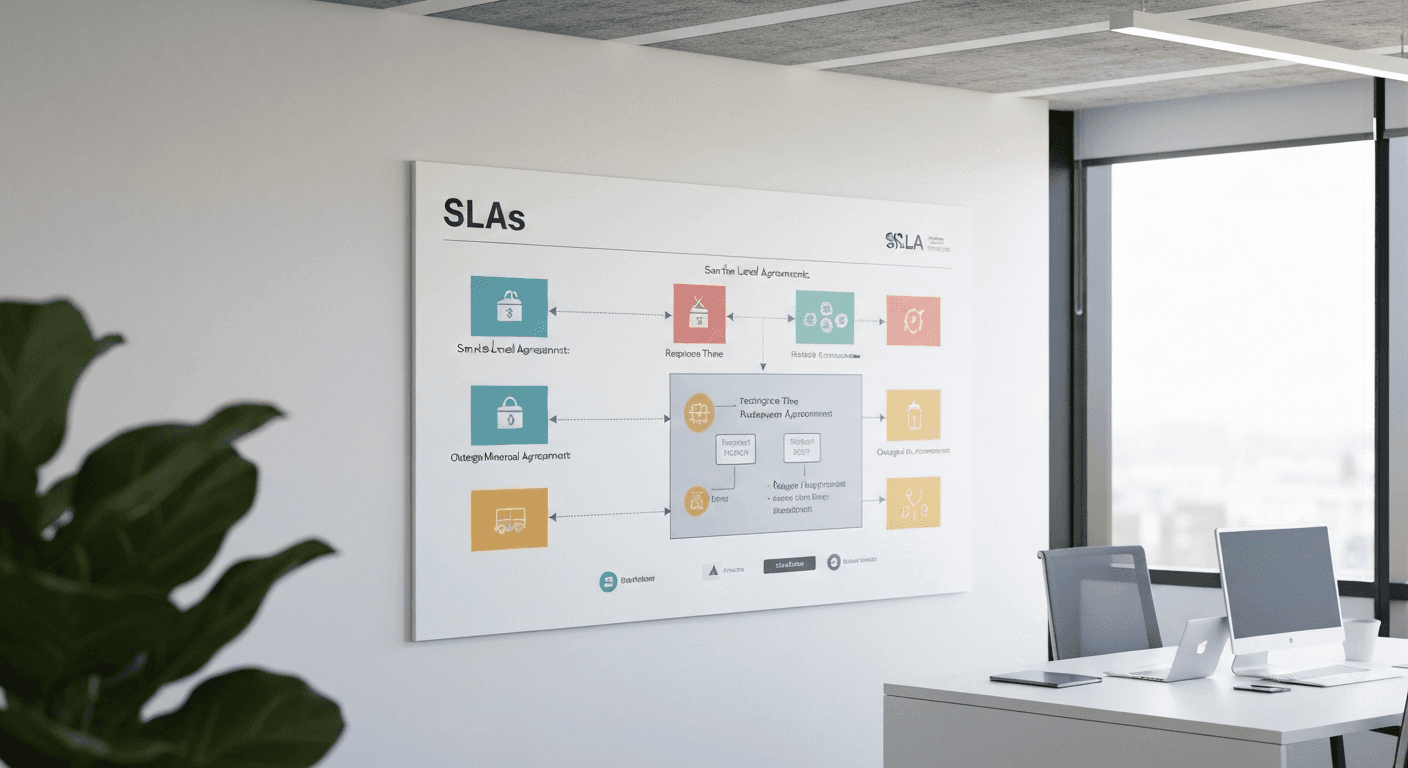
Not all SLAs are created equal. Depending on the service and the customer, agreements can be structured in different ways to best suit the situation. The main types of SLAs are designed to address specific scenarios, from individual customer needs to standardised service offerings.
Understanding these different types of SLAs, customer-level, service-based, and multi-level, helps you choose the right structure for your needs. Each type offers a unique approach to defining the levels of service, ensuring that the agreement is relevant and effective for everyone involved.
Customer-level SLAs
A customer-level SLA is a tailored agreement between a service provider and a single customer. This type of contract is customised to meet the specific requirements of that client, whether they are an external company or an internal department.
For instance, a third-party cloud services provider might create a customer-level SLA for a tech company. This agreement would outline the unique performance expectations for the applications that the tech company hosts in the cloud, ensuring their particular needs are met.
This approach ensures that the customer's unique expectations for customer service and service performance are clearly defined and addressed. The SLA will specify everything from service availability to the service credits applicable if the provider fails to meet the agreed-upon standards.
Service-based SLAs
A service-based SLA is a standard agreement that details a single, defined service offered to multiple customers. If a provider offers a product with the same level of service and support to all its clients, this type of SLA is the most practical choice.
Think of an IT service management (ITSM) team. They might use a service-based SLA for all customers who contact their service desk. The agreement would outline the quality of service everyone can expect, such as response times for support tickets, regardless of who the customer is.
This approach simplifies the process for the provider while giving all customers a clear understanding of the service standards for specific services. It focuses on guaranteeing consistent service availability and performance for that particular offering across the board.
Multi-level SLAs
A multi-level SLA is a more complex agreement that is divided into different levels to accommodate various parties or service tiers within a single contract. This structure is useful when a one-size-fits-all approach doesn't work.
For example, a Software-as-a-Service (SaaS) company that offers its product at different pricing plans might use a multi-level SLA. The agreement would have separate sections defining the performance levels and expectations for each product tier, from basic to premium.
This type of SLA can also be used between an organisation and multiple external providers or even between several internal departments. By breaking the agreement into different levels, it can accurately reflect the various business objectives and service delivery expectations of all parties involved.
Related Article: Types of Contracts Every Business Needs
Main Components of an SLA Contract
While SLAs can vary based on business needs, most contain similar key components. These elements work together to create a comprehensive document that leaves no room for ambiguity. A well-structured SLA ensures clear expectations are set from the start.
From a detailed description of services to the specific performance metrics that will be used for measurement, each component plays a critical role. Let's explore the essential parts that make up a robust and effective SLA contract.
Scope and description of services
One of the most crucial parts of an SLA is the section that provides a detailed description of services. This component clearly outlines the scope of services to be provided, including all relevant details to ensure a thorough understanding.
It should cover information on service delivery, turnaround times for projects, schedules for maintenance, and any dependencies that could affect the service. All aspects of the service should be documented here to avoid any future confusion or disputes. This section should also define any exclusions, which are services that are not offered under the agreement.
By providing a complete accounting of all factors and circumstances, this section ensures that the customer's requirements are fully understood and that the service is aligned to produce the desired business results.
Roles, responsibilities and stakeholders
To ensure smooth communication and accountability, an SLA must clearly define all stakeholders and their roles. This section lists every party involved in the agreement, outlines their specific responsibilities, and provides their contact information.
Often, a primary point of contact is designated for reporting end-user issues or for general communication. This prevents confusion about who to turn to when a problem arises, whether it's the service provider's help desk or a specific manager.
By clearly breaking down the roles, the SLA helps manage the workflow and escalation process. This clarity contributes to a better customer experience, as you always know who is responsible for what and how to reach them when you need support.
Performance metrics and targets
The heart of any SLA is its section on performance metrics and targets. This is where the agreement becomes measurable. It details the agreed-upon standards for service availability and performance, specifying the metrics that will be used to gauge the quality of service.
These targets are often defined within a Service Level Objective (SLO), which establishes a performance baseline for a particular service over a set period. For example, an SLO might state a target of 99.9% uptime per month. Setting clear expectations through measurable goals is fundamental to effective service level management.
Both parties should carefully consider these performance metrics, as they are central to the entire agreement. They provide an objective way to determine if the provider is meeting its commitments and form the basis for any penalties or remedies.
Related Article: Contract Clause Library: Your Comprehensive Guide
Key Clauses in a Service Level Contract

A service level contract is more than just a list of services and metrics; it also includes key clauses that provide legal and procedural structure. These clauses are designed to manage risk, handle disputes, and outline consequences for non-compliance.
Important clauses to look for include remedies and penalties, such as service credits, an indemnification clause for legal protection, and clear escalation procedures. Understanding these provisions is vital for protecting your interests. We will now examine some of the most critical clauses in detail.
Remedies and penalties for non-compliance
What happens if a service provider fails to meet the agreed-upon performance standards? The remedies and penalties section of an SLA defines the consequences for such breaches, ensuring accountability.
These penalties often come in the form of service credits, where a customer can reduce their payment by a certain percentage. The amount is usually drawn from a portion of the monthly fees that the provider puts "at risk." This approach incentivises the provider to maintain performance without being overly punitive. Some agreements may also specify other financial penalties.
This section also details escalation procedures and time frames for resolutions. In cases of repeated failures or significant service disruptions, the clause might outline terms for contract termination, protecting the customer from sustained poor performance and potential litigation costs.
Indemnification and legal protections
An indemnification clause is a crucial component for legal protection and risk management within an SLA. This provision requires the service provider to compensate the customer for any third-party litigation costs, losses, or damages that result from a breach of the service warranties.
In simple terms, it shifts the risk from you, the customer, to the service provider. For instance, if a service breach leads to a lawsuit from one of your clients, the indemnification clause ensures the provider covers the associated legal expenses. This is a key part of any disaster recovery and service level management strategy.
It is important to note that standard SLA templates provided by vendors may not include this clause. It is often wise to work with legal counsel to add a provision for indemnification, although the service provider may want to negotiate its terms.
Termination and review provisions
An SLA is a living document that needs to adapt to changing circumstances. That is why termination and review provisions are essential for effective contract management and long-term operational efficiency.
The termination provisions outline the circumstances under which the agreement can be cancelled before its expiration date. This includes defining the notice period required by either party if they decide to end the contract. On the other hand, a review clause establishes a process and timetable for regular reviews of the SLA's terms.
These reviews are critical because vendor capabilities, workloads, and customer requirements evolve over time. This process allows the SLA to be updated to incorporate new service features and address current customer needs, ensuring it remains relevant and beneficial for both parties.
Related Article: Significance of tracking data points in contract management
SLA Metrics and How to Measure Compliance

To enforce an SLA, you need a way to measure whether the provider is meeting its promises. This is where SLA metrics come in. These are the specific, quantifiable measures used to evaluate the service quality and determine if the terms of the agreement are being met.
Choosing the right performance metrics is vital for success. Without the right data, it is difficult to know how the arrangement is working for either party. Common metrics include service availability, error rates, and response time. Let's look at how these are measured.
Availability, uptime and error rates
Availability and uptime are two of the most common metrics in an SLA. Uptime measures the amount of time that services are working and available for use. This is typically expressed as a percentage over a certain period, such as 99.9% per month.
For many businesses, especially in e-commerce, even a small amount of downtime can be costly, so uptime requirements are often very strict. The SLA will reflect these performance standards, as different businesses have different needs.
Error rates, or defect rates, measure the percentage of time a service falls below expected performance targets. This can include coding errors, missed deadlines, or other failures in production. Tracking these rates helps gauge the overall technical quality of the service.
Uptime Percentage | Allowed Downtime per Month | Allowed Downtime per Year |
|---|---|---|
99% | 7.31 hours | 3.65 days |
99.9% | 43.83 minutes | 8.77 hours |
99.99% | 4.38 minutes | 52.60 minutes |
99.999% | 26.30 seconds | 5.26 minutes |
Response time and resolution time
When an issue occurs, how quickly it is addressed is critical. This is where response time and resolution time metrics come into play. These performance standards are especially important for services that include customer support.
Response time establishes the acceptable amount of time for a service provider to acknowledge and log a customer's issue or request. For example, the SLA might state that all high-priority incidents must be responded to by the service desk within 15 minutes.
Resolution time, on the other hand, defines the acceptable time frame for an issue to be fully resolved once it has been logged. Strong incident response depends on meeting both of these metrics, ensuring that problems are not only acknowledged quickly but also fixed in a timely manner.
Tracking and reporting performance
Tracking performance and reporting on it regularly are fundamental to successful service level management. Without a system for monitoring metrics, it is impossible to enforce an SLA or have productive conversations about service performance.
Many service providers make performance statistics available through an online portal. This allows customers to check whether SLAs are being met and if they are entitled to any service credits. For critical services, some businesses also use third-party tools to capture objective performance data.
Using effective contract management software can simplify this process. A good CLM software solution from a provider like Volody helps automate the tracking and reporting of metrics, ensuring clear communication and eliminating misunderstandings about performance. This approach streamlines how you manage and verify your SLA commitments.
Related Article: Significance of tracking data points in contract management
Best Practices for Creating Effective SLA Agreements
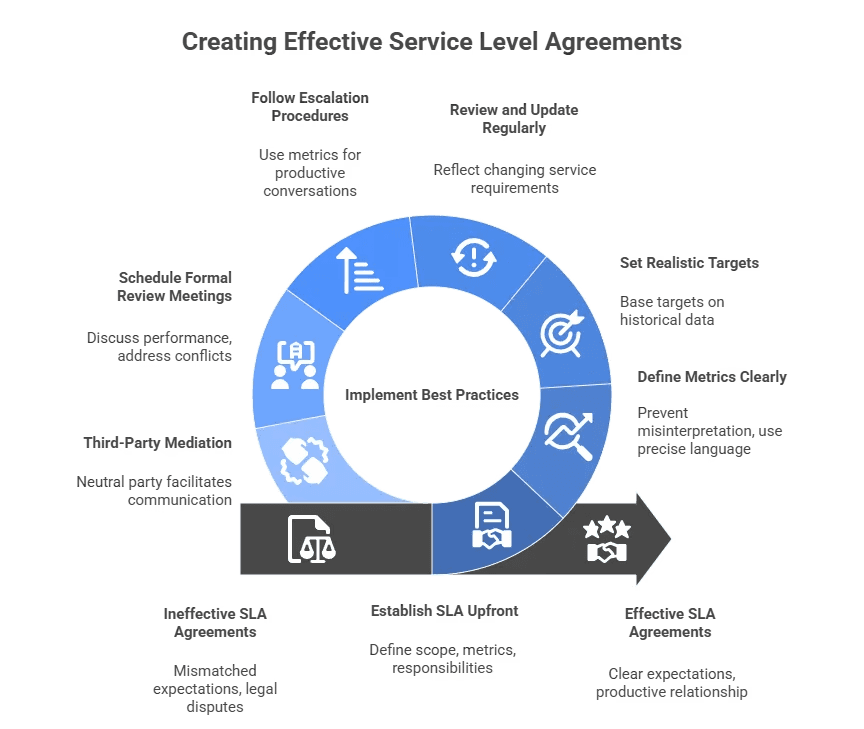
Creating an effective SLA requires more than just filling out a template. It involves careful thought and collaboration to ensure the agreement truly serves its purpose. Following best practices can help you craft an SLA that sets clear expectations and aligns with your business goals.
The goal is to produce a document that motivates the right behaviour from both parties and maintains a high quality of service. From avoiding common mistakes to having a plan for disputes, here are some tips for making your SLAs work for you.
Common mistakes to avoid in drafting
Drafting an SLA can be a complex process, and there are several common mistakes that can undermine its effectiveness. Being aware of these pitfalls can help you create a stronger, more reliable agreement that provides clear expectations and legal protections.
One of the biggest errors is not establishing the SLA upfront. It should be a part of the initial contract negotiation, not an afterthought. Another mistake is creating an agreement with too many metrics, which can be difficult to track and analyse, or too few, which might not adequately measure service performance.
To ensure your SLA is effective, avoid these common mistakes:
Vague Definitions: Ensure all terms and metrics are clearly defined to prevent misinterpretation. For example, what constitutes "response time"?
Unrealistic Targets: Set attainable performance levels. If metrics are impossible to meet, they will only cause frustration.
Ignoring the Provider's Control: Metrics should only cover factors that are within the service provider's control.
Viewing it as a Static Document: The SLA should be reviewed and updated regularly to reflect changing service requirements.
Dispute resolution strategies
Even with a well-drafted Service Level Agreement, disputes can still arise. A strong SLA anticipates this possibility and includes clear dispute resolution strategies to handle disagreements constructively and professionally.
The first step is often to follow the defined escalation procedures. This might involve raising the issue from the service desk to higher levels of management on both sides. The goal is to use the SLA metrics not as a tool for punishment, but as a basis for productive conversations about performance and priorities.
If direct communication doesn't resolve the issue, other strategies can be employed. The SLA should outline these steps clearly to avoid lengthy and costly conflicts.
Formal Review Meetings: Schedule regular meetings to discuss performance and address any brewing conflicts before they escalate.
Third-Party Mediation: In some cases, bringing in a neutral third party for mediation can help both sides find a mutually agreeable solution.
Clear Consequences: The SLA should already define penalties for non-compliance, which can often resolve disputes over minor breaches without further conflict.
Related Article: What Is Contract Negotiation? Clear Strategies & Expert Tips
Conclusion
In conclusion, a well-structured Service Level Agreement (SLA) is crucial for ensuring that both parties in a business relationship have clear expectations regarding services and performance. By understanding the key components, types, and best practices, you can create an SLA that safeguards your interests while fostering trust between stakeholders. Remember, an effective SLA not only outlines responsibilities and performance metrics but also includes clauses that address compliance and remedies for non-compliance. In doing so, you will pave the way for smoother operations and enhanced service quality. If you're ready to take the next step in establishing robust SLAs for your business, feel free to reach out for a free consultation with our experts.
Frequently Asked Questions
How do service level agreements differ between IT and online services?
SLAs for IT services often cover hardware support, on-premise response times, and interactions with an IT department. In contrast, SLAs for online services, like cloud computing, focus more on service availability, network latency, data security, and application performance standards, which are critical in the technology industry.
Are SLA contracts legally binding in India?
Yes, when an SLA is part of a formal contract and adheres to the principles of the Indian Contract Act, 1872, it is legally binding. It provides legal protections and can be enforced in court. This makes it a critical tool for risk management and for recovering litigation costs in case of a breach.
Where can I find service level contract templates for my business?
Many service providers offer standard contract templates as a starting point. Additionally, using contract lifecycle management software can provide access to pre-vetted templates. However, it is crucial to review and customise any template with legal counsel to ensure it aligns with your specific business objectives and follows SLA management best practices.
About the Company

Volody AI CLM is an Agentic AI-powered Contract Lifecycle Management platform designed to eliminate manual contracting tasks, automate complex workflows, and deliver actionable insights. As a one-stop shop for all contract activities, it covers drafting, collaboration, negotiation, approvals, e-signature, compliance tracking, and renewals. Built with enterprise-grade security and no-code configuration, it meets the needs of the most complex global organizations. Volody AI CLM also includes AI-driven contract review and risk analysis, helping teams detect issues early and optimize terms. Trusted by Fortune 500 companies, high-growth startups, and government entities, it transforms contracts into strategic, data-driven business assets.




" height="216.72211px" id="FYO0bO80Y" transform="translate(3 6.105)" width="206.073px"/><path d="M 108.174 222 C 88.432 222 70.303 217.239 53.785 207.717 C 37.267 198.196 24.173 185.052 14.504 168.285 C 4.835 151.312 0 132.165 0 110.845 C 0 89.731 4.835 70.792 14.504 54.025 C 24.173 37.052 37.267 23.804 53.785 14.282 C 70.303 4.761 88.432 0 108.174 0 C 128.116 0 146.246 4.761 162.562 14.282 C 179.08 23.804 192.073 37.052 201.541 54.025 C 211.21 70.792 216.044 89.731 216.044 110.845 C 216.044 132.165 211.21 151.312 201.541 168.285 C 192.073 185.052 179.08 198.196 162.562 207.717 C 146.044 217.239 127.915 222 108.174 222 Z M 108.174 183.189 C 120.864 183.189 132.044 180.291 141.713 174.495 C 151.382 168.492 158.936 160.006 164.375 149.035 C 169.814 138.064 172.533 125.334 172.533 110.845 C 172.533 96.355 169.814 83.729 164.375 72.965 C 158.936 61.994 151.382 53.611 141.713 47.815 C 132.044 42.02 120.864 39.122 108.174 39.122 C 95.483 39.122 84.202 42.02 74.332 47.815 C 64.663 53.611 57.109 61.994 51.67 72.965 C 46.231 83.729 43.511 96.355 43.511 110.845 C 43.511 125.334 46.231 138.064 51.67 149.035 C 57.109 160.006 64.663 168.492 74.332 174.495 C 84.202 180.291 95.483 183.189 108.174 183.189 Z" fill="rgba(255, 255, 255, 0.12)" height="222px" id="aa1McFcE9" transform="translate(227.183 3)" width="216.04399999999998px"/><path d="M 42.302 182.257 L 111.799 182.257 L 111.799 216.722 L 0 216.722 L 0 0 L 42.302 0 Z" fill="rgba(255, 255, 255, 0.12)" height="216.72211px" id="yRq4AnrsX" transform="translate(477.721 6.105)" width="111.79899999999998px"/><path d="M 108.174 222 C 88.432 222 70.303 217.239 53.785 207.717 C 37.267 198.196 24.173 185.052 14.504 168.285 C 4.835 151.312 0 132.165 0 110.845 C 0 89.731 4.835 70.792 14.504 54.025 C 24.173 37.052 37.267 23.804 53.785 14.282 C 70.303 4.761 88.432 0 108.174 0 C 128.116 0 146.246 4.761 162.562 14.282 C 179.08 23.804 192.073 37.052 201.541 54.025 C 211.21 70.792 216.045 89.731 216.045 110.845 C 216.045 132.165 211.21 151.312 201.541 168.285 C 192.073 185.052 179.08 198.196 162.562 207.717 C 146.044 217.239 127.915 222 108.174 222 Z M 108.174 183.189 C 120.864 183.189 132.044 180.291 141.713 174.495 C 151.382 168.492 158.936 160.006 164.375 149.035 C 169.814 138.064 172.534 125.334 172.534 110.845 C 172.534 96.355 169.814 83.729 164.375 72.965 C 158.936 61.994 151.382 53.611 141.713 47.815 C 132.044 42.02 120.864 39.122 108.174 39.122 C 95.483 39.122 84.202 42.02 74.332 47.815 C 64.663 53.611 57.108 61.994 51.67 72.965 C 46.231 83.729 43.511 96.355 43.511 110.845 C 43.511 125.334 46.231 138.064 51.67 149.035 C 57.108 160.006 64.663 168.492 74.332 174.495 C 84.202 180.291 95.483 183.189 108.174 183.189 Z" fill="rgba(255, 255, 255, 0.12)" height="222px" id="mo8HQspQ0" transform="translate(609.155 3)" width="216.04500000000007px"/><path d="M 73.727 0 C 95.885 0 115.324 4.45 132.044 13.351 C 148.967 22.252 161.957 34.982 171.027 51.541 C 180.287 67.894 184.917 86.937 184.917 108.671 C 184.917 130.405 180.287 149.449 171.027 165.801 C 161.957 181.947 148.967 194.47 132.044 203.371 C 115.324 212.271 95.885 216.722 73.727 216.722 L 0 216.722 L 0 0 Z M 72.216 179.773 C 94.374 179.773 111.497 173.564 123.583 161.144 C 135.669 148.724 141.713 131.233 141.713 108.671 C 141.713 86.109 135.669 68.515 123.583 55.888 C 111.497 43.055 94.374 36.638 72.216 36.638 L 42.302 36.638 L 42.302 179.773 Z" fill="rgba(255, 255, 255, 0.12)" height="216.72211px" id="I3iXX5Hi_" transform="translate(859.693 6.105)" width="184.91699999999992px"/><path d="M 185.22 0 L 113.91 141.273 L 113.91 216.722 L 71.61 216.722 L 71.61 141.273 L 0 0 L 47.74 0 L 93.06 99.046 L 138.08 0 Z" fill="rgba(255, 255, 255, 0.12)" height="216.72211px" id="nzHyWC0_d" transform="translate(1061.78 6.105)" width="185.22000000000003px"/></svg>)