

Key Highlights
A force majeure clause frees parties from contractual obligations due to an extraordinary event.
The purpose is risk management, protecting your business from uncontrollable disruptions.
A force majeure event can include a natural disaster, war, or government action.
When invoked, it typically suspends performance of the contract, not necessarily terminating it.
Clear and specific wording is crucial to avoid disputes over what is covered.
Failing to perform without a valid clause can lead to a breach of contract claim.
Introduction
Have you ever wondered what happens when an unexpected crisis makes it impossible to fulfil a contract? In the world of commercial contracts, a force majeure clause is your safety net. This powerful contract provision protects parties when a major, uncontrollable force majeure event occurs. Understanding how this clause works is essential for protecting your business from financial losses and legal trouble. It provides a clear path forward when unforeseen circumstances disrupt your plans.
Defining Force Majeure Clause

The term "force majeure" comes from French law and means "superior force." In a contract, a force majeure clause is a provision that frees parties from their contractual obligations when an unforeseen event, or an "act of god," prevents them from performing. It is a critical tool for managing risk in any agreement.
Essentially, this clause acknowledges that some events are so powerful they make it impossible to carry on as planned. This section explores what a force majeure clause is, its origins, and common misunderstandings about its use, answering the question, "What is a force majeure clause and how does it work in contracts?".
Explanation and Meaning in Contracts
In its simplest form, a force majeure clause allocates risk between the parties in a contract. It sets out what happens if an extraordinary force majeure event, beyond anyone's reasonable control, stops one or both parties from fulfilling their side of the bargain. This helps to avoid disputes by creating a clear framework for managing the situation.
When a qualifying event occurs, the affected party's duties are typically suspended for the duration of the event. This does not automatically cancel the contract. Instead, it provides temporary relief from liability for non-performance. The specific contract terms will dictate the exact consequences and protect your contractual rights.
The key is that the event must make performance impossible or impractical, not just more difficult or expensive. The scope and application of the clause depend entirely on how it is written in the contract, making careful drafting essential for your protection.
Origin and Historical Development
The concept of force majeure has its roots in French law, specifically the Napoleonic Code. It was designed to address situations where an irresistible force prevented a party from meeting their obligations. From its origins in continental Europe, the idea has spread and been adopted into legal systems worldwide, including in the United Kingdom and the United States.
Over time, the historical development of the clause has seen its interpretation expand. Initially, it was often limited to a true "act of God," such as a natural catastrophe. However, English courts, for example, have agreed that other events, like strikes or machinery breakdowns, can be included under the force majeure umbrella.
It is important to note that the term is not a catch-all for any delay. An English case from 1915 clarified that everyday interruptions, like bad weather, are not force majeure because they are foreseeable. This evolution highlights the need for contracts to specifically define what events are covered.
Common Misconceptions About Force Majeure
A frequent misunderstanding is that a force majeure clause is a get-out-of-jail-free card for any difficult situation. This is not true. A force majeure event does not apply if fulfilling the contract simply becomes more expensive or less profitable. The clause is intended for events that make performance impossible, not just inconvenient.
Another common myth is that it covers a party's own mistakes. The clause will not protect you from the results of your own negligence or poor planning. For example, a failure to perform due to a lack of maintenance on essential equipment would not typically qualify as force majeure, as maintenance is within your control.
Finally, invoking the clause is not always straightforward and can lead to disputes. If a court finds that the event does not fall within the clause's scope, the non-performing party may still face liability for breach of contract. This is why courts interpret force majeure clauses strictly based on the contract's specific wording.
Purpose and Importance of Force Majeure Clauses

So, why is this clause so critical for your business? The primary purpose is risk management. It protects your organization from being penalized for failing to meet contractual obligations due to events that are completely out of your control. This is vital for maintaining financial stability and good business relationships.
The importance of force majeure clauses cannot be overstated, as they provide certainty in an uncertain world. The following sections will explain how these clauses help in managing risk, ensuring business continuity, and protecting you against the unexpected.
Risk Management in Commercial Agreements
At its core, a force majeure clause is a powerful risk management tool. In commercial contracts, countless external factors can disrupt your plans. By including this provision, you can protect your business from unforeseen circumstances that could otherwise lead to significant financial loss or damaging legal disputes.
The clause provides clarity on each party's responsibilities when a crisis hits. Instead of arguing over who is at fault, the contract itself provides the answer. This proactive approach helps prevent disagreements from escalating, saving both time and money.
By defining which events excuse non-performance, you can better manage your contractual obligations and protect your interests. It is a fundamental part of creating resilient and fair commercial agreements that can withstand unexpected challenges.
Ensuring Business Continuity
A force majeure clause plays a direct role in your business continuity strategy. When a disruptive force majeure event occurs, such as a flood or a government-mandated shutdown, the last thing you need is to be tied up in legal battles over contractual duties.
This clause gives your business breathing room. It allows you to legally suspend performance without being in breach of contract. This frees up your team to focus on what truly matters: recovering from the event, mitigating its impact, and getting your operations back on track.
By building this flexibility into your agreements, you ensure that your business can navigate crises more effectively. It is a practical way to protect your operations and pave the way for a smoother recovery when the unexpected happens.
Protecting Against Unforeseeable Events
The real power of a force majeure clause lies in its ability to shield you from genuinely unforeseeable events. These are the uncontrollable events that could not have been reasonably anticipated when the contract was signed. The clause acts as a defence against liability in these specific situations.
From natural disasters to sudden political turmoil, such unforeseen circumstances can make it impossible for even the most diligent party to perform their obligations. Without a force majeure provision, your business could be held responsible for something that was entirely beyond its control.
This protection is not automatic; the event must be both unforeseeable and the direct cause of the non-performance. A well-drafted clause ensures that your business is not unfairly burdened by a true force majeure event that no one could have predicted.
Related Article: 7 Key Contract Clauses Found in Business Contracts
Typical Events Covered by Force Majeure
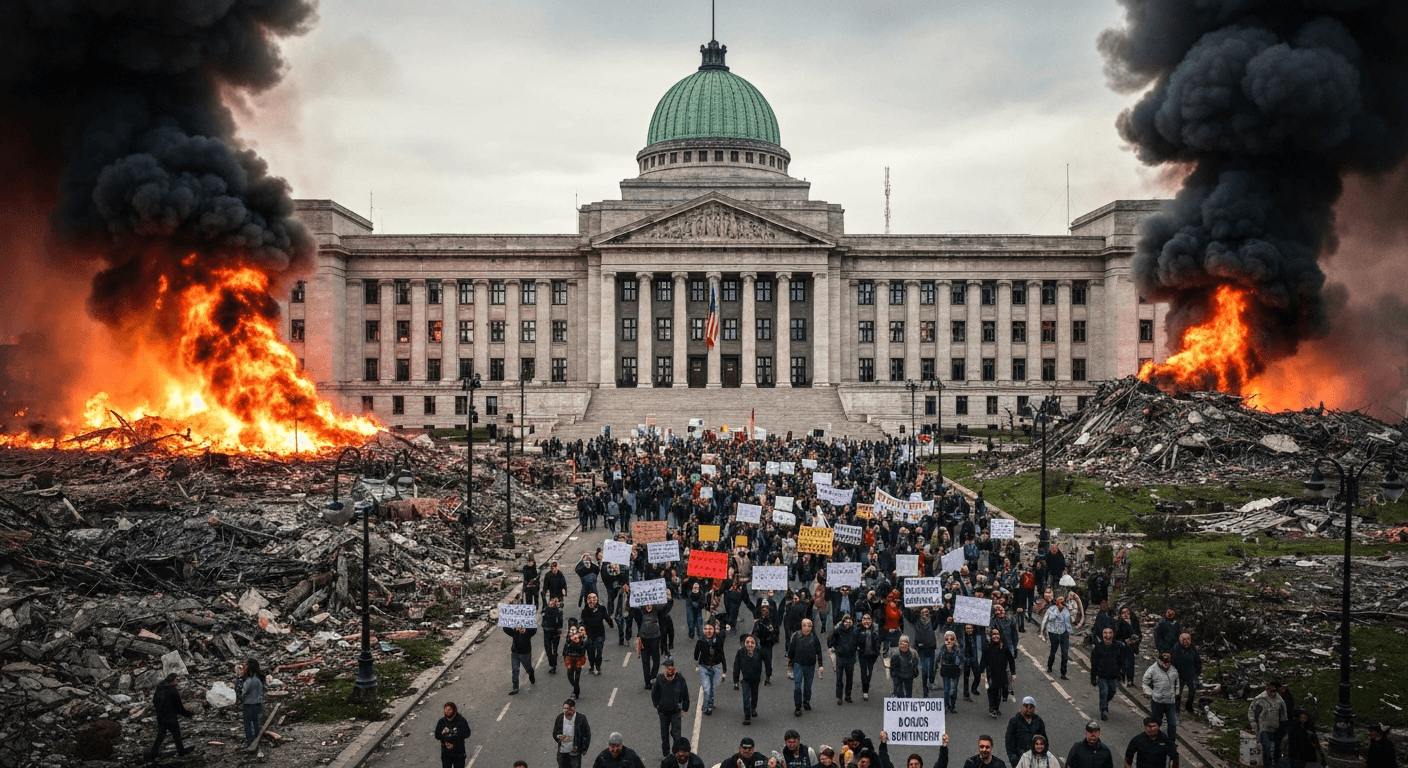
What kinds of disruptions typically qualify as a force majeure event? While the specifics depend on the contract, most clauses include a list of qualifying events. These listed events often fall into predictable categories, ranging from natural phenomena to human actions.
These lists can be either exhaustive, meaning only the specified events apply, or illustrative, providing examples of what might be covered. Generally, they include acts of god, political unrest, and government intervention. The following sections explore these common categories in more detail.
Natural Disasters and Calamities
One of the most classic examples of a force majeure event is a natural disaster. These events are often referred to as an "act of god" because they are beyond human control. When a major calamity strikes, it can make contract performance physically impossible.
Common examples of natural disasters included in force majeure clauses are:
Earthquakes
Hurricanes, floods, and tsunamis
Wildfires
Volcanic eruptions
It is important to be specific. For example, ordinary predictable rain would likely not qualify. However, a sudden flash flood that damages a venue would almost certainly be considered a force majeure event. The scale of the natural disaster is key to determining whether the clause can be invoked.
War, Terrorism, and Civil Disturbance
Force majeure clauses are not limited to natural events. Human actions, particularly those that create widespread instability, are also commonly included. An act of war or a major security threat can make it unsafe or impossible to fulfil contractual obligations, especially in international trade.
Typical events in this category include:
An act of war, whether declared or not
Terrorist attacks
Riots and civil unrest
Strikes or widespread labour disputes
These events can disrupt supply chains, halt transportation, and put personnel at risk. By including them in your contract, you acknowledge that such disruptions can trigger a force majeure event, excusing non-performance while the situation persists.
Government Actions and Statutory Changes
Sometimes, the entity that creates laws can also create a force majeure event. Sudden government actions or statutory changes can make it illegal or impractical to continue with a contract. These events are often beyond a company's control and can have a significant impact on operations.
Examples of such government actions include:
Trade embargoes or new tariffs
Expropriation (government seizure of private property)
Government-imposed lockdowns or travel bans
Sudden changes in laws or regulations
Well-drafted force majeure provisions anticipate these possibilities. During the COVID-19 pandemic, clauses that included "government actions" were crucial for businesses forced to close due to public health orders.
Key Elements That Constitute an Effective Force Majeure Clause

A truly effective force majeure clause is more than just a list of potential disasters. To be enforceable and provide real protection, it must be carefully constructed with several key elements. The contract terms need to be clear, specific, and procedural.
These contractual clauses should define the events, outline the steps to take when an event occurs, and describe the duties of the affected party. Let's examine the essential components that make a force majeure clause robust and reliable.
Standard Definitions and Scope of Events
The foundation of any good force majeure clause is a clear definition of what constitutes a qualifying event. The scope of the force majeure clause should be precisely defined to avoid ambiguity. You can do this with an exhaustive list, which limits the clause to only the listed events, or an illustrative one, which provides examples but allows for other similar events.
Standard definitions help ensure both parties understand what is covered. Vague terms like "damaging earthquake" can lead to disputes. It is better to use clear language and, where possible, objective standards. This clarity is vital for the clause to function as intended.
A well-defined scope helps manage expectations and reduces the likelihood of a legal challenge. The table below outlines key definitional elements.
Element | Description |
|---|---|
Event Definition | Clearly lists specific events (e.g., floods, war, pandemic). |
Causation | Requires the event to be the direct cause of non-performance. |
Control | Specifies the event must be beyond the party's reasonable control. |
Foreseeability | States the event could not have been reasonably foreseen. |
Notification and Documentation Requirements
Simply experiencing a force majeure event is not enough; you must follow the correct procedure. An effective clause will include specific notification and documentation requirements. The affected party is typically required to give written notice to the other party within a set timeframe after the event occurs.
This notification should contain all relevant information about the event. You should explain what happened, how it is impacting your ability to perform, and how long you expect the disruption to last. Failing to provide timely notice can sometimes result in losing the protection of the clause.
In addition to notification, you will likely need to provide proof. This could include government announcements, news reports, or expert assessments. Proper documentation is crucial for substantiating your claim and ensuring the process is transparent and fair.
Obligations Around Mitigation and Attempts to Perform
Invoking a force majeure clause does not mean you can simply sit back and do nothing. Most clauses include an obligation on the affected party to mitigate the effects of the event. This means you must take reasonable steps to minimize the disruption and overcome the obstacle if possible.
You need to demonstrate that you are making genuine attempts to perform your obligations to the extent that you can. For example, if your primary supplier is shut down, you may be expected to look for an alternative source, even if it is more expensive. This duty to make reasonable endeavours is a key part of acting in good faith.
Courts often look at mitigation efforts when deciding whether a force majeure claim is valid. A party that makes no effort to solve the problem is less likely to receive the protection of the clause.
Related Article: Mastering International Contracts: Compliance & Risk
Impact of Force Majeure on Contractual Obligations
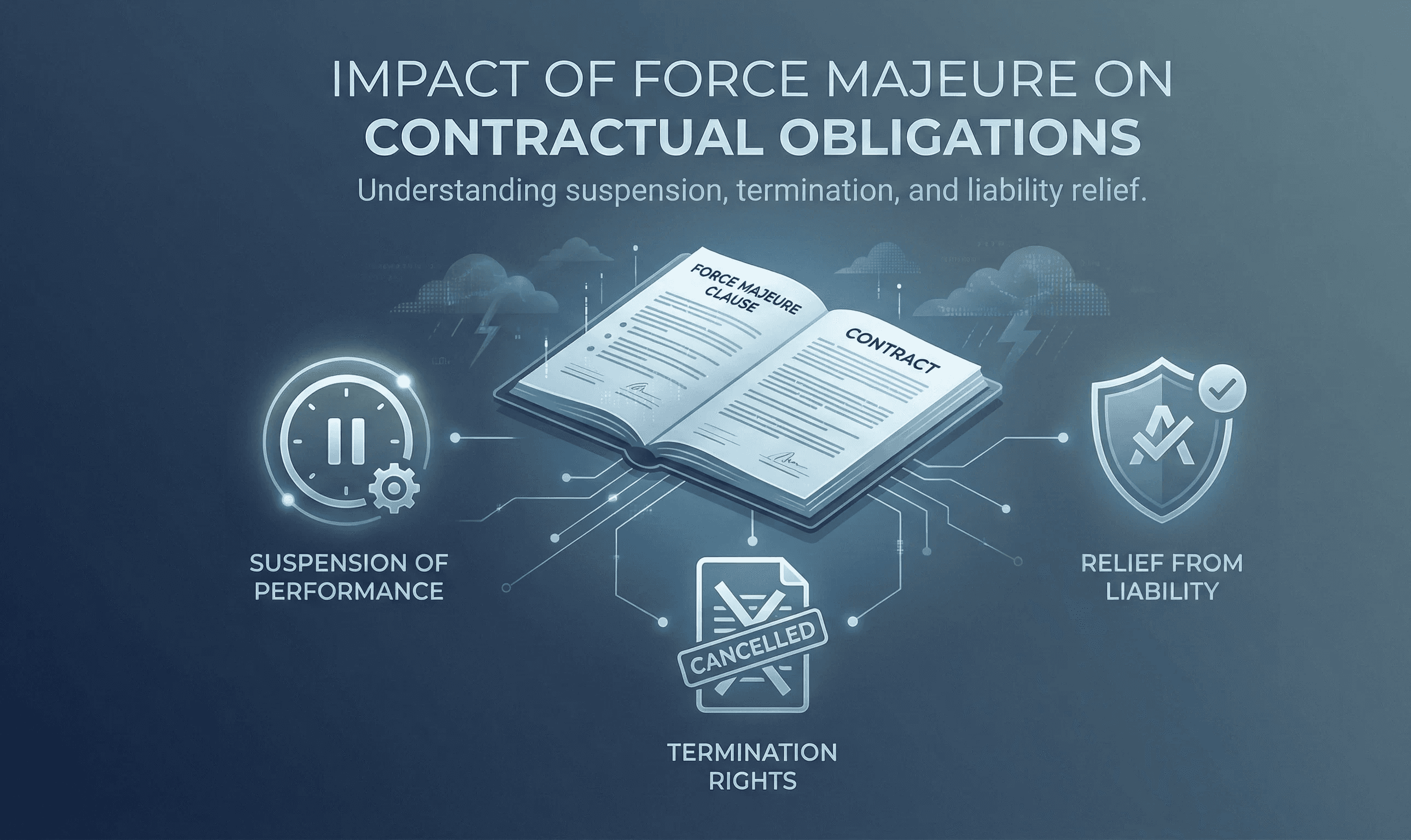
When a force majeure event is successfully invoked, what is the actual impact on the contract? The primary effect is a change to the parties' contractual obligations. Instead of leading to an immediate breach of contract claim, the clause typically allows for a suspension of performance.
This provides temporary relief from liability for non-performance. The exact consequences, however, will depend on the specific wording of the clause. The following sections will detail how force majeure can lead to suspension, termination, and relief from liability.
Suspension or Delay of Performance
The most common outcome of a force majeure claim is the suspension of performance. This means the affected party's duties under the contract are put on hold. This delay of performance is excused, and the party is not considered to be in breach of the agreement during this time.
The suspension typically lasts for the period of time that the force majeure event and its effects continue. Once the event is over, the contractual obligations usually resume. The contract timelines, including the original date of the performance, are often extended to account for the lost time.
This provides a practical solution that preserves the contract while acknowledging the reality of the disruption. It gives both parties an opportunity to wait out the crisis without resorting to legal action.
Termination Options Under Force Majeure
While suspension is common, some situations may require a more permanent solution. Many force majeure clauses include provisions for the termination of the contract. This option usually becomes available if the force majeure event continues for a prolonged period, making the eventual performance of the contract impossible or commercially pointless.
The clause will typically specify a timeframe, for example, 90 or 180 days. If the event persists beyond this period, either party may have the right to terminate the contract by giving written notice. This protects both parties from being locked into an agreement that can no longer be fulfilled.
This termination right is a crucial part of managing long-term risk. It ensures that your contractual rights are protected and provides a clear exit strategy when a temporary problem becomes a permanent one.
Consequences of Non-Performance
The ultimate consequence of a valid force majeure claim is relief from liability for non-performance. When the clause is properly invoked, the affected party is excused from its duties and cannot be sued for damages arising from its failure to perform. This prevents a claim of breach of contract.
This protection is the core purpose of the clause. It ensures that a party is not penalised for something that was genuinely beyond its control. However, this relief only applies if all the conditions of the clause are met, including notice and mitigation.
If a party claims force majeure incorrectly, or if a court determines the event does not qualify, the consequences can be severe. The party could still be held liable for breach of contract and face financial penalties. This highlights the importance of understanding your contract and seeking legal advice when needed.
Related Article: Types of Contracts Every Business Needs
Force Majeure vs. Hardship Clauses
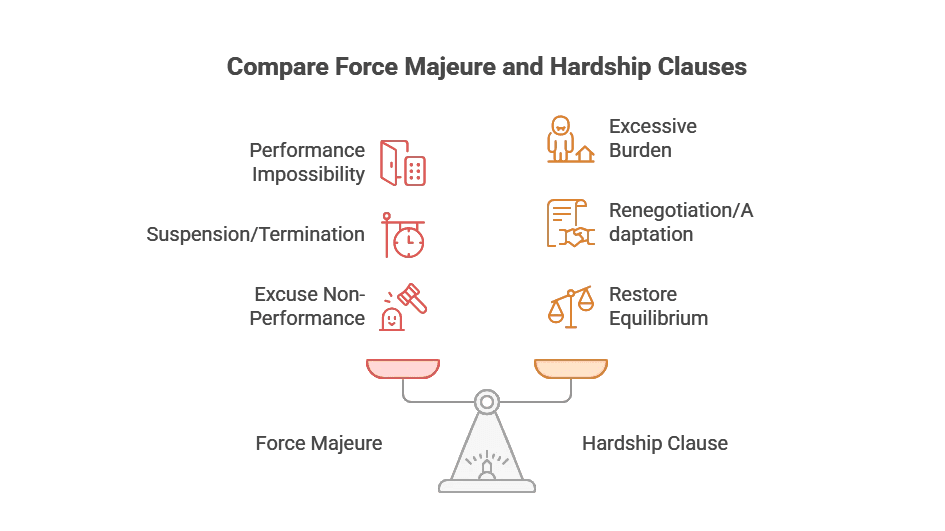
It is easy to confuse a force majeure clause with a hardship clause, but they serve different purposes. While both deal with unexpected events, a force majeure clause is triggered when performance becomes impossible. A hardship clause, on the other hand, applies when performance becomes excessively burdensome but is still possible.
These contractual clauses address a wide range of situations, and understanding their differences is key to drafting a comprehensive contract. Let's explore the main distinctions and when each clause should be used.
Main Legal Differences
The primary difference between the two clauses lies in the event's impact and the resulting remedy. A force majeure event makes fulfilling contractual obligations impossible, while a hardship situation makes it fundamentally more difficult or economically unbalanced.
The legal outcomes also differ significantly:
Force Majeure: The typical remedy is to suspend performance temporarily. If the impossibility continues, the contract may be terminated. The goal is to excuse non-performance.
Hardship Clause: The remedy is usually to renegotiate the contract terms to restore the original balance. Termination is a last resort. The goal is to adapt the contract, not abandon it.
In short, force majeure is about impossibility, leading to suspension or termination. Hardship is about excessive difficulty, leading to renegotiation.
When Each Clause Should Be Used
Knowing when to use each of these contractual clauses is essential for effective contract drafting. They address different types of risk and should be included based on the specific needs of your agreement.
Consider using each clause in these scenarios:
Force Majeure Clause: This is essential for any contract where external events could completely prevent performance. A force majeure event like a factory being destroyed by a natural disaster is a perfect example.
Hardship Clause: This is useful in long-term contracts where economic conditions might change dramatically. Hardship situations like a sudden, massive spike in the cost of raw materials could make the original price unfair.
Including both clauses can provide comprehensive protection. A force majeure clause handles impossible situations, while a hardship clause offers a way to manage extreme but surmountable challenges. Thoughtful drafting with contract lifecycle management software ensures you are prepared for both.
Legal Checklist for Drafting an Enforceable Force Majeure Clause

To ensure your force majeure clause holds up in court, it must be drafted with care and precision. Vague or poorly written clauses can be difficult to enforce, leaving your business exposed. The enforceability of the clause depends on the clarity and specificity of its contract terms.
This legal checklist provides a guide to the key elements you should include to create a robust and defensible clause. Using contract management software can help standardise this process across your organisation.
Key Points to Include for Validity
For a force majeure clause to be effective, its enforceability must be a top priority during drafting. A court will look closely at the wording of the contract provision to determine its validity. Including the following points will make your clause much stronger.
Here are key elements to include:
A specific list of events: Be as clear as possible about what qualifies.
A direct causation requirement: The clause should state that the event must be the cause of the non-performance.
Clear notification procedures: Define the timeline and method for giving notice.
A duty to mitigate: Specify that the affected party must take reasonable steps to lessen the impact.
By clearly outlining these points, you reduce ambiguity and increase the likelihood that your force majeure clause will be upheld if challenged.
Best Practices for Indian Businesses
For Indian businesses, it is vital to understand that Indian law interprets force majeure clauses strictly based on the text of the contract. The Indian Contract Act, 1872, does not have a statutory definition of force majeure, so the terms of the agreement are paramount.
Here are some best practices for drafting these clauses in India:
Define events explicitly: Do not rely on general terms like "act of god." List the specific events you want to cover, as courts will look to this list.
Specify the applicable law: Clearly state which law governs the contract to avoid confusion.
Adhere to procedures: Follow notification and mitigation duties precisely, as this will be scrutinised if a dispute arises over a force majeure event.
Tailor to local risks: Consider risks specific to your industry and region in India when defining your contractual obligations.
By following these guidelines, Indian businesses can create more effective and enforceable force majeure clauses, which is particularly important when dealing with international contracts where interpretations may vary.
Conclusion
In conclusion, incorporating a force majeure clause within your contracts is essential for safeguarding your interests against unforeseen circumstances. Such clauses not only facilitate better risk management but also ensure that your business maintains continuity during challenging times. Understanding the nuances of what constitutes a force majeure event and how to articulate these clauses effectively can save you significant legal troubles down the line. As you draft or review contracts, pay attention to the key elements that make a force majeure clause enforceable and relevant to your specific industry. Don't leave your business vulnerable; ensure you have a well-defined force majeure clause in place. For tailored advice, consider consulting a legal expert who can guide you through the intricacies of contract law.
Frequently Asked Questions
What events are typically recognised as force majeure in India?
In India, a force majeure event is recognised based on the contract's specific terms. Common examples include natural disaster scenarios, acts of god, war, terrorism, strikes, and significant statutory changes. Without explicit mention in the contract, it can be difficult to claim relief for failing to meet contractual obligations.
How should parties prove a force majeure event occurred?
The affected party must provide timely notice and clear documentation to prove a force majeure event. This can include official government orders, meteorological reports, news articles, or photographs. This relevant information must show that the event directly prevented the fulfilment of contractual obligations.
Can force majeure clauses cover pandemics like COVID-19?
Yes, if the clause is written to include such events. Many modern contracts now explicitly list "pandemics," "epidemics," or "public health emergencies" as a qualifying force majeure event. If not listed, a pandemic might still be covered under broader terms like "government action" if lockdowns were imposed, affecting contractual obligations.
What are the key components of a force majeure clause in a contract?
The key components of a force majeure clause include a clear definition of the scope of the force majeure clause, including a list of trigger events. It should also outline notification requirements, the duty to mitigate, and the impact on contractual rights, such as suspension or termination of the contract.
About the Company

Volody AI CLM is an Agentic AI-powered Contract Lifecycle Management platform designed to eliminate manual contracting tasks, automate complex workflows, and deliver actionable insights. As a one-stop shop for all contract activities, it covers drafting, collaboration, negotiation, approvals, e-signature, compliance tracking, and renewals. Built with enterprise-grade security and no-code configuration, it meets the needs of the most complex global organizations. Volody AI CLM also includes AI-driven contract review and risk analysis, helping teams detect issues early and optimize terms. Trusted by Fortune 500 companies, high-growth startups, and government entities, it transforms contracts into strategic, data-driven business assets.






" height="216.72211px" id="FYO0bO80Y" transform="translate(3 6.105)" width="206.073px"/><path d="M 108.174 222 C 88.432 222 70.303 217.239 53.785 207.717 C 37.267 198.196 24.173 185.052 14.504 168.285 C 4.835 151.312 0 132.165 0 110.845 C 0 89.731 4.835 70.792 14.504 54.025 C 24.173 37.052 37.267 23.804 53.785 14.282 C 70.303 4.761 88.432 0 108.174 0 C 128.116 0 146.246 4.761 162.562 14.282 C 179.08 23.804 192.073 37.052 201.541 54.025 C 211.21 70.792 216.044 89.731 216.044 110.845 C 216.044 132.165 211.21 151.312 201.541 168.285 C 192.073 185.052 179.08 198.196 162.562 207.717 C 146.044 217.239 127.915 222 108.174 222 Z M 108.174 183.189 C 120.864 183.189 132.044 180.291 141.713 174.495 C 151.382 168.492 158.936 160.006 164.375 149.035 C 169.814 138.064 172.533 125.334 172.533 110.845 C 172.533 96.355 169.814 83.729 164.375 72.965 C 158.936 61.994 151.382 53.611 141.713 47.815 C 132.044 42.02 120.864 39.122 108.174 39.122 C 95.483 39.122 84.202 42.02 74.332 47.815 C 64.663 53.611 57.109 61.994 51.67 72.965 C 46.231 83.729 43.511 96.355 43.511 110.845 C 43.511 125.334 46.231 138.064 51.67 149.035 C 57.109 160.006 64.663 168.492 74.332 174.495 C 84.202 180.291 95.483 183.189 108.174 183.189 Z" fill="rgba(255, 255, 255, 0.12)" height="222px" id="aa1McFcE9" transform="translate(227.183 3)" width="216.04399999999998px"/><path d="M 42.302 182.257 L 111.799 182.257 L 111.799 216.722 L 0 216.722 L 0 0 L 42.302 0 Z" fill="rgba(255, 255, 255, 0.12)" height="216.72211px" id="yRq4AnrsX" transform="translate(477.721 6.105)" width="111.79899999999998px"/><path d="M 108.174 222 C 88.432 222 70.303 217.239 53.785 207.717 C 37.267 198.196 24.173 185.052 14.504 168.285 C 4.835 151.312 0 132.165 0 110.845 C 0 89.731 4.835 70.792 14.504 54.025 C 24.173 37.052 37.267 23.804 53.785 14.282 C 70.303 4.761 88.432 0 108.174 0 C 128.116 0 146.246 4.761 162.562 14.282 C 179.08 23.804 192.073 37.052 201.541 54.025 C 211.21 70.792 216.045 89.731 216.045 110.845 C 216.045 132.165 211.21 151.312 201.541 168.285 C 192.073 185.052 179.08 198.196 162.562 207.717 C 146.044 217.239 127.915 222 108.174 222 Z M 108.174 183.189 C 120.864 183.189 132.044 180.291 141.713 174.495 C 151.382 168.492 158.936 160.006 164.375 149.035 C 169.814 138.064 172.534 125.334 172.534 110.845 C 172.534 96.355 169.814 83.729 164.375 72.965 C 158.936 61.994 151.382 53.611 141.713 47.815 C 132.044 42.02 120.864 39.122 108.174 39.122 C 95.483 39.122 84.202 42.02 74.332 47.815 C 64.663 53.611 57.108 61.994 51.67 72.965 C 46.231 83.729 43.511 96.355 43.511 110.845 C 43.511 125.334 46.231 138.064 51.67 149.035 C 57.108 160.006 64.663 168.492 74.332 174.495 C 84.202 180.291 95.483 183.189 108.174 183.189 Z" fill="rgba(255, 255, 255, 0.12)" height="222px" id="mo8HQspQ0" transform="translate(609.155 3)" width="216.04500000000007px"/><path d="M 73.727 0 C 95.885 0 115.324 4.45 132.044 13.351 C 148.967 22.252 161.957 34.982 171.027 51.541 C 180.287 67.894 184.917 86.937 184.917 108.671 C 184.917 130.405 180.287 149.449 171.027 165.801 C 161.957 181.947 148.967 194.47 132.044 203.371 C 115.324 212.271 95.885 216.722 73.727 216.722 L 0 216.722 L 0 0 Z M 72.216 179.773 C 94.374 179.773 111.497 173.564 123.583 161.144 C 135.669 148.724 141.713 131.233 141.713 108.671 C 141.713 86.109 135.669 68.515 123.583 55.888 C 111.497 43.055 94.374 36.638 72.216 36.638 L 42.302 36.638 L 42.302 179.773 Z" fill="rgba(255, 255, 255, 0.12)" height="216.72211px" id="I3iXX5Hi_" transform="translate(859.693 6.105)" width="184.91699999999992px"/><path d="M 185.22 0 L 113.91 141.273 L 113.91 216.722 L 71.61 216.722 L 71.61 141.273 L 0 0 L 47.74 0 L 93.06 99.046 L 138.08 0 Z" fill="rgba(255, 255, 255, 0.12)" height="216.72211px" id="nzHyWC0_d" transform="translate(1061.78 6.105)" width="185.22000000000003px"/></svg>)