

Key Highlights
A governing law clause determines the substantive laws used to interpret a contract.
The jurisdiction clause specifies the courts or tribunals that will handle dispute resolution.
These clauses are vital for risk management and legal predictability in commercial contracts.
Jurisdiction can be exclusive, non-exclusive, or asymmetric, each offering different levels of flexibility.
Your choice of law should have a reasonable connection to the contract to ensure enforceability.
Clearly drafting these provisions prevents ambiguity and costly preliminary legal battles.
When drafting contracts, especially those across borders, the governing law and jurisdiction clause is one of the most critical components. These provisions decide which legal system will interpret your agreement and which courts will resolve any disputes. Making the right choice here can be the difference between a smooth resolution and a long, expensive legal fight.
Understanding Governing Law and Jurisdiction Clauses in Contracts

Governing law and jurisdiction clauses perform separate but complementary roles within commercial contracts. While they are often grouped together, each addresses a unique aspect of your legal agreement.
Understanding their individual functions is key to drafting effective law clauses that protect your interests. The following sections will explore what each clause does and why both are essential for your contracts.
Definition and Scope of Governing Law Clause
A governing law clause specifies which jurisdiction's substantive laws will be used to interpret and govern the contract. This provides the legal framework for the entire agreement.
This choice of law determines how provisions are understood, what implied terms may apply, and what remedies are available if a breach occurs.
For instance, a clause might state that the agreement is governed by the "laws of the State of California." This means any legal dispute will be judged based on California's established legal principles, regardless of where the parties are located.
What Is a Jurisdiction Clause?
A jurisdiction clause, also known as a forum selection clause, identifies the specific courts or tribunals with the authority to hear and settle disputes arising from the contract.
Essentially, this clause establishes the "where" of any potential litigation. This decision significantly impacts the procedural rules, legal process, and practical elements like cost and convenience.
An example is a clause stating that parties submit to the jurisdiction of the "courts of England." This ensures any legal action takes place in a pre-agreed location, simplifying matters like the service of process.
Why Both Clauses Matter in Legal Agreements
Including both a governing law and jurisdiction clause is vital for creating certainty and managing risk. Without them, you face ambiguity over which laws apply and where to file a lawsuit, potentially leading to parallel proceedings in different jurisdictions.
Well-drafted clauses offer several key benefits for dispute resolution. They give you control over the legal environment in which your contract will be judged.
Key advantages include:
Legal Certainty: Removes ambiguity about applicable laws and competent courts.
Efficiency: Prevents preliminary battles over where to litigate, saving time and money.
Risk Management: Allows you to choose a favourable legal environment with relevant expertise.
Distinction Between Governing Law and Jurisdiction

Although they work together, it is crucial to understand the distinction between governing law and jurisdiction. These clauses answer two separate but equally important questions that arise when a contractual dispute occurs.
Governing law determines 'what' rules apply, while jurisdiction determines 'who' applies those rules. The following sections break down this distinction to help you avoid confusion and potential conflict of laws.
Substantive Rules of Governing Law Explained
A governing law provision determines the substantive laws that will be used to interpret the contract. This covers the core rights and obligations of the parties.
The chosen law dictates how the contract's terms are construed, what constitutes a breach, and what damages can be awarded. It is the legal rulebook for the agreement.
Essentially, governing law is the body of law itself, he statutes and precedents that define your contractual relationship. It answers the question, "What law will we use to decide the outcome?"
Jurisdiction as the Forum for Dispute Resolution
Jurisdiction, on the other hand, specifies the geographical location and court system where a dispute will be resolved. It is about the venue, not the law itself.
This part of the clause identifies which court of competent jurisdiction has the authority to hear a case. The choice can be based on factors like the location of the parties or the subject matter of the contract.
Dispute resolution provisions concerning jurisdiction answer the question, "Where will we go to resolve our disagreement?" This determines the procedural law and the courthouse where you will argue your case.
Illustrative Examples Showcasing Differences
The difference between these two concepts is best understood through examples. A contract between a British company and an American company might use English law as the governing law but specify the courts of New York for jurisdiction.
In this scenario, a New York court would apply English law to interpret the contract and resolve the dispute. This separation allows parties from different countries to choose a neutral and predictable legal framework.
Here is a simple table showing how these clauses differ:
Aspect | Governing Law Clause | Jurisdiction Clause |
|---|---|---|
Purpose | Specifies the substantive laws for interpreting the contract (the 'what'). | Designates the court or forum for resolving disputes (the 'where'). |
Example | "This agreement shall be governed by English law." | "The parties submit to the exclusive jurisdiction of the courts of the State of California." |
Legal Significance and Effects of These Clauses

The legal significance of governing law and jurisdiction clauses cannot be overstated. They directly affect contract interpretation, the obligations of the parties, and potential legal costs in the event of a dispute.
These provisions are not just legal formalities; they are strategic tools that provide predictability and control. Understanding their effects is key to effective risk management, which we will now explore.
Impact on Contract Interpretation and Enforcement
The choice of governing law directly influences how your contractual obligations are interpreted. Different legal systems have unique rules for construing contract language, resolving ambiguities, and enforcing terms.
An appropriate governing law ensures that the contract is enforced as intended. For example, some jurisdictions are more likely to enforce limitation of liability clauses than others. Using a contract management software helps track these clauses across your agreements.
Effective contract management involves selecting a legal framework that aligns with your commercial goals, ensuring your rights are protected and obligations are clearly defined according to a predictable set of rules.
Risk Management and Predictability for Businesses
For businesses, these clauses are fundamental tools for risk management. By pre-selecting the law of the jurisdiction and the forum, you eliminate the uncertainty that comes with cross-border transactions.
This predictability allows you to anticipate your rights and obligations, manage potential legal costs, and avoid unfavourable legal systems. It is a strategic decision that provides a significant advantage if a dispute arises.
Key benefits for risk management include:
Cost Control: Prevents expensive arguments about which law or court should apply.
Strategic Advantage: Lets you choose a legal system known for its commercial expertise.
Certainty: Provides a clear roadmap for how disputes will be handled.
Consequences of Omitting These Clauses
Failing to include a governing law and jurisdiction clause in your contract creates significant risk and uncertainty. Without this guidance, courts must apply complex "conflict of laws principles" to determine which legal system should govern the dispute.
This process is often time-consuming, expensive, and unpredictable. It can lead to your contract being judged under a legal system that is unfavourable to your interests or whose rules you are unfamiliar with.
The potential negative consequences include:
Legal Uncertainty: Parties may disagree on which laws or courts apply.
Increased Costs: Litigation is needed just to determine the applicable law and forum.
Unfavourable Outcomes: A court might apply laws that go against public policy or your intentions.
Types of Jurisdiction Clauses in Indian Contracts
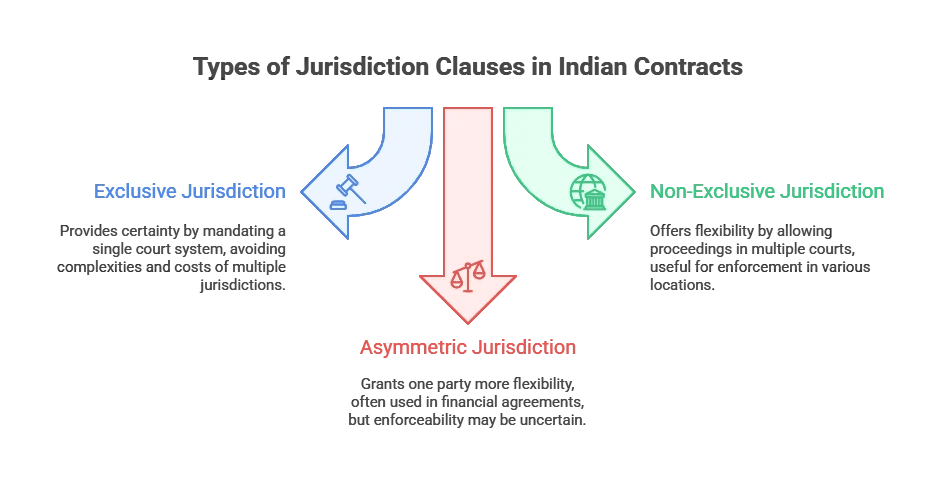
Jurisdiction clauses are not one-size-fits-all. They can be drafted in several ways to meet different business needs, offering varying degrees of certainty and flexibility for the parties involved.
The three primary types are exclusive, non-exclusive, and asymmetric jurisdiction clauses. Each type dictates where legal proceedings can be initiated and is suited to different contractual situations, which the following sections explain in detail.
Exclusive Jurisdiction Clauses
An exclusive jurisdiction clause mandates that disputes must be resolved in one specific court system and nowhere else. This provides the highest level of certainty about where litigation will take place.
By agreeing to a single jurisdiction, both parties prevent one another from initiating legal action in an unexpected or inconvenient forum. This is particularly valuable when you want to ensure a dispute is handled in a familiar judicial system.
An example would be a clause granting "exclusive jurisdiction of the courts of England," which prevents lawsuits related to the contract from being filed in any other country.
Non-Exclusive Jurisdiction Clauses
A non-exclusive jurisdiction clause designates a preferred forum for disputes but does not prevent proceedings from being brought in other competent courts. This approach offers greater flexibility.
This type of clause is useful in situations where enforcement actions might be necessary in multiple locations, such as where a party's assets are located. It establishes a default option while keeping other avenues open.
For example, in joint ventures or contracts where the subject matter of the contract is spread across regions, a non-exclusive clause allows a party to pursue remedies in the most practical and effective jurisdiction.
Asymmetric Jurisdiction Clauses
Asymmetric jurisdiction clauses give one party more flexibility than the other. Typically, one party is restricted to a single jurisdiction, while the other can choose to bring proceedings in multiple forums.
These are common in international contracts like financial agreements, where a lender wants maximum flexibility to pursue a defaulting borrower in any jurisdiction where they have assets. It creates a one-sided advantage in dispute resolution.
However, the enforceability of these clauses can be uncertain. Some jurisdictions question their fairness and may not uphold them, so it is important to seek legal advice before including one, especially if an arbitration agreement is also involved.
Conclusion
In conclusion, understanding the role of governing law and jurisdiction clauses is crucial for anyone engaged in contractual agreements. These clauses not only determine the applicable legal framework but also establish the forum for resolving disputes, thus playing an essential role in risk management and predictability for businesses. By clearly distinguishing between the substantive rules of governing law and the procedural aspects of jurisdiction, parties can avoid ambiguities that may lead to unwanted litigation. Additionally, being aware of different types of jurisdiction clauses—exclusive, non-exclusive, and asymmetric—enables better strategic planning. As you navigate the complexities of contractual agreements, consider reviewing your contracts to ensure these clauses are well-defined and tailored to your needs. If you require assistance, feel free to reach out for a consultation to optimise your agreements.
Frequently Asked Questions
How can parties select the right governing law and jurisdiction for their contract?
To select the right governing law and jurisdiction, consider the location of the parties, where the contract will be performed, and the subject matter. Choose a neutral and well-developed legal system. It is always best to seek legal advice to ensure you select an appropriate governing law.
Are governing law and jurisdiction clauses enforceable in cross-border agreements?
Yes, courts generally enforce these clauses in international contracts, especially for exclusive jurisdiction. However, enforcement can be limited by the public policy of the local legal system or mandatory local laws, such as consumer protection or employment regulations, which may override the chosen law.
Is it possible to update or modify these clauses after the contract is signed?
Yes, parties can modify a governing law clause or jurisdiction clause after a contract is signed. This requires the mutual consent of all parties and should be formalised through a written amendment to the original agreement to ensure the new law provisions are legally binding.
About the Company

Volody AI CLM is an Agentic AI-powered Contract Lifecycle Management platform designed to eliminate manual contracting tasks, automate complex workflows, and deliver actionable insights. As a one-stop shop for all contract activities, it covers drafting, collaboration, negotiation, approvals, e-signature, compliance tracking, and renewals. Built with enterprise-grade security and no-code configuration, it meets the needs of the most complex global organizations. Volody AI CLM also includes AI-driven contract review and risk analysis, helping teams detect issues early and optimize terms. Trusted by Fortune 500 companies, high-growth startups, and government entities, it transforms contracts into strategic, data-driven business assets.







" height="216.72211px" id="FYO0bO80Y" transform="translate(3 6.105)" width="206.073px"/><path d="M 108.174 222 C 88.432 222 70.303 217.239 53.785 207.717 C 37.267 198.196 24.173 185.052 14.504 168.285 C 4.835 151.312 0 132.165 0 110.845 C 0 89.731 4.835 70.792 14.504 54.025 C 24.173 37.052 37.267 23.804 53.785 14.282 C 70.303 4.761 88.432 0 108.174 0 C 128.116 0 146.246 4.761 162.562 14.282 C 179.08 23.804 192.073 37.052 201.541 54.025 C 211.21 70.792 216.044 89.731 216.044 110.845 C 216.044 132.165 211.21 151.312 201.541 168.285 C 192.073 185.052 179.08 198.196 162.562 207.717 C 146.044 217.239 127.915 222 108.174 222 Z M 108.174 183.189 C 120.864 183.189 132.044 180.291 141.713 174.495 C 151.382 168.492 158.936 160.006 164.375 149.035 C 169.814 138.064 172.533 125.334 172.533 110.845 C 172.533 96.355 169.814 83.729 164.375 72.965 C 158.936 61.994 151.382 53.611 141.713 47.815 C 132.044 42.02 120.864 39.122 108.174 39.122 C 95.483 39.122 84.202 42.02 74.332 47.815 C 64.663 53.611 57.109 61.994 51.67 72.965 C 46.231 83.729 43.511 96.355 43.511 110.845 C 43.511 125.334 46.231 138.064 51.67 149.035 C 57.109 160.006 64.663 168.492 74.332 174.495 C 84.202 180.291 95.483 183.189 108.174 183.189 Z" fill="rgba(255, 255, 255, 0.12)" height="222px" id="aa1McFcE9" transform="translate(227.183 3)" width="216.04399999999998px"/><path d="M 42.302 182.257 L 111.799 182.257 L 111.799 216.722 L 0 216.722 L 0 0 L 42.302 0 Z" fill="rgba(255, 255, 255, 0.12)" height="216.72211px" id="yRq4AnrsX" transform="translate(477.721 6.105)" width="111.79899999999998px"/><path d="M 108.174 222 C 88.432 222 70.303 217.239 53.785 207.717 C 37.267 198.196 24.173 185.052 14.504 168.285 C 4.835 151.312 0 132.165 0 110.845 C 0 89.731 4.835 70.792 14.504 54.025 C 24.173 37.052 37.267 23.804 53.785 14.282 C 70.303 4.761 88.432 0 108.174 0 C 128.116 0 146.246 4.761 162.562 14.282 C 179.08 23.804 192.073 37.052 201.541 54.025 C 211.21 70.792 216.045 89.731 216.045 110.845 C 216.045 132.165 211.21 151.312 201.541 168.285 C 192.073 185.052 179.08 198.196 162.562 207.717 C 146.044 217.239 127.915 222 108.174 222 Z M 108.174 183.189 C 120.864 183.189 132.044 180.291 141.713 174.495 C 151.382 168.492 158.936 160.006 164.375 149.035 C 169.814 138.064 172.534 125.334 172.534 110.845 C 172.534 96.355 169.814 83.729 164.375 72.965 C 158.936 61.994 151.382 53.611 141.713 47.815 C 132.044 42.02 120.864 39.122 108.174 39.122 C 95.483 39.122 84.202 42.02 74.332 47.815 C 64.663 53.611 57.108 61.994 51.67 72.965 C 46.231 83.729 43.511 96.355 43.511 110.845 C 43.511 125.334 46.231 138.064 51.67 149.035 C 57.108 160.006 64.663 168.492 74.332 174.495 C 84.202 180.291 95.483 183.189 108.174 183.189 Z" fill="rgba(255, 255, 255, 0.12)" height="222px" id="mo8HQspQ0" transform="translate(609.155 3)" width="216.04500000000007px"/><path d="M 73.727 0 C 95.885 0 115.324 4.45 132.044 13.351 C 148.967 22.252 161.957 34.982 171.027 51.541 C 180.287 67.894 184.917 86.937 184.917 108.671 C 184.917 130.405 180.287 149.449 171.027 165.801 C 161.957 181.947 148.967 194.47 132.044 203.371 C 115.324 212.271 95.885 216.722 73.727 216.722 L 0 216.722 L 0 0 Z M 72.216 179.773 C 94.374 179.773 111.497 173.564 123.583 161.144 C 135.669 148.724 141.713 131.233 141.713 108.671 C 141.713 86.109 135.669 68.515 123.583 55.888 C 111.497 43.055 94.374 36.638 72.216 36.638 L 42.302 36.638 L 42.302 179.773 Z" fill="rgba(255, 255, 255, 0.12)" height="216.72211px" id="I3iXX5Hi_" transform="translate(859.693 6.105)" width="184.91699999999992px"/><path d="M 185.22 0 L 113.91 141.273 L 113.91 216.722 L 71.61 216.722 L 71.61 141.273 L 0 0 L 47.74 0 L 93.06 99.046 L 138.08 0 Z" fill="rgba(255, 255, 255, 0.12)" height="216.72211px" id="nzHyWC0_d" transform="translate(1061.78 6.105)" width="185.22000000000003px"/></svg>)