
Contracts are not administrative artifacts. They define enforceable obligations, revenue entitlements, supplier accountability, and regulatory exposure. Organizations that manage contracts through email chains, shared drives, and spreadsheet trackers lack enforceable lifecycle control. This fragmentation weakens audit defensibility, obscures renewal timelines, and introduces financial leakage.
Enterprise Contract Lifecycle Management (CLM) platforms address this by transforming contracts into structured operational assets. This comparison evaluates Icertis and Ironclad across lifecycle governance depth, AI extraction capability, pricing architecture, integration maturity, and enterprise scalability. It also examines how Volody positions itself as a lifecycle-governance-centric alternative.
The objective is not feature enumeration. The objective is structural evaluation.
Why Legacy Contract Management Models Fail at Scale
Traditional contract management relies on disconnected tools rather than governed systems. Legal teams draft agreements in document editors. Commercial teams circulate revisions through email. Finance monitors obligations separately. No unified system enforces lifecycle continuity.
This produces predictable operational risk:
Approval authority is inconsistently enforced
Contract versions proliferate without traceability
Renewal deadlines are missed due to fragmented tracking
Obligations remain unenforced due to lack of structured monitoring
Enterprise-wide contract exposure remains opaque
As contract volume increases, manual oversight becomes structurally incapable of maintaining governance discipline. Contract management transitions from controlled infrastructure to reactive administration.
CLM platforms replace fragmentation with governed lifecycle orchestration.
Contract Lifecycle Management as Governance Infrastructure
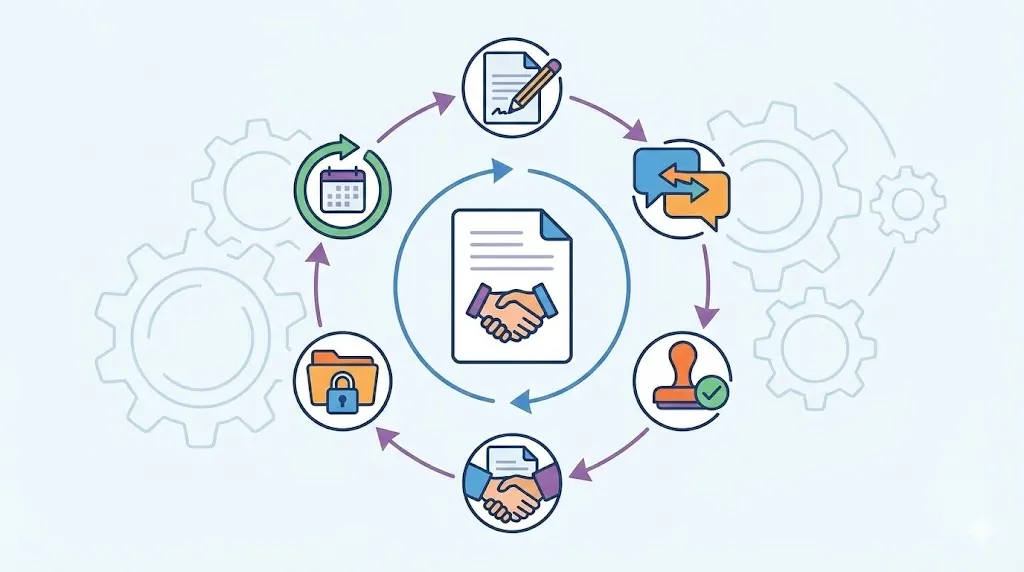
Contract Lifecycle Management software governs contracts from initial request through renewal, amendment, and termination. Its primary function is not storage. Its function is lifecycle enforcement.
Core lifecycle governance layers include:
Structured Intake and Metadata Capture
Contract requests enter the system with predefined metadata including contract type, jurisdiction, counterparty classification, and risk category. This metadata determines workflow routing, approval requirements, and clause logic.Template-Driven Drafting and Clause Control
Pre-approved clause libraries ensure legal consistency. Non-standard clause insertion can trigger automatic approval escalation or compliance review.Negotiation Tracking and Revision Auditability
Every revision, redline, and approval event is recorded. This creates audit-defensible contract lineage.Execution and Structured Storage
Signed agreements are stored as structured data assets, not static documents.Post-Signature Obligation Governance
Milestones, renewal triggers, and performance commitments are monitored through enforceable lifecycle tracking.
Modern CLM platforms integrate artificial intelligence to extract metadata, detect risk-bearing clauses, and enable portfolio-wide contract intelligence.
Platform Architecture Overview: Icertis vs Ironclad
Icertis: Enterprise Governance-Centric Lifecycle Management
Icertis is designed for multinational enterprises operating within regulated environments. Its architecture prioritizes compliance enforcement, integration depth, and governance scalability.
Key architectural characteristics include:
Native integration with enterprise ecosystems such as ERP and procurement platforms
Complex approval hierarchy modeling aligned with delegation authority frameworks
Structured obligation governance aligned with compliance requirements
Enterprise-scale contract intelligence reporting
This architecture enables organizations to model contracts as governed operational assets embedded within enterprise systems.
Implementation complexity is correspondingly higher. Deployment often requires configuration cycles aligned with organizational governance structures.
Ironclad: Workflow-Centric Contract Automation
Ironclad approaches contract lifecycle management through workflow orchestration and usability optimization. Its design prioritizes accessibility across business teams.
Core architectural focus areas include:
Guided workflows enabling business users to initiate contracts
Collaborative drafting and negotiation environments
Simplified workflow configuration models
Faster deployment compared to governance-heavy enterprise systems
Ironclad emphasizes operational efficiency and adoption velocity rather than deeply layered governance enforcement.
This architecture aligns well with organizations seeking structured workflows without extensive enterprise infrastructure modeling.
Related Article: Ironclad Review: Testing out Ironclad for a week
Lifecycle Governance Comparison: Execution Depth and Structural Control
Intake and Drafting Governance
Icertis enforces structured intake discipline. Metadata requirements ensure contracts enter lifecycle workflows with predefined classification. Clause libraries operate within policy enforcement frameworks, preventing unauthorized deviations.
Ironclad emphasizes workflow accessibility. Guided intake workflows enable business teams to generate contracts efficiently. Governance logic exists, but enforcement depth is typically less rigid than enterprise-centric systems.
The distinction reflects architectural intent: governance enforcement versus workflow acceleration.
Negotiation and Compliance Traceability
Icertis prioritizes audit traceability. Clause deviations can trigger automated escalation. Every contractual modification is recorded within structured governance frameworks.
Ironclad prioritizes collaborative negotiation efficiency. Legal and business stakeholders interact within guided workflows designed to preserve deal velocity.
Both platforms maintain audit trails, but enforcement rigor differs.
Approval Hierarchy Modeling
Approval routing complexity is a defining architectural differentiator.
Icertis supports deeply nested approval structures reflecting enterprise delegation frameworks across jurisdictions, business units, and financial thresholds.
Ironclad supports conditional approvals optimized for workflow clarity and usability. Governance modeling depth is sufficient for many organizations but less suited to highly complex multinational authority matrices.
Execution and Integration with Enterprise Systems
Both platforms integrate with electronic signature providers. Structural differences emerge after execution.
Icertis integrates contract data directly into enterprise systems, enabling synchronization with procurement workflows, supplier management systems, and financial platforms.
Ironclad centralizes executed contracts within searchable repositories and workflow-linked reporting systems. Integration depth is typically stronger within CRM environments than ERP ecosystems.
Post-Signature Obligation Governance
Post-signature lifecycle enforcement reveals the most significant architectural differences.
Icertis models obligations as structured governance entities. Milestones, performance obligations, and renewal timelines integrate into enterprise reporting frameworks.
Ironclad provides renewal reminders and metadata tracking, enabling lifecycle visibility. However, obligation modeling depth is generally less comprehensive compared to enterprise governance-centric platforms.
This distinction affects audit readiness and compliance automation capability.
Pricing Architecture and Cost Structure Analysis
Enterprise CLM pricing follows custom subscription models based on multiple operational variables.
Metric | Icertis Pricing Structure | Ironclad Pricing Structure |
Pricing Model | Custom enterprise subscription | Custom annual subscription |
Primary Units | Per-user licensing components | Per-user pricing scaling with adoption |
Implementation | Required (Higher initial investment) | Lower complexity (Streamlined deployment) |
Configuration Focus | Deep governance & global compliance | Workflow automation & usability |
Estimated Entry Point | $16,000+ per month | $5,000+ per month |
Strategic Fit | Scaled deployment with governance depth | High-growth adoption with fast ROI |
Related Article: What is Contract Workflow? Benefits of Automating Approvals
Artificial Intelligence Capability and Contract Intelligence Maturity
AI capability in CLM platforms primarily focuses on metadata extraction, clause detection, and risk identification.
Typical AI functions include:
Automatic extraction of contract metadata fields
Clause classification and deviation detection
Portfolio-level contract analytics
Renewal risk identification
Both platforms provide AI-assisted metadata extraction and contract analysis. However, enterprise platforms typically emphasize structured integration of extracted data into governance frameworks rather than standalone analysis.
AI effectiveness depends on extraction accuracy, transparency, and integration with lifecycle workflows.
Integration Ecosystem Depth and Enterprise Suitability
Integration capability determines whether contract data functions as operational infrastructure or isolated documentation.
Icertis prioritizes enterprise integration depth. Its architecture aligns with procurement systems, supplier management systems, and enterprise financial platforms.
Ironclad prioritizes workflow integrations, particularly within sales and commercial operations environments.
Integration depth directly affects contract enforceability, financial alignment, and lifecycle automation capability.
Implementation Complexity and Operational Overhead
Enterprise CLM deployment involves lifecycle modeling, workflow configuration, and governance structuring.
Icertis implementation timelines typically extend several months due to governance configuration requirements.
Ironclad deployment timelines are generally shorter due to workflow-centric architecture and lower governance modeling complexity.
Implementation complexity reflects architectural depth rather than platform capability limitations.
Volody CLM: Lifecycle Governance with Balanced Deployment Complexity
Volody CLM positions itself as a lifecycle governance platform designed to combine structured contract intelligence with deployment efficiency.
Its architectural priorities include:
Structured metadata capture from contract initiation
AI-assisted metadata extraction integrated into lifecycle governance
Automated obligation tracking linked to contract milestones
Configurable workflows without extensive technical configuration
Volody emphasizes lifecycle enforcement while reducing implementation overhead commonly associated with enterprise governance platforms.
This positioning aligns with organizations requiring governance discipline without prolonged deployment cycles.
Enterprise Decision Framework: Selecting the Appropriate CLM Architecture
Platform selection should align with governance complexity, integration requirements, and operational scale.
Icertis aligns with organizations requiring:
Global governance enforcement across multiple jurisdictions
Deep ERP and procurement integration
Complex approval hierarchy modeling
Enterprise-scale compliance enforcement
Ironclad aligns with organizations requiring:
Workflow automation across business teams
Faster deployment timelines
Collaborative contract creation environments
Moderate governance complexity
Volody aligns with organizations requiring:
Structured lifecycle governance with lower deployment overhead
Integrated AI-driven contract intelligence
Automated obligation enforcement
Balanced governance depth and usability
CLM platforms function as operational governance infrastructure. Selection should prioritize lifecycle enforcement capability rather than interface usability alone.
Related Article: Ironclad Review: Testing out Ironclad for a week
Strategic Conclusion: Governance Depth Determines Long-Term CLM Value
Contract lifecycle management platforms differ fundamentally in architectural intent. Some optimize workflow efficiency. Others prioritize enterprise governance enforcement.
Icertis emphasizes governance depth, compliance enforcement, and enterprise integration maturity. Ironclad emphasizes workflow accessibility and deployment efficiency. Volody emphasizes structured lifecycle governance combined with implementation efficiency.
Organizations managing large-scale contract portfolios benefit most from platforms that convert contracts into governed operational infrastructure rather than passive document repositories.
About the Company
Volody AI CLM is an Agentic AI-powered Contract Lifecycle Management platform designed to eliminate manual contracting tasks, automate complex workflows, and deliver actionable insights. As a one-stop shop for all contract activities, it covers drafting, collaboration, negotiation, approvals, e-signature, compliance tracking, and renewals. Built with enterprise-grade security and no-code configuration, it meets the needs of the most complex global organizations. Volody AI CLM also includes AI-driven contract review and risk analysis, helping teams detect issues early and optimize terms. Trusted by Fortune 500 companies, high-growth startups, and government entities, it transforms contracts into strategic, data-driven business assets.



" height="216.72211px" id="FYO0bO80Y" transform="translate(3 6.105)" width="206.073px"/><path d="M 108.174 222 C 88.432 222 70.303 217.239 53.785 207.717 C 37.267 198.196 24.173 185.052 14.504 168.285 C 4.835 151.312 0 132.165 0 110.845 C 0 89.731 4.835 70.792 14.504 54.025 C 24.173 37.052 37.267 23.804 53.785 14.282 C 70.303 4.761 88.432 0 108.174 0 C 128.116 0 146.246 4.761 162.562 14.282 C 179.08 23.804 192.073 37.052 201.541 54.025 C 211.21 70.792 216.044 89.731 216.044 110.845 C 216.044 132.165 211.21 151.312 201.541 168.285 C 192.073 185.052 179.08 198.196 162.562 207.717 C 146.044 217.239 127.915 222 108.174 222 Z M 108.174 183.189 C 120.864 183.189 132.044 180.291 141.713 174.495 C 151.382 168.492 158.936 160.006 164.375 149.035 C 169.814 138.064 172.533 125.334 172.533 110.845 C 172.533 96.355 169.814 83.729 164.375 72.965 C 158.936 61.994 151.382 53.611 141.713 47.815 C 132.044 42.02 120.864 39.122 108.174 39.122 C 95.483 39.122 84.202 42.02 74.332 47.815 C 64.663 53.611 57.109 61.994 51.67 72.965 C 46.231 83.729 43.511 96.355 43.511 110.845 C 43.511 125.334 46.231 138.064 51.67 149.035 C 57.109 160.006 64.663 168.492 74.332 174.495 C 84.202 180.291 95.483 183.189 108.174 183.189 Z" fill="rgba(255, 255, 255, 0.12)" height="222px" id="aa1McFcE9" transform="translate(227.183 3)" width="216.04399999999998px"/><path d="M 42.302 182.257 L 111.799 182.257 L 111.799 216.722 L 0 216.722 L 0 0 L 42.302 0 Z" fill="rgba(255, 255, 255, 0.12)" height="216.72211px" id="yRq4AnrsX" transform="translate(477.721 6.105)" width="111.79899999999998px"/><path d="M 108.174 222 C 88.432 222 70.303 217.239 53.785 207.717 C 37.267 198.196 24.173 185.052 14.504 168.285 C 4.835 151.312 0 132.165 0 110.845 C 0 89.731 4.835 70.792 14.504 54.025 C 24.173 37.052 37.267 23.804 53.785 14.282 C 70.303 4.761 88.432 0 108.174 0 C 128.116 0 146.246 4.761 162.562 14.282 C 179.08 23.804 192.073 37.052 201.541 54.025 C 211.21 70.792 216.045 89.731 216.045 110.845 C 216.045 132.165 211.21 151.312 201.541 168.285 C 192.073 185.052 179.08 198.196 162.562 207.717 C 146.044 217.239 127.915 222 108.174 222 Z M 108.174 183.189 C 120.864 183.189 132.044 180.291 141.713 174.495 C 151.382 168.492 158.936 160.006 164.375 149.035 C 169.814 138.064 172.534 125.334 172.534 110.845 C 172.534 96.355 169.814 83.729 164.375 72.965 C 158.936 61.994 151.382 53.611 141.713 47.815 C 132.044 42.02 120.864 39.122 108.174 39.122 C 95.483 39.122 84.202 42.02 74.332 47.815 C 64.663 53.611 57.108 61.994 51.67 72.965 C 46.231 83.729 43.511 96.355 43.511 110.845 C 43.511 125.334 46.231 138.064 51.67 149.035 C 57.108 160.006 64.663 168.492 74.332 174.495 C 84.202 180.291 95.483 183.189 108.174 183.189 Z" fill="rgba(255, 255, 255, 0.12)" height="222px" id="mo8HQspQ0" transform="translate(609.155 3)" width="216.04500000000007px"/><path d="M 73.727 0 C 95.885 0 115.324 4.45 132.044 13.351 C 148.967 22.252 161.957 34.982 171.027 51.541 C 180.287 67.894 184.917 86.937 184.917 108.671 C 184.917 130.405 180.287 149.449 171.027 165.801 C 161.957 181.947 148.967 194.47 132.044 203.371 C 115.324 212.271 95.885 216.722 73.727 216.722 L 0 216.722 L 0 0 Z M 72.216 179.773 C 94.374 179.773 111.497 173.564 123.583 161.144 C 135.669 148.724 141.713 131.233 141.713 108.671 C 141.713 86.109 135.669 68.515 123.583 55.888 C 111.497 43.055 94.374 36.638 72.216 36.638 L 42.302 36.638 L 42.302 179.773 Z" fill="rgba(255, 255, 255, 0.12)" height="216.72211px" id="I3iXX5Hi_" transform="translate(859.693 6.105)" width="184.91699999999992px"/><path d="M 185.22 0 L 113.91 141.273 L 113.91 216.722 L 71.61 216.722 L 71.61 141.273 L 0 0 L 47.74 0 L 93.06 99.046 L 138.08 0 Z" fill="rgba(255, 255, 255, 0.12)" height="216.72211px" id="nzHyWC0_d" transform="translate(1061.78 6.105)" width="185.22000000000003px"/></svg>)