

Contract administration is often treated as a narrow, pre-signature activity. In practice, it is the operational layer that determines whether contractual intent survives contact with real-world execution. When administration is weak, contracts exist only as documents. When it is structured, contracts function as enforceable, auditable instruments that guide business behaviour over time.
This article sets out what contract administration actually covers, why it breaks down inside organisations, how it fits into the full contract lifecycle, and why its quality directly affects legal risk and operational control. The focus is on execution reality rather than theory, and on how modern legal teams design administration to work at scale.
What Contract Administration Covers in Practice

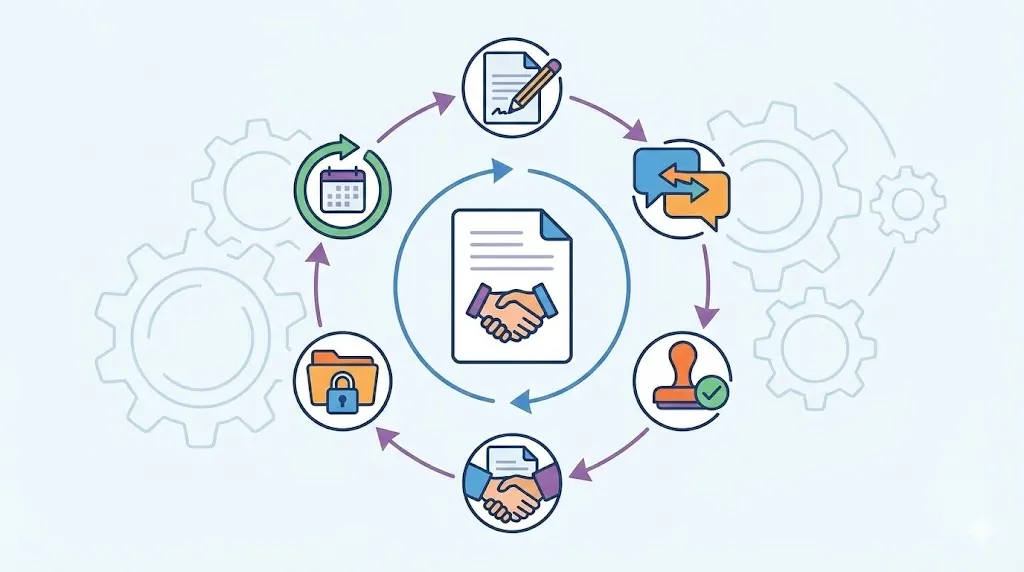
At its core, contract administration governs how contracts move through an organisation from request to execution and beyond. In practice, it begins well before signature and continues long after the ink is dry. The work is not limited to managing documents; it involves controlling decisions, ownership, and visibility at each stage.
Most contract workflows start with an intake request from the business. Administration determines how that request is captured, what information is required upfront, and how it is routed. Without structure at this point, legal teams inherit incomplete context, leading to unnecessary back-and-forth and delays. Effective administration sets expectations early by standardising intake and ensuring that key commercial and legal parameters are defined before drafting begins.
Contract drafting itself is also an administrative concern. Structured drafting relies on approved templates and clause libraries that reflect current legal positions. Administration ensures the right template is used, deviations are tracked, and negotiation changes are visible to all stakeholders. This is where version control becomes critical. Without clear ownership and controlled editing, teams lose track of what has changed and why, increasing review time and risk.
Approval workflows sit squarely within contract administration. Contracts rarely require a single sign-off. Legal, finance, procurement, and business leaders may all need to review different aspects. Administration defines who must approve what, in what order, and under which conditions. When this logic is implicit rather than explicit, approvals stall or occur without proper review.
Contract Execution is the visible milestone, but it is not the endpoint. Administration governs how contracts are prepared for signature, how execution is coordinated across parties, and how the final, authoritative version is stored. A signed contract that cannot be easily located or referenced is effectively unmanaged.
Related Article: Contract Templates Standardization: Simplifying Legal Work
Why Contract Administration Breaks Down Inside Organisations

Contract administration rarely fails because of a lack of legal expertise. It fails because process design does not keep pace with organisational complexity. As companies grow, informal practices that once worked begin to fracture.
One common failure point is unclear ownership. When responsibility for administration is distributed across legal, sales, procurement, and operations without a defined model, tasks fall between roles. Drafting may be owned by legal, approvals by the business, and execution by operations, with no single function accountable for continuity. This fragmentation leads to inconsistent handling and lost visibility.
Manual processes compound the problem. Email-based negotiations, ad hoc document storage, and spreadsheet tracking do not scale. They obscure status, make audit trails difficult to reconstruct, and rely heavily on individual diligence. When staff change roles or leave, institutional knowledge disappears with them.
Another source of breakdown is the absence of standardisation. Without agreed templates, fallback positions, and approval thresholds, every contract becomes a bespoke exercise. Legal teams spend time re-litigating settled positions, and business teams experience delays they cannot predict or explain.
These issues surface most clearly during contract negotiation and approval stages. Versions proliferate, stakeholders are unsure which draft is current, and approvals are either rushed or bypassed to meet commercial deadlines. Administration fails not because teams are careless, but because the system provides no guardrails.
Understanding these failure modes is essential before attempting to fix them. Articles focused on specific breakdowns, such as approval bottlenecks or version control failures, explore these issues in more detail.
Related Article: Overcome Top 5 Contract Management Challenges with Ease
How Contract Administration Fits into the Full Contract Lifecycle

A persistent misconception is that contract administration ends at signature. In reality, execution marks a transition, not a conclusion. Administrative responsibility must carry forward into the operational life of the contract.
Immediately after execution, contracts need to be recorded in a way that preserves key metadata. Parties, term, renewal dates, notice periods, pricing mechanisms, and obligations must be visible and accessible. If this information remains locked in a PDF, the organisation cannot act on it without manual review.
Obligation tracking is a central post-signature administrative function. Many contracts impose ongoing duties: reporting requirements, service levels, data protection commitments, or payment milestones. Administration determines how these obligations are identified, assigned, and monitored. Without a system for tracking them, compliance depends on memory and goodwill.
Contract Renewals and terminations are another critical area. Contracts often renew automatically unless notice is given within a defined window. Administration ensures these dates are monitored and surfaced to the right stakeholders in time to make a decision. Missed notices can lock organisations into unfavourable terms or trigger disputes.
The handoff between legal and operational teams is where lifecycle continuity is most fragile. If execution information is not communicated clearly, operational teams may not know what was agreed or what constraints apply. Effective administration creates a single source of truth that supports downstream use.
Related Article: How to Manage a Contract Post Execution? Best Practices
Legal and Operational Consequences of Weak Contract Administration

The consequences of weak administration are rarely immediate, but they are cumulative and costly. From a legal perspective, poor administration undermines enforceability and defensibility. If an organisation cannot demonstrate who approved a contract, what terms were agreed, or whether obligations were met, its position in a dispute is weakened.
Operationally, the impact is visible in missed opportunities and inefficiencies. Revenue may be delayed because contracts are not executed on time. Costs increase when unfavourable terms renew automatically. Compliance teams struggle during audits when they cannot easily produce complete and accurate contract records.
Risk exposure also increases. Untracked obligations can lead to regulatory breaches, particularly in areas such as data protection or financial reporting. When contracts are not administered consistently, risk assessments become unreliable.
These outcomes are not the result of poor intent. They reflect the absence of administrative infrastructure. When administration relies on individual effort rather than defined processes, errors are inevitable.
Related Article: Contract Management Security: Risks, Mistakes and Solutions
What Effective Contract Administration Looks Like at Scale

Effective contract administration at scale is characterised by clarity, consistency, and continuity. Ownership is defined, processes are documented, and information flows predictably between stakeholders.
Drafting begins from standardised templates that reflect current policy. Deviations are visible and intentional. Negotiations are conducted within controlled environments where changes are tracked and attributable. Approval workflows are rule-based, ensuring that the right reviewers are involved based on contract characteristics rather than ad hoc judgment.
Execution is coordinated rather than improvised. Signature processes are streamlined, and the final executed agreement is automatically treated as the authoritative record. Post-execution, contracts are not archived and forgotten. They remain active references, with obligations and milestones monitored over time.
Technology-enabled processes support this model by enforcing structure rather than replacing judgment. They provide routing logic, audit trails, and visibility, allowing legal teams to focus on substantive issues rather than administrative overhead.
At scale, effective administration also produces data. Teams can see where contracts slow down, which clauses drive negotiation, and where risk concentrates. This feedback loop supports continuous improvement and informed decision-making.
Conclusion
Contract administration is not a peripheral activity. It is the operational system that turns legal agreements into reliable business instruments. When administration is informal or fragmented, contracts lose their power to control risk and guide performance. When it is structured and lifecycle-aware, contracts become assets that can be governed, monitored, and enforced with confidence.
For legal and contract teams operating at scale, the shift is from managing documents to managing decisions and obligations over time. Structured drafting, defined approval workflows, coordinated execution, and post-signature visibility are no longer optional; they are foundational to legal effectiveness.
Teams exploring structured, technology-enabled approaches to contract administration may look at platforms such as Volody as examples of how drafting, approvals, execution, and post-signature visibility can be supported within a single, coherent workflow.
About the Company

Volody AI CLM is an Agentic AI-powered Contract Lifecycle Management platform designed to eliminate manual contracting tasks, automate complex workflows, and deliver actionable insights. As a one-stop shop for all contract activities, it covers drafting, collaboration, negotiation, approvals, e-signature, compliance tracking, and renewals. Built with enterprise-grade security and no-code configuration, it meets the needs of the most complex global organizations. Volody AI CLM also includes AI-driven contract review and risk analysis, helping teams detect issues early and optimize terms. Trusted by Fortune 500 companies, high-growth startups, and government entities, it transforms contracts into strategic, data-driven business assets.




" height="216.72211px" id="FYO0bO80Y" transform="translate(3 6.105)" width="206.073px"/><path d="M 108.174 222 C 88.432 222 70.303 217.239 53.785 207.717 C 37.267 198.196 24.173 185.052 14.504 168.285 C 4.835 151.312 0 132.165 0 110.845 C 0 89.731 4.835 70.792 14.504 54.025 C 24.173 37.052 37.267 23.804 53.785 14.282 C 70.303 4.761 88.432 0 108.174 0 C 128.116 0 146.246 4.761 162.562 14.282 C 179.08 23.804 192.073 37.052 201.541 54.025 C 211.21 70.792 216.044 89.731 216.044 110.845 C 216.044 132.165 211.21 151.312 201.541 168.285 C 192.073 185.052 179.08 198.196 162.562 207.717 C 146.044 217.239 127.915 222 108.174 222 Z M 108.174 183.189 C 120.864 183.189 132.044 180.291 141.713 174.495 C 151.382 168.492 158.936 160.006 164.375 149.035 C 169.814 138.064 172.533 125.334 172.533 110.845 C 172.533 96.355 169.814 83.729 164.375 72.965 C 158.936 61.994 151.382 53.611 141.713 47.815 C 132.044 42.02 120.864 39.122 108.174 39.122 C 95.483 39.122 84.202 42.02 74.332 47.815 C 64.663 53.611 57.109 61.994 51.67 72.965 C 46.231 83.729 43.511 96.355 43.511 110.845 C 43.511 125.334 46.231 138.064 51.67 149.035 C 57.109 160.006 64.663 168.492 74.332 174.495 C 84.202 180.291 95.483 183.189 108.174 183.189 Z" fill="rgba(255, 255, 255, 0.12)" height="222px" id="aa1McFcE9" transform="translate(227.183 3)" width="216.04399999999998px"/><path d="M 42.302 182.257 L 111.799 182.257 L 111.799 216.722 L 0 216.722 L 0 0 L 42.302 0 Z" fill="rgba(255, 255, 255, 0.12)" height="216.72211px" id="yRq4AnrsX" transform="translate(477.721 6.105)" width="111.79899999999998px"/><path d="M 108.174 222 C 88.432 222 70.303 217.239 53.785 207.717 C 37.267 198.196 24.173 185.052 14.504 168.285 C 4.835 151.312 0 132.165 0 110.845 C 0 89.731 4.835 70.792 14.504 54.025 C 24.173 37.052 37.267 23.804 53.785 14.282 C 70.303 4.761 88.432 0 108.174 0 C 128.116 0 146.246 4.761 162.562 14.282 C 179.08 23.804 192.073 37.052 201.541 54.025 C 211.21 70.792 216.045 89.731 216.045 110.845 C 216.045 132.165 211.21 151.312 201.541 168.285 C 192.073 185.052 179.08 198.196 162.562 207.717 C 146.044 217.239 127.915 222 108.174 222 Z M 108.174 183.189 C 120.864 183.189 132.044 180.291 141.713 174.495 C 151.382 168.492 158.936 160.006 164.375 149.035 C 169.814 138.064 172.534 125.334 172.534 110.845 C 172.534 96.355 169.814 83.729 164.375 72.965 C 158.936 61.994 151.382 53.611 141.713 47.815 C 132.044 42.02 120.864 39.122 108.174 39.122 C 95.483 39.122 84.202 42.02 74.332 47.815 C 64.663 53.611 57.108 61.994 51.67 72.965 C 46.231 83.729 43.511 96.355 43.511 110.845 C 43.511 125.334 46.231 138.064 51.67 149.035 C 57.108 160.006 64.663 168.492 74.332 174.495 C 84.202 180.291 95.483 183.189 108.174 183.189 Z" fill="rgba(255, 255, 255, 0.12)" height="222px" id="mo8HQspQ0" transform="translate(609.155 3)" width="216.04500000000007px"/><path d="M 73.727 0 C 95.885 0 115.324 4.45 132.044 13.351 C 148.967 22.252 161.957 34.982 171.027 51.541 C 180.287 67.894 184.917 86.937 184.917 108.671 C 184.917 130.405 180.287 149.449 171.027 165.801 C 161.957 181.947 148.967 194.47 132.044 203.371 C 115.324 212.271 95.885 216.722 73.727 216.722 L 0 216.722 L 0 0 Z M 72.216 179.773 C 94.374 179.773 111.497 173.564 123.583 161.144 C 135.669 148.724 141.713 131.233 141.713 108.671 C 141.713 86.109 135.669 68.515 123.583 55.888 C 111.497 43.055 94.374 36.638 72.216 36.638 L 42.302 36.638 L 42.302 179.773 Z" fill="rgba(255, 255, 255, 0.12)" height="216.72211px" id="I3iXX5Hi_" transform="translate(859.693 6.105)" width="184.91699999999992px"/><path d="M 185.22 0 L 113.91 141.273 L 113.91 216.722 L 71.61 216.722 L 71.61 141.273 L 0 0 L 47.74 0 L 93.06 99.046 L 138.08 0 Z" fill="rgba(255, 255, 255, 0.12)" height="216.72211px" id="nzHyWC0_d" transform="translate(1061.78 6.105)" width="185.22000000000003px"/></svg>)