

Key Highlights
A change order is a formal amendment to an existing contract, documenting modifications to the original scope of work.
Effective change order management is vital in any construction project to prevent disputes and ensure fair compensation.
The change order process involves identifying a need, submitting a request, negotiation, and formal approval before implementation.
Change orders are necessary for handling design modifications, estimation errors, unforeseen site conditions, and regulatory updates.
Proper documentation is essential, detailing the change, its impact on cost and schedule, and referencing the original contract.
Understanding the difference between change orders and contract amendments is key to successful project management.
Introduction
In the world of construction and project management, change is almost inevitable. Even the most carefully planned project can face unexpected challenges or new requirements. This is where a change order becomes essential. A change order is a formal document that modifies the original construction contract, ensuring that any adjustments to the project's scope, timeline, or cost are officially recorded and agreed upon by all parties. Understanding how to manage these changes is crucial for keeping your project on track and maintaining clear, professional relationships.
Change Order Basics in Construction Contracts

When you begin a construction project, the original contract outlines the entire scope of work. However, circumstances can shift, requiring adjustments. A change order is the formal mechanism used to document and authorise these modifications.
It serves as a legal record that protects both you and your client from misunderstandings. This ensures any new work or alterations are officially added to the agreement. We will now explore what a change order is and why it plays such a critical role in contract management.
Definition of a Change Order
So, what exactly is a change order in construction projects? Simply put, it is a written amendment to an existing contract that formalises any modification to the original agreement. This could involve adding or removing work, changing materials, or adjusting project timelines after the initial contract has been signed. It acts as an official "update" to your contract.
Think of it as a mini-agreement that details the specific changes. It captures any deviation from the original scope of work, ensuring it is acknowledged and approved by everyone involved before the new work begins. This document provides a detailed description of the change and its impact.
Without a formal change order, you risk performing extra work without a guarantee of payment or facing disputes over what was agreed upon. It transforms verbal requests or handshake deals into a legally enforceable part of the construction project, protecting you from potential conflicts and financial loss.
Purpose and Role of Change Orders
The primary purpose of a change order is to provide a structured and transparent way to adapt a project as it evolves. Projects rarely go exactly as planned, and these documents offer the flexibility needed to address shifts in client needs, site conditions, or project priorities without abandoning the entire contract.
When should a change order be used in a contract? It should be used whenever there is a need to modify the project’s scope, cost, or schedule. The change order process ensures that any adjustments are formally documented, priced fairly, and approved by all stakeholders. This creates a clear record that prevents confusion and holds both parties accountable.
Ultimately, change orders protect you from being pressured into doing extra work for free. They formalise project changes that might otherwise exist in a grey area, providing a description of the change and its effect on the contract value. This helps prevent contractual disputes about what was agreed upon and ensures you receive fair compensation.
Common Scenarios Where Change Orders Are Used
Change orders are a common part of any construction contract, arising from various situations that require adjustments to the initial plan. They are not a sign of poor planning but rather a tool for managing the dynamic nature of construction work. You will likely encounter the need for a change order in many different circumstances.
These documents are used to manage modifications, whether they involve adding features, substituting materials, or addressing unexpected issues. Knowing when a change order is necessary helps you maintain control over the project’s direction and budget. They are essential for documenting any additional work or alterations.
Here are some common scenarios where a change order is typically required:
Design changes: The project owner or client requests alterations to the design, such as moving a wall or adding a new feature.
Unforeseen site conditions: Excavation might reveal unsuitable ground or other unexpected issues that were not part of the original assessment.
Material substitutions: A specified material may become unavailable or too costly, requiring a substitution.
Regulatory updates: A new building regulation comes into effect during construction, requiring adjustments to comply.
Related Article: AI CLM in Construction: Boost Efficiency & Compliance
Key Reasons Why Change Orders Are Issued
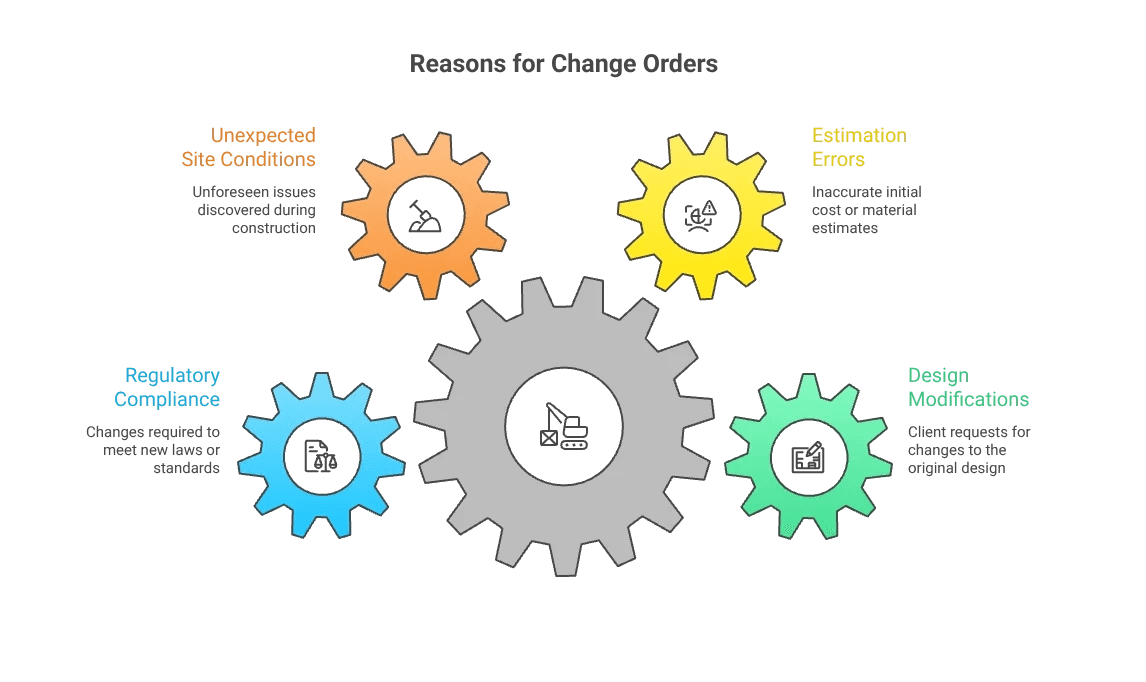
Understanding why change orders occur is the first step toward effective change order management. These modifications are not arbitrary; they are typically driven by specific, identifiable factors that arise during a project's lifecycle. A change order might be initiated by the project owner, the contractor, or even external forces.
Recognising these triggers allows you to anticipate potential changes and manage them proactively. From adjustments in the project scope to unexpected on-site discoveries, several key reasons lead to the issuance of a change order. Let’s look at some of the most common causes in more detail.
Design Modifications and Scope Changes
One of the most frequent reasons for a change order is a request for design modifications from the client. As a project takes shape, the owner may see new opportunities or change their mind about certain features. These scope of work changes can range from minor tweaks to significant additions that alter the building's layout or functionality.
For example, a client might decide to expand a room, add a window, or upgrade the quality of materials used. Any deviation from the original scope of work detailed in the contract must be documented. This is crucial for managing expectations and calculating the impact on costs and timelines.
When these design changes occur, a change order is necessary to formalise the additional work. It outlines the new requirements, adjusts the contract price, and updates the project schedule accordingly. This ensures that you are compensated for the extra labour and materials while providing the client with a clear understanding of the adjustments.
Estimation Errors and Unexpected Site Conditions
Sometimes, the need for a change order arises from issues that were not apparent at the start of the project. Estimation errors in the original plan can lead to discrepancies between the bid and the actual work required. This might happen if the initial assessment of materials or labour was inaccurate.
More commonly, unforeseen site conditions can force a change. For instance, your team might discover poor soil quality that cannot support the planned foundation, or encounter underground utilities that were not on the original blueprints. These surprises require immediate attention and adjustments to the construction plan.
In these situations, a change order is essential to address the new challenges. It documents the problem, outlines the necessary solution, and calculates the impact on the project's budget and timeline. This formal process ensures that you can adapt to unexpected conditions while keeping the project moving forward in a structured manner.
Regulatory, Inspection, or Compliance Needs
Another key reason for issuing a change order is the need to adhere to new or updated regulations. The legal and compliance landscape can shift during a long-term construction project, and your work must always meet the current standards. This is a critical aspect of risk management.
For example, a building code might be updated mid-project, or an inspector might require modifications to meet safety standards. These regulatory changes are non-negotiable and often require immediate adjustments to the construction contract. Failing to comply can lead to fines, work stoppages, or legal issues.
A change order helps manage these compliance needs formally. It is used to document:
Changes required to meet new building codes or safety regulations.
Adjustments mandated by a government inspection.
Modifications needed to obtain necessary permits or certifications.
This ensures that all work remains compliant and that the costs and time associated with these changes are officially recorded.
Related Article: Contract Compliance: Importance & Best Practices
The Change Order Process Explained

A well-defined change order process is essential for effective project management. It provides a clear, step-by-step framework for handling modifications to the contract, ensuring that everyone from the project manager to the client understands their roles and responsibilities. This structured approach helps prevent confusion and disputes.
Following a consistent change management process ensures that every change is properly documented, reviewed, and approved according to the contract terms. Let's break down the typical stages involved, from identifying the need for a change to its final implementation.
Identifying the Need for a Change
The change order process begins the moment a potential modification to the project’s scope is identified. This can be initiated by anyone involved in the project, including the client, the contractor, or a consultant. The key is to recognise when an issue or request falls outside the boundaries of the existing contract.
Common triggers for identifying a change include:
A client requesting additional work or a design alteration.
The discovery of unforeseen conditions on the construction site.
Once a potential change is identified, it is crucial to document it immediately. This initial step involves clearly defining what needs to be changed and why it is necessary. Good contract management practice dictates that even small deviations should be recorded to prevent "scope creep," where minor, undocumented changes accumulate and impact the project over time.
Submitting a Change Order Request
After identifying the need for a change, the next step is to prepare and submit a formal change order request. This document is typically compiled by the contractor and sent to the project owner or client for review. It serves as the official proposal for modifying the original contract.
The request should be detailed and comprehensive, often using a standardised change order form. It must clearly articulate the proposed change, the reason for it, and its potential impact on the project. This includes a breakdown of the costs for additional materials and labour, as well as any adjustments to the project schedule.
Submitting a well-documented change order request is crucial for transparency. It provides the project owner with all the information they need to make an informed decision and helps justify the adjustments to the contract value. This formal submission moves the process from an informal discussion to a structured review.
Negotiation, Approval, and Implementation
Once the change order request is submitted, the negotiation phase begins. The project owner and other relevant parties will review the proposal. They may ask for additional information, question the costs, or suggest alternative solutions. This is a critical stage where clear communication and good contract management skills are essential to reach a mutual agreement.
After negotiations are complete and all parties agree on the terms, the change order is formally approved and signed. It is vital that work on the change does not begin until you have this written approval. Proceeding without a signed document creates significant financial risk, as you may not be compensated for the work.
With the signed change order in hand, you can begin implementation. The project manager updates the project timeline and budget, and the construction team is informed of the new scope of work. All records are updated to reflect the modification, ensuring the project continues smoothly under the revised contract terms.
Related Article: How to Simplify Contract Approvals? A Comprehensive Guide
Change Order Documentation Essentials
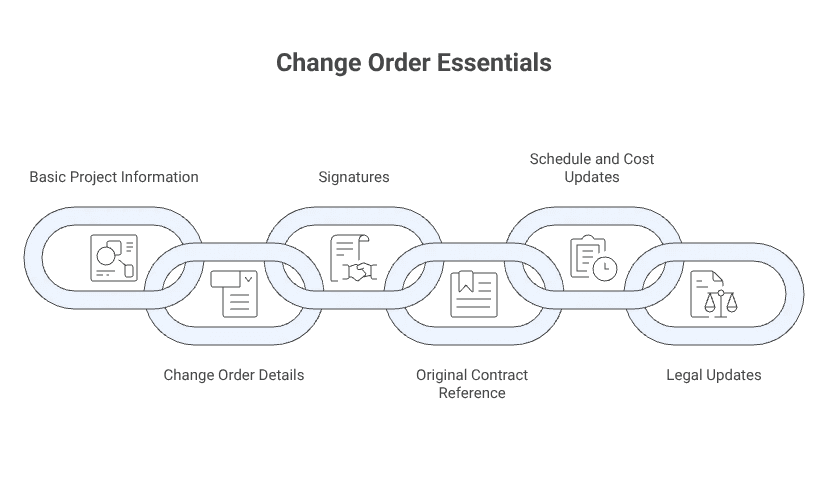
Proper documentation is the backbone of effective change order management. A well-drafted change order document leaves no room for ambiguity and serves as a clear, legally binding record of the modifications to the original agreement. It protects all parties by ensuring everyone has the same understanding of the changes.
Every change order should contain specific, essential information to be effective. A detailed description of the work and its impact is crucial for project management and avoiding future disputes. Let’s examine the key components that must be included in every change order.
Required Information in a Change Order Document
To be effective, a change order form must be thorough and precise. It needs to capture all the essential details of the modification to prevent any confusion down the line. Think of it as a complete record that anyone can review to understand exactly what was changed and why.
This documentation is not just an administrative task; it is a vital communication tool. It ensures that the description of the change is clear to the client, the project team, and any other stakeholders. Incomplete or vague information can lead to disagreements and payment disputes.
Every change order document should include the following key information:
Basic project and contact information: The project name, address, contract number, and the names and contact details of the owner and contractor.
Change order details: A unique change order number for tracking purposes.
A detailed description of the change: A clear explanation of the work being added or removed compared to the original contract.
Signatures: Authorisation from all required parties.
Reference to the Original Contract Details
A change order does not replace the original contract; it amends it. For this reason, it is crucial that every change order document explicitly references the original agreement. This creates a clear link between the initial terms and the new modifications, maintaining a cohesive project record.
By including details from the original contract, you provide essential context. This helps all parties understand how the change fits into the larger project. Mentioning the original contract value, project name, and contract date ensures there is no confusion about which agreement is being modified.
This practice is also important for legal and administrative clarity. It confirms that the change order is an extension of the existing legal framework and not a separate, standalone agreement. Referencing the original scope of work helps highlight exactly what is being altered, making the entire process transparent and easy to track.
Schedule, Cost, and Legal Updates
Perhaps the most critical part of a change order is detailing its impact on the project's schedule and cost. Any modification, whether it's adding or removing work, will almost certainly affect the budget and timeline. This section must clearly outline all cost adjustments and changes to the completion date. This helps manage expectations and prevent disputes over cost overruns.
The document should provide a breakdown of the new costs, including labour, materials, and any overhead or profit markups. It should also specify the number of additional days needed, if any, to complete the new work. This transparency is key to maintaining a good working relationship with your client. Legal updates or references to specific contract clauses being affected should also be noted to ensure full compliance.
Here is how these impacts are typically detailed:
Impact Area | Description |
|---|---|
Cost Adjustments | Details the cost of the new work, including a breakdown of materials, labour, and overhead. It should also show the revised total contract value. |
Schedule Changes | Specifies the additional time required to complete the change and provides a new estimated project completion date. |
Legal Updates | Notes any specific clauses in the original contract that are affected by the change order, ensuring legal clarity. |
Change Order Types and Their Usage
Not all change orders are the same. Depending on the nature of the modification, a construction change order can take different forms. Understanding the various change order types helps you apply the correct one for each situation, ensuring clarity and adherence to contract management best practices.
Whether you are adding work, removing it, or making a substitution, each type serves a specific purpose within project management. Knowing how and when to use them is essential for keeping your project on track. Let's explore some of the most common types and their applications.
Additive vs Deductive Change Orders
Change orders can be broadly categorised into two main types: additive and deductive. The difference between them is straightforward and depends on whether work is being added to or removed from the contract.
An additive change order is the most common type. It is used when extra work is added to the project's original scope. This could be a client requesting a new feature or a response to an unforeseen site condition. An additive change order increases the contract value and may extend the project timeline. A deductive change order, on the other hand, is used to remove a portion of the work from the contract. This results in a reduction of the total contract price.
Here's a simple breakdown:
Additive Change Order: Increases the project scope and typically raises the contract value.
Deductive Change Order: Reduces the project scope and lowers the contract value.
Negotiating a deductive change can sometimes be complex, as you need to agree on the value of the work being removed.
Examples of Common Change Order Types in India
In the Indian construction industry, effective change management is crucial for navigating the complexities of large-scale projects. While the principles are universal, certain types of change orders are particularly common due to local factors like evolving regulations and dynamic project environments.
Contractors and project owners frequently use change orders to adapt to new requirements or unforeseen challenges. These documents ensure that modifications to the project scope are formally recorded and managed, preventing disputes and keeping projects on schedule.
Here are some common examples seen in India:
Scope expansions: Clients often request additional features or expansions as the project progresses, requiring an additive change order.
Change directives: In urgent situations, a project owner may issue a change directive to instruct the contractor to proceed with a change immediately, with cost and time implications to be settled later.
Material substitutions: Due to supply chain issues or cost fluctuations, a change order may be needed to approve the use of alternative materials.
Contract Amendments vs Change Orders
It is important to understand the difference between a change order and a contract amendment, as they are not interchangeable. While both modify an agreement, they serve different purposes and apply in different contexts. A change order is typically used for project-specific adjustments within the framework of the original contract.
A change order modifies the scope of work, timeline, or cost of a particular project. For example, adding a room or changing building materials would be handled with a change order. It operates under the existing contract terms.
In contrast, a contract amendment is a broader modification that alters the core terms and conditions of the contract itself. This could involve changing payment schedules, updating legal clauses like liability, or extending the contract duration. An amendment fundamentally revises the original contract, whereas a change order deals with the specifics of the work being performed.
Related Article: Types of Contracts Every Business Needs
Impact of Change Orders on Project Management

Change orders have a significant impact on project management. While necessary for flexibility, they can introduce complexity and risk if not handled properly. Each change can affect the project timeline, budget, and communication flow between the construction team and the client.
A single change can have a ripple effect, disrupting schedules and increasing the contract value. Effective project management requires anticipating these impacts and having a clear process to mitigate them. Let's look at how change orders can influence key aspects of a project.
Timeline Adjustments and Budget Implications
The most direct impacts of a change order are on the project's timeline and budget. Any alteration to the project scope, whether big or small, will likely require cost adjustments and may lead to schedule delays. This is why careful assessment is crucial before a change is approved.
Additive change orders, which add work, almost always increase the overall project cost and can lead to budget overruns if not managed carefully. They often require additional labour, materials, and time, which extends the project timeline. Even seemingly minor changes can cause a domino effect, delaying subsequent tasks and pushing back the final completion date.
Key implications include:
Budget overruns: Additional work or more expensive materials directly increase project costs.
Schedule delays: New tasks disrupt the planned workflow and can extend the project timeline.
Deductive change orders can reduce costs, but they can also disrupt the schedule if not planned properly.
Communication Between Stakeholders
Clear communication is the cornerstone of successful change order management. When a change is proposed, it is vital that all relevant parties, including the project owner, contractor, subcontractors, and designers—are kept informed. A breakdown in communication can lead to misunderstandings, mistakes, and disputes.
The change order process itself is a formal communication tool. It ensures that everyone has a written record of what was agreed upon. However, informal communication is just as important. Regular meetings and updates help manage expectations and ensure all team members are aligned on the new direction.
Effective project management involves creating an environment where stakeholders feel comfortable raising concerns and asking questions. When everyone understands the reasons for a change and its impact, it is easier to work collaboratively toward a solution. This proactive approach to communication minimises friction and keeps the project moving forward smoothly.
Effects on Procurement and Supply Chain Processes
Change orders can create significant ripples throughout the procurement and supply chain processes. When a change involves new or different materials, the project manager must quickly adjust procurement plans. This can be challenging, especially if the required materials have long lead times or are difficult to source.
A sudden change can disrupt the cash flow of the project. You may need to pay for new materials upfront before receiving payment from the client, putting a strain on your finances. The change can also affect subcontractors and suppliers, who may need to alter their own schedules and resource allocations. This makes coordination across the entire supply chain essential.
Construction management software can help mitigate these issues by providing real-time visibility into material needs and delivery schedules. It allows the project manager to communicate changes quickly to all parties involved, from the procurement team to the suppliers, helping to minimise delays and keep the project on track.
Conclusion
In conclusion, understanding change orders is essential for anyone involved in construction management. They serve as a critical mechanism to address modifications in project scope, budget, and timeline, ensuring all stakeholders are aligned and informed. By effectively managing change orders, you can mitigate disruptions and maintain project momentum. Remember, clear documentation and communication are vital components of this process, helping to avoid misunderstandings and legal complications. If you're keen on enhancing your project management skills, don’t hesitate to reach out for a free consultation to explore further insights into effective change order practices.
Frequently Asked Questions
How is a change order initiated and approved?
A change order is initiated when a party identifies a need for a change. The contractor then submits a formal change order request to the project owner. After review and negotiation, all relevant parties must sign the document to approve it. Work should only begin after this formal approval is secured.
What details should be included in a change order document?
A change order document should include project and contact information, a unique change order number, and a detailed description of the change. It must also outline the impact on cost and schedule, reference the original contract number, and have signatures from all approving parties to be valid.
How do change orders differ from purchase orders and amendments?
A purchase order initiates a transaction, while a change order modifies an existing contract's scope, cost, or timeline. A contract amendment alters the core terms of the original contract itself, whereas a change order typically addresses specific project-related work within the framework of that specific contract.
About the Company

Volody AI CLM is an Agentic AI-powered Contract Lifecycle Management platform designed to eliminate manual contracting tasks, automate complex workflows, and deliver actionable insights. As a one-stop shop for all contract activities, it covers drafting, collaboration, negotiation, approvals, e-signature, compliance tracking, and renewals. Built with enterprise-grade security and no-code configuration, it meets the needs of the most complex global organizations. Volody AI CLM also includes AI-driven contract review and risk analysis, helping teams detect issues early and optimize terms. Trusted by Fortune 500 companies, high-growth startups, and government entities, it transforms contracts into strategic, data-driven business assets.






" height="216.72211px" id="FYO0bO80Y" transform="translate(3 6.105)" width="206.073px"/><path d="M 108.174 222 C 88.432 222 70.303 217.239 53.785 207.717 C 37.267 198.196 24.173 185.052 14.504 168.285 C 4.835 151.312 0 132.165 0 110.845 C 0 89.731 4.835 70.792 14.504 54.025 C 24.173 37.052 37.267 23.804 53.785 14.282 C 70.303 4.761 88.432 0 108.174 0 C 128.116 0 146.246 4.761 162.562 14.282 C 179.08 23.804 192.073 37.052 201.541 54.025 C 211.21 70.792 216.044 89.731 216.044 110.845 C 216.044 132.165 211.21 151.312 201.541 168.285 C 192.073 185.052 179.08 198.196 162.562 207.717 C 146.044 217.239 127.915 222 108.174 222 Z M 108.174 183.189 C 120.864 183.189 132.044 180.291 141.713 174.495 C 151.382 168.492 158.936 160.006 164.375 149.035 C 169.814 138.064 172.533 125.334 172.533 110.845 C 172.533 96.355 169.814 83.729 164.375 72.965 C 158.936 61.994 151.382 53.611 141.713 47.815 C 132.044 42.02 120.864 39.122 108.174 39.122 C 95.483 39.122 84.202 42.02 74.332 47.815 C 64.663 53.611 57.109 61.994 51.67 72.965 C 46.231 83.729 43.511 96.355 43.511 110.845 C 43.511 125.334 46.231 138.064 51.67 149.035 C 57.109 160.006 64.663 168.492 74.332 174.495 C 84.202 180.291 95.483 183.189 108.174 183.189 Z" fill="rgba(255, 255, 255, 0.12)" height="222px" id="aa1McFcE9" transform="translate(227.183 3)" width="216.04399999999998px"/><path d="M 42.302 182.257 L 111.799 182.257 L 111.799 216.722 L 0 216.722 L 0 0 L 42.302 0 Z" fill="rgba(255, 255, 255, 0.12)" height="216.72211px" id="yRq4AnrsX" transform="translate(477.721 6.105)" width="111.79899999999998px"/><path d="M 108.174 222 C 88.432 222 70.303 217.239 53.785 207.717 C 37.267 198.196 24.173 185.052 14.504 168.285 C 4.835 151.312 0 132.165 0 110.845 C 0 89.731 4.835 70.792 14.504 54.025 C 24.173 37.052 37.267 23.804 53.785 14.282 C 70.303 4.761 88.432 0 108.174 0 C 128.116 0 146.246 4.761 162.562 14.282 C 179.08 23.804 192.073 37.052 201.541 54.025 C 211.21 70.792 216.045 89.731 216.045 110.845 C 216.045 132.165 211.21 151.312 201.541 168.285 C 192.073 185.052 179.08 198.196 162.562 207.717 C 146.044 217.239 127.915 222 108.174 222 Z M 108.174 183.189 C 120.864 183.189 132.044 180.291 141.713 174.495 C 151.382 168.492 158.936 160.006 164.375 149.035 C 169.814 138.064 172.534 125.334 172.534 110.845 C 172.534 96.355 169.814 83.729 164.375 72.965 C 158.936 61.994 151.382 53.611 141.713 47.815 C 132.044 42.02 120.864 39.122 108.174 39.122 C 95.483 39.122 84.202 42.02 74.332 47.815 C 64.663 53.611 57.108 61.994 51.67 72.965 C 46.231 83.729 43.511 96.355 43.511 110.845 C 43.511 125.334 46.231 138.064 51.67 149.035 C 57.108 160.006 64.663 168.492 74.332 174.495 C 84.202 180.291 95.483 183.189 108.174 183.189 Z" fill="rgba(255, 255, 255, 0.12)" height="222px" id="mo8HQspQ0" transform="translate(609.155 3)" width="216.04500000000007px"/><path d="M 73.727 0 C 95.885 0 115.324 4.45 132.044 13.351 C 148.967 22.252 161.957 34.982 171.027 51.541 C 180.287 67.894 184.917 86.937 184.917 108.671 C 184.917 130.405 180.287 149.449 171.027 165.801 C 161.957 181.947 148.967 194.47 132.044 203.371 C 115.324 212.271 95.885 216.722 73.727 216.722 L 0 216.722 L 0 0 Z M 72.216 179.773 C 94.374 179.773 111.497 173.564 123.583 161.144 C 135.669 148.724 141.713 131.233 141.713 108.671 C 141.713 86.109 135.669 68.515 123.583 55.888 C 111.497 43.055 94.374 36.638 72.216 36.638 L 42.302 36.638 L 42.302 179.773 Z" fill="rgba(255, 255, 255, 0.12)" height="216.72211px" id="I3iXX5Hi_" transform="translate(859.693 6.105)" width="184.91699999999992px"/><path d="M 185.22 0 L 113.91 141.273 L 113.91 216.722 L 71.61 216.722 L 71.61 141.273 L 0 0 L 47.74 0 L 93.06 99.046 L 138.08 0 Z" fill="rgba(255, 255, 255, 0.12)" height="216.72211px" id="nzHyWC0_d" transform="translate(1061.78 6.105)" width="185.22000000000003px"/></svg>)